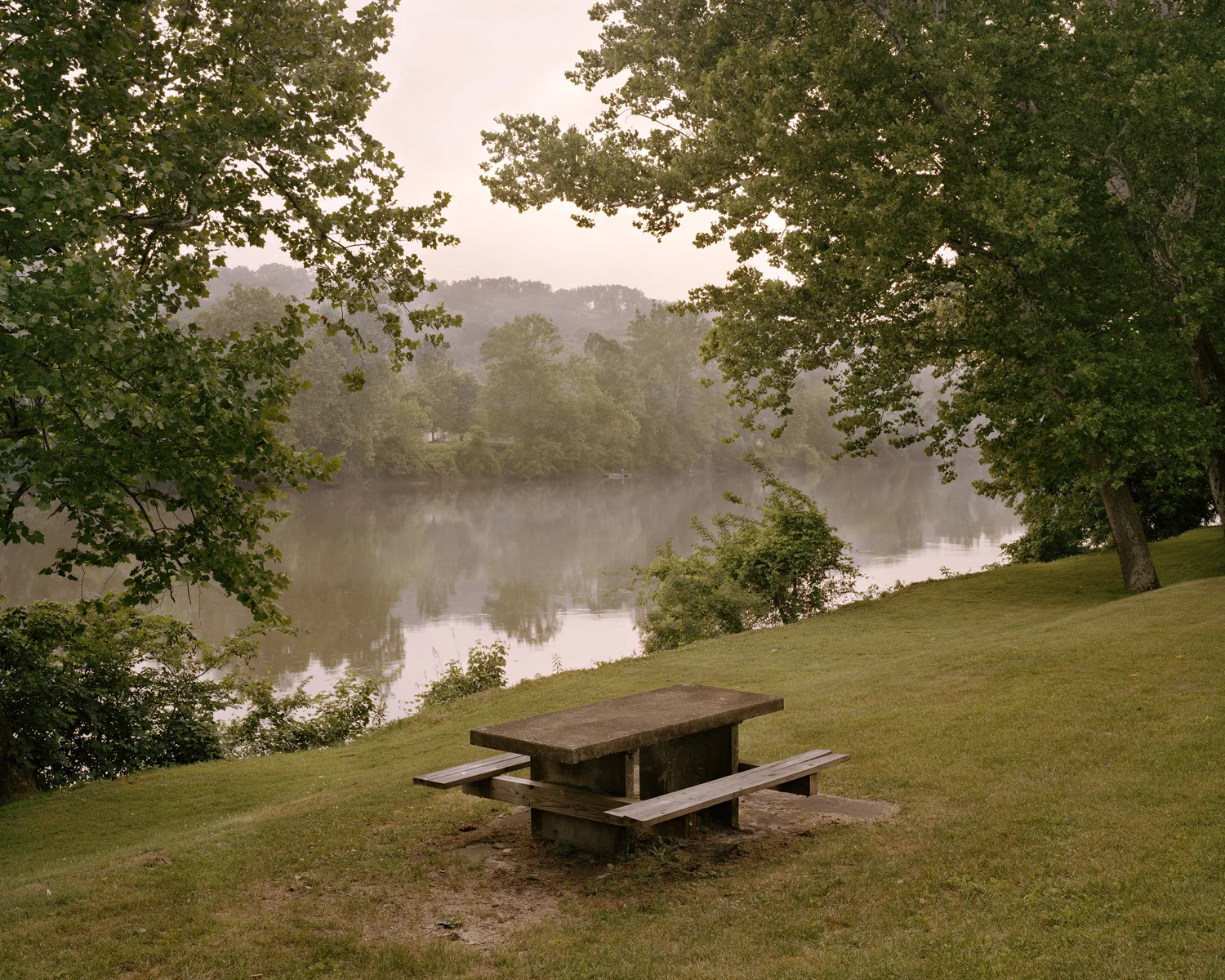
Looking at Appalachia | Michael Sherwin
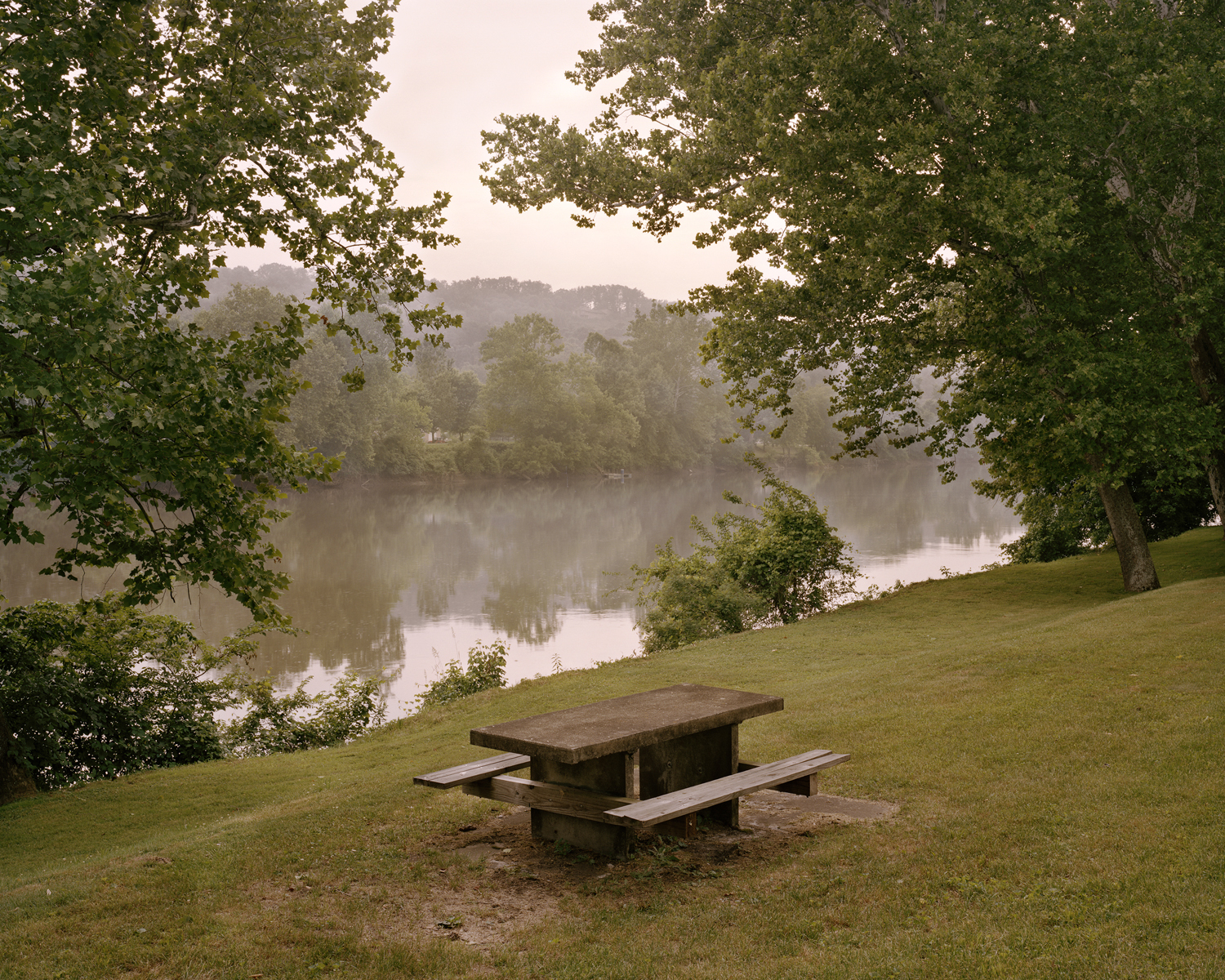
Michael Sherwin is an Associate Professor of Photography and Intermedia in the School of Art and Design at West Virginia University. Using the mediums of photography, video and installation, his work reflects on the experience of observing nature through the lenses of science and popular culture. He has won numerous grants and awards for his work, and has exhibited widely, including recent shows at the Huntington Museum of Art in Huntington, WV, Clay Center for the Arts and Sciences in Charleston, WV, CEPA Gallery in Buffalo, NY, SPACES Gallery in Cleveland, OH, PUNCH Gallery in Seattle, WA and the Center for Emerging Visual Artists in Philadelphia, PA. Sherwin earned a Master of Fine Arts from the University of Oregon in 2004, and a Bachelor of Fine Arts from The Ohio State University in 1999. He has been a member of the faculty at the University of Oregon and Central Washington University. He is also an active and participating member of the Society for Photographic Education and the lead instructor for WVU's Jackson Hole Photography Workshop.
(Editor's note: this is the first Looking at Appalachia post with our overhauled theme, which offers larger photographs. Enjoy the new design and please feel free to share any feedback.)


Roger May: Your current body of work, Vanishing Points, is moving into its fifth year. How have you seen the project evolve since you started?
Michael Sherwin: Initially, I was pretty clinical in my approach. I was making photographs with a very wide angle, attempting to encompass as much of the landscape as possible. I was mostly shooting in places that were designated archaeological sites, and careful to include some evidence of the history in the photograph. As the project progressed into Ohio I felt my approach loosening. I was following the newly established Ancient Ohio Trail, which connects numerous sites via a driving route. Rather than just focusing on the actual sites, I began to acknowledge the journey more and more. I started making photographs that were literally along the road, or of subjects that caught my eye while traveling from one point on the map to another. Many of these newer images are of isolated subjects, or details of a much larger landscape, such as an old stump with shoots growing out of it, a deer blind or prayer hands. I like to think of these as symbols, or metaphors, for the larger conversation. I also like the way these newer images add a fresh narrative element to the series. In turn, the sequencing of images has become really important to me.


RM: I’m particularly drawn to the absence of people in this series. Certainly there are human elements from both past and present generations, but can you tell me about this decision as an element of the series?
MS: I actually made several portraits early on in the project, but nothing I felt strongly about, and not enough of them really to include. Although there are no direct portraits in the series, there are people included at a distance in several of the images, some fishing, some praying and some exploring. You can’t really identify with any of these people; they are merely a part of the larger landscape in which they exist. This was not a deliberate decision. I have always been more comfortable working with landscape as a subject matter and I guess that’s where I focused my energy.


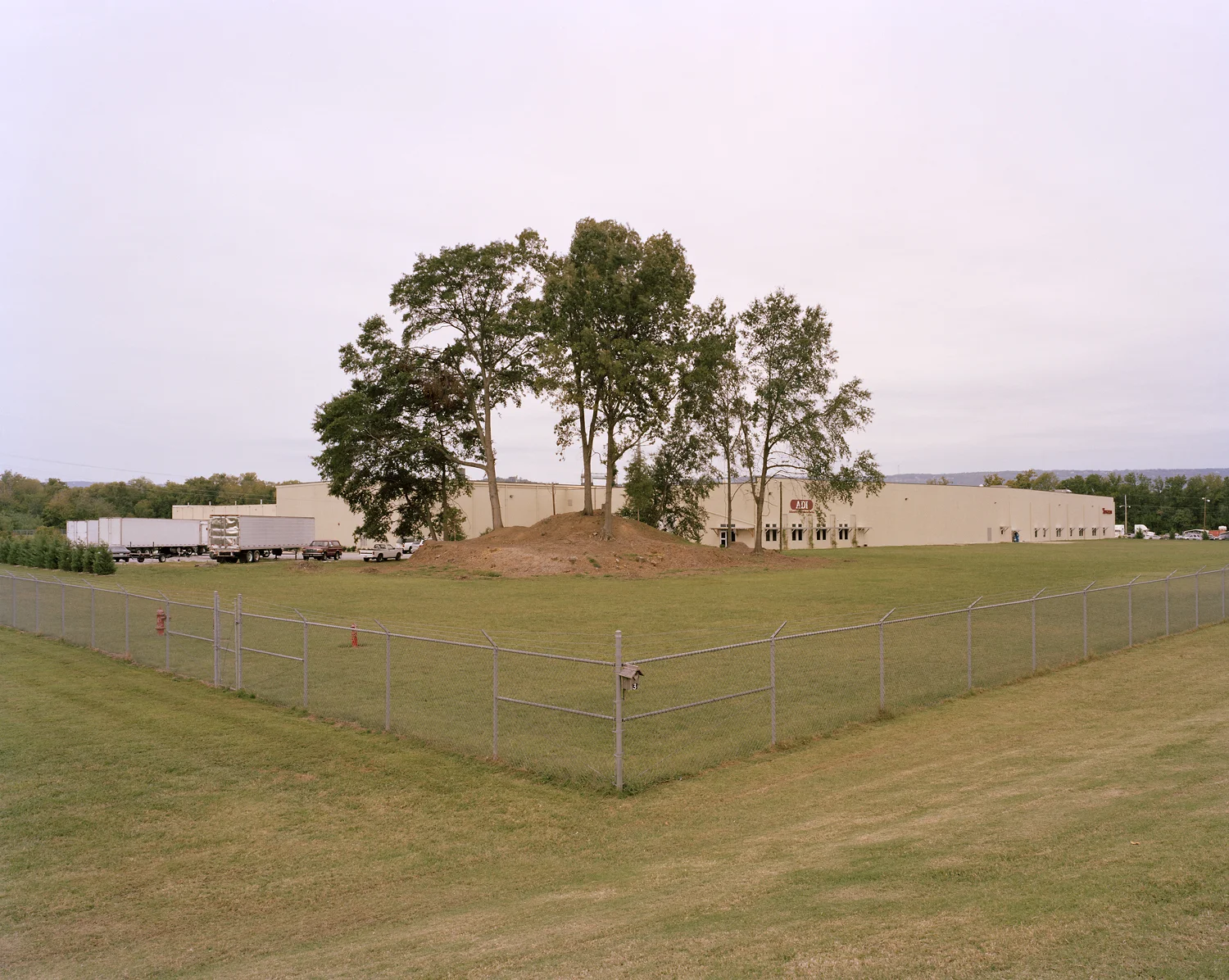
RM: I appreciate how quiet this work is on the surface, but how transformational each individual image becomes when you consider the full weight of Manifest Destiny on Native American population and culture. It struck me that there are many parallels with Manifest Destiny and the extractive industries (mountaintop removal coal mining) in Appalachia, specifically West Virginia. In the name of modernization and American prosperity, people of the region - old and new - suffer the effects of outside industry and influence. Can you talk a little about this?
MS: Progress, in the name of big industry and personal gain, is trumping careful consideration of the historical and cultural significance of the landscape and people of West Virginia and throughout the country. Much like the onset of Manifest Destiny in the 19th century, outside interests in the mineral resources of West Virginia have little to no concern about the quality of life of the people who call it home. I’ve lived all over the country, including nine years in the Northwest, and I’ve never seen a landscape so ravaged and mishandled as West Virginia. This struck me upon moving here in 2007 and even more so as I ventured out to photograph throughout the state. Because of its economic reliance on extractive industries, the state has opened itself up to the worst kind of environmental degradation – mountaintop removal coal mining. Not only does this type of mining have horrendous and irreversible effects on the land, it’s also dispossessing thousands of rural families and destroying communities.
Whether driven by divine right, or money, the products of Manifest Destiny continue to way heavy on our landscape and indigenous cultures. I’ve witnessed this right here in Morgantown, WV, where the population is growing rapidly and unchecked building seems to be happening everywhere in the name of progress. The monstrous Suncrest Towne Center, which inspired the project and was built less than a mile from my house, exists on an ancient Monongahela burial and village site. As an American with Irish-German ancestry I realize I am a product of Manifest Destiny. In a way this series is an attempt to grapple with this legacy and to connect to a previous cultural understanding of the land and spirituality that I more closely identify with.


RM: How important is writing about your work in the editorial process? Can you talk a little about your working process, how you identify locations to make pictures, and how you stay motivated to make this deeply engaging work?
MS: I have kept a journal from the very beginning of this project. The contents include notes about possible locations, itineraries, clippings, contact info, inspirational quotes and musings, and a rambling narrative about my outings. The journal helps me keep all the pieces of the puzzle together, albeit in a somewhat disorganized manner. I often review it to remember a name of a person or place visited or to reread a certain passage. At some point, it might be fun to see the text, or journal, exist in the same space as the images.
It’s a difficult process to identify locations. I do a lot of research online, read books and meet with people to discuss my project. Some of the sites I visit exist in state parks or monuments, which are easy to locate, but many others are intentionally kept from the public. I use Google Earth a lot and make a map of sites to visit with detailed directions before ever leaving the house. Of course, things come up along the journey in talking with people who actually know the landscape. The locals are often the best resource for locations and sites not found on any map. I’ve found that I really enjoy this process of discovery. Much like hiking through a new landscape, or paddling a meandering river, I’m always wondering what’s around the next corner. The project continues to unfold as I progress, encouraging me to keep exploring and sharing my discoveries.


RM: This series deals with many elements, but there is this theme of time that I find intriguing. Reaching back into history can often lead us into uncomfortable territory, yet the beauty of each individual picture seems to lighten those blows. Time is also required to study the pictures, to connect the story of the past to the constructed image we’re looking at when we look at the expanse of the Suncrest Town Center in Morgantown, West Virginia. How do you communicate the importance of time, especially the breadth of time the project addresses?
MS: There’s an unwritten history embedded in the landscape of Appalachia. Layers and strata of time are occasionally unearthed and a story unfolds. I’m really interested in how the land holds secrets and vessels of time unknown. When I visit an ancient site, or designated sacred site, I am very sensitive to this deep sense of time and history. However, nearly everywhere you look evidence of our modern civilization intrudes. There’s a fascinating push and pull between the mysterious past and familiar present at these sites. I feel this duality when I’m working in the field and attempt to translate it in the photographs.
Some of the photographs in the series are more direct and ironic, while others combine the atmosphere of light and time to create a more ephemeral scene. In certain images, the land, with all its mystery and beauty, seems to hold a quiet power in the presence of trivial human artifacts. As permanent as things may appear, our own civilization is subject to the slow grate of time and change. At some point in the distant future our own culture will be defined by the remains we left behind.


RM: As an educator, how do you convey the importance of long-term work to your students? We are inundated with visual imagery these days, yet we aren’t necessarily more visually literate as a culture. How has your experience with long-term projects informed your teaching style and appreciation for similar work?
MS: It’s been really fun and challenging to throw myself into the Vanishing Points project and allow it to evolve over the past several years. This is the first serious long-term project I’ve undertaken and it’s quite different from my previous work, which involved a lot of video, appropriation and experimental installations. At times, it has been difficult for me to accept a project that is so traditional and straightforward in terms of technique. At the same time, however, I’ve rekindled my appreciation for straight photography and discovered a whole bunch of other artists, both current and past, that have similar styles. Many of these artists have spent multiple years, even a decade or more, on a single project, which has been reassuring.
Unfortunately, my students are not given the kind of time I have to focus on a single project. In fact, it’s hard for them to focus on a project for more than one semester. However, when they get to their final semester, I often see a lineage in their content that goes back to their first photographs/projects three years prior. We talk about these early images and ideas and how they relate to what they’re currently working on. In their final semester they are required to create a presentation, which draws on their resources and influences and connects their work and ideas. I remind them that their work will often take on many different appearances throughout their career, but they will eventually see overarching concepts and personal motivations coalesce.

All photographs © Michael Sherwin. All rights reserved.
- Big Bottom Massacre State Memorial, Morgan County, Ohio.
- Conus Mound, Mount Cemetery, Marietta, Ohio.
- Grave Creek Mound, Moundsville, West Virginia.
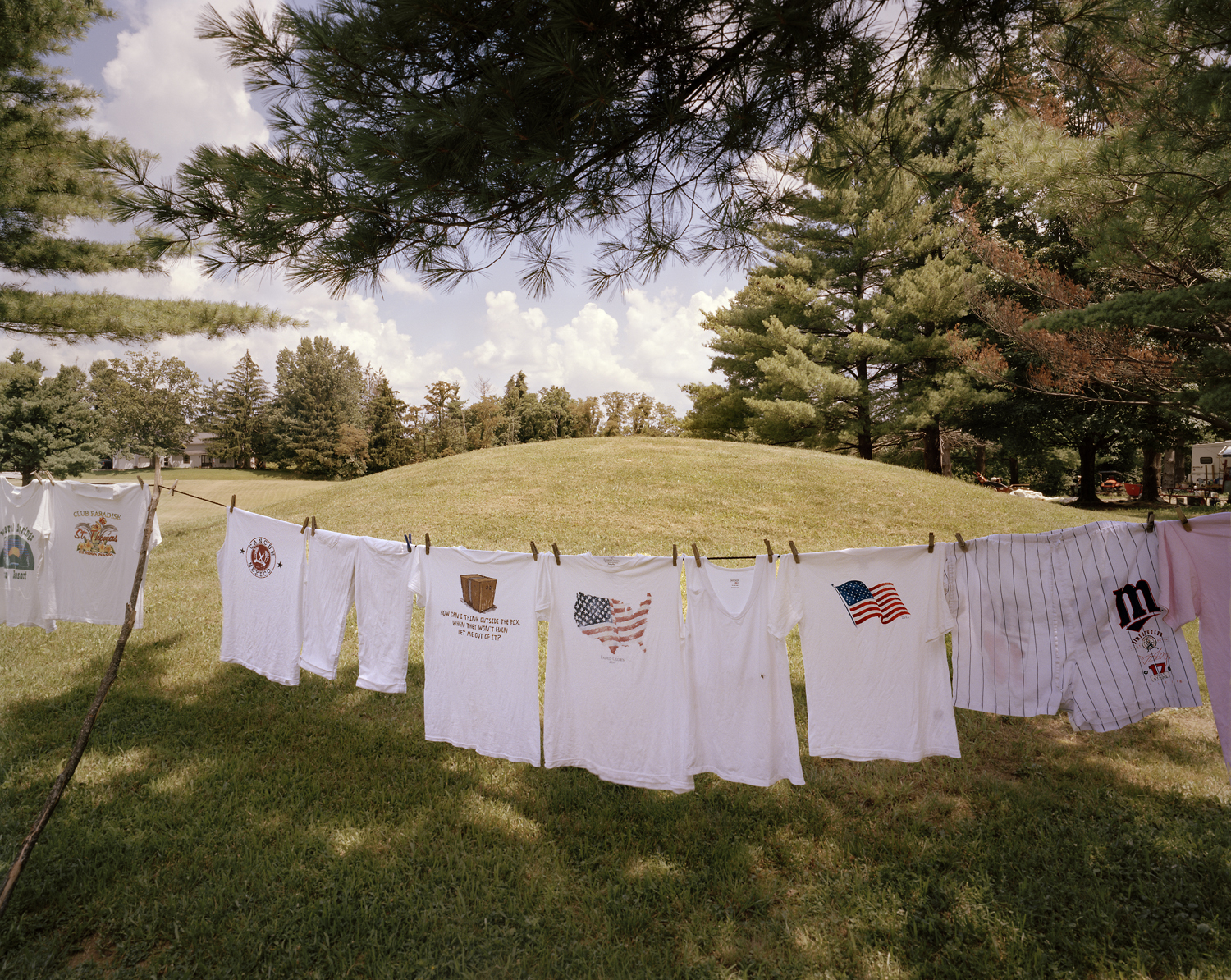
- Laundry, Indian Mound Campground, New Marshfield, Ohio.
- Air Force Museum, Dayton, Ohio.
- Shrum Mound, Columbus, Ohio.
- Suncrest Towne Center, Morgantown, West Virginia.
- Boat Ramp, Greenbottom Wildlife Management Area, West Virginia.
- Factory, Ohio River, Marshall County, West Virginia.
- Chickamunga Mound, Chattanooga, Tennessee.
- Sunrise, Hopewell Culture National Historical Park, Chillicothee, Ohio.
- Dead Fox, James A. Rhodes Appalachian Highway, Vinton County, Ohio.
- View from the Top, Criel Mound, South Charleston, West Virginia.
- Fishing, Muskingum River, Lowell, Ohio.
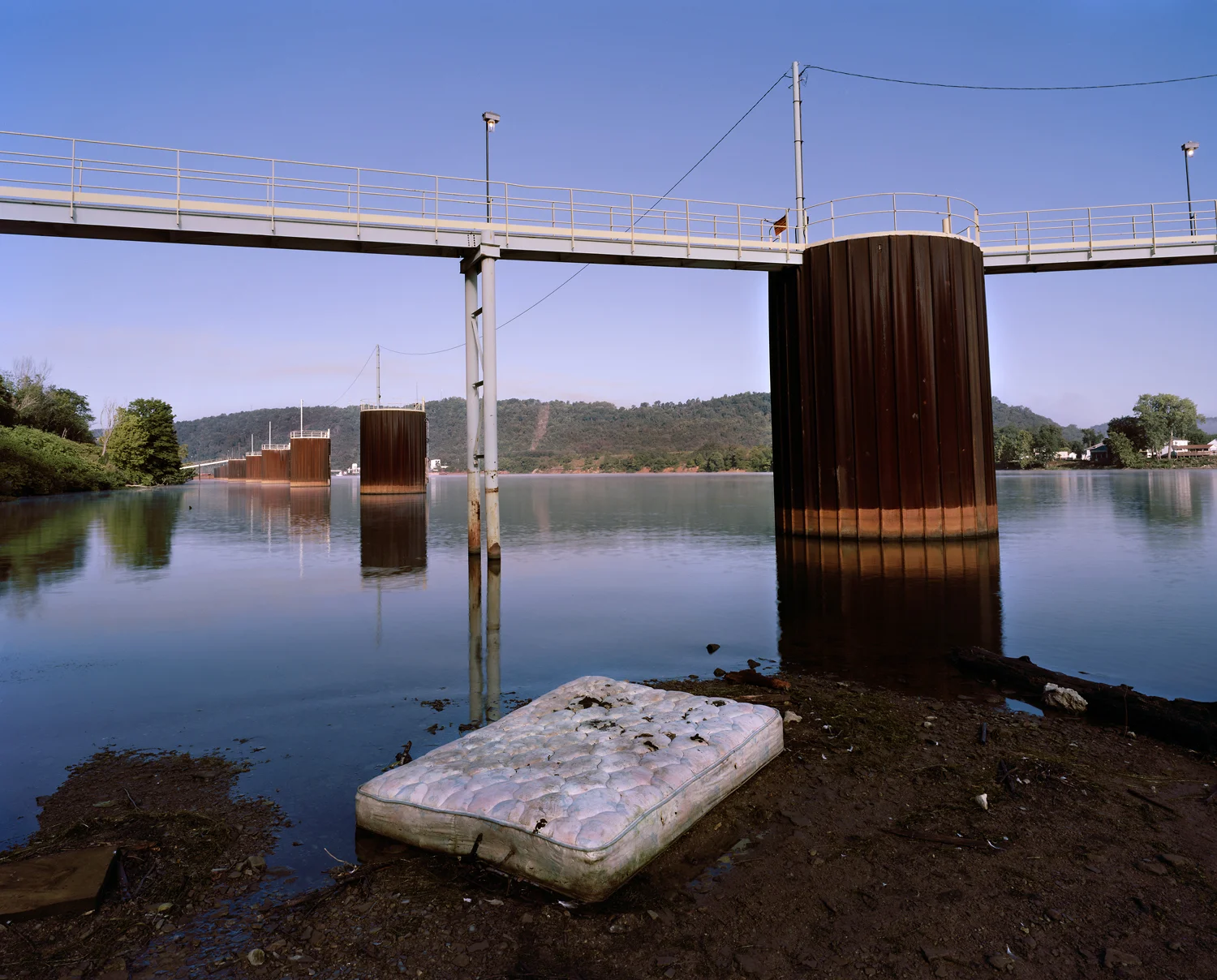
- Mattress, Natrium Plant, New Martinsville, Ohio.
- Miamisburg Mound, Miamisburg, Ohio.
- Mural, Point Pleasant Riverfront Park, Point Pleasant, West Virginia.
- Prayer Hands, Faith Chapel, Vinton County, Ohio.
- Rail Lines, Moundsville, West Virginia.
- Stump, Great Miami River, Hamilton, Ohio.
- Shawnee Overlook, North Bend, Ohio.
- Soybean Field, Buffalo, West Virginia.
Looking at Appalachia | Robert Gumpert
In 1972, while hitchhiking across the United States, Robert Gumpert found himself on the side of the road in Cabin Creek, West Virginia waiting for a ride. During a shift change at the coal mine nearby, seeing a steady stream of miners convinced him that he needed to come back to photograph the area.
Back in Los Angeles in late 1973, his conversation with the National Lawyer’s Guild connected him to Charleston, West Virginia. While there, he learned of an ongoing strike in Harlan County, Kentucky at the Brookside and Highsplint mines. At the same time, Barbara Koppel was making what would later become the well-known, Academy Award-winning documentary Harlan County U.S.A.

Last month, Gumpert was kind enough to participate in a Skype discussion about his experience making pictures in Appalachia as well as share some of his work.

For three months, Gumpert worked and lived in Harlan County photographing the strikes and the impact on the families and communities like Coxton and Evarts. All of this was happening not long after the killing of Canadian filmmaker Hugh O’Connor in neighboring Letcher County, which served as the centerpiece of Elizabeth Barret’s Stranger With a Camera.
Though this was Gumpert’s first major project, he was aware of the power of pictures and how they can be used to perpetuate stereotypes. A few times, Gumpert mentioned that newspaper reporters passing through the area asked for specific types of pictures, which he knew would be used to support an expected narrative about Appalachia. He flatly refused. However, he didn’t refuse to show poverty and hard times, he insisted on not making it the center of the story.
Back in Los Angeles, Gumpert began processing his film, making contact sheets, and selecting images for print. Working with a friend, Rick Fichter, who was a film major at USC, the project was broken down into three parts: the strike, inside the mines, and a family. He printed a show for a local bookstore intending to hang the photographs of the underground mine at approximately 29”, the height of the mine he visited. Realizing that most people wouldn’t make the effort to view the photos in that manner, he opted to mark the length of the wall at 29” to serve as a visual marker for the viewers.
The work he did in Appalachia taught him a lot about exploitation. He sensed the bitterness and anger on the faces of the miners and families as day after day they watched absentee capitalism haul away their futures. This put a face on it for Gumpert. “I had my politics before I got to eastern Kentucky, but there was nothing like seeing it to bring it home for me.”




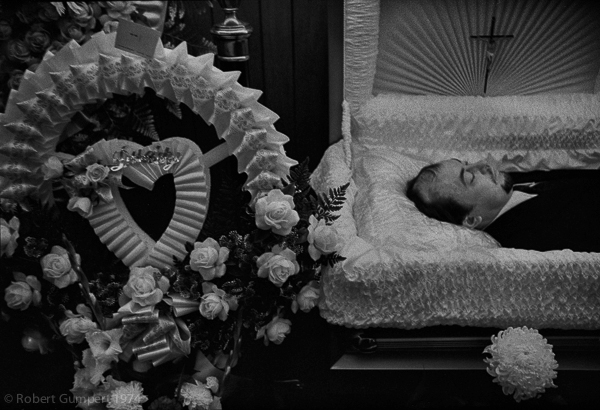


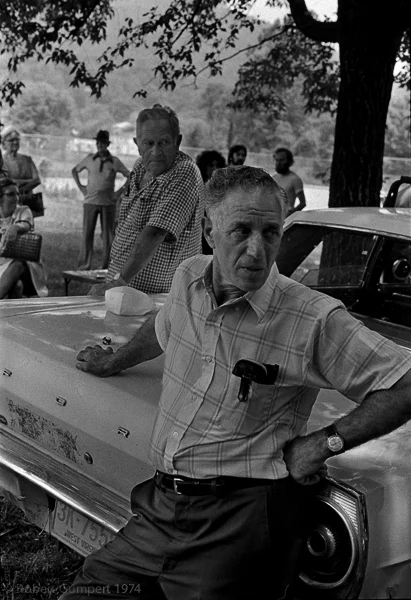


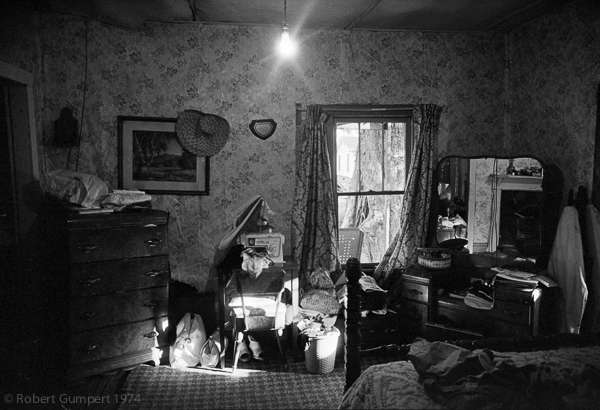


All photographs © Robert Gumpert, 1974 unless otherwise noted. All rights reserved.
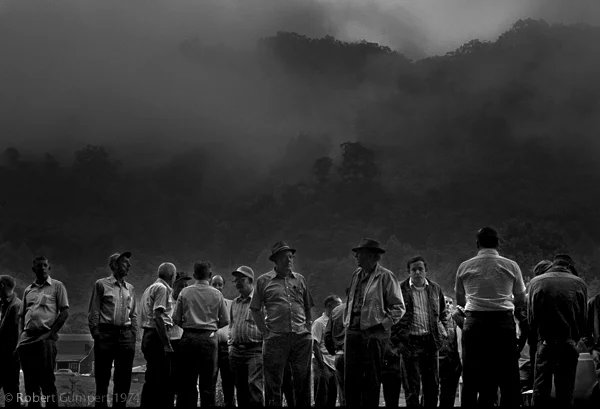
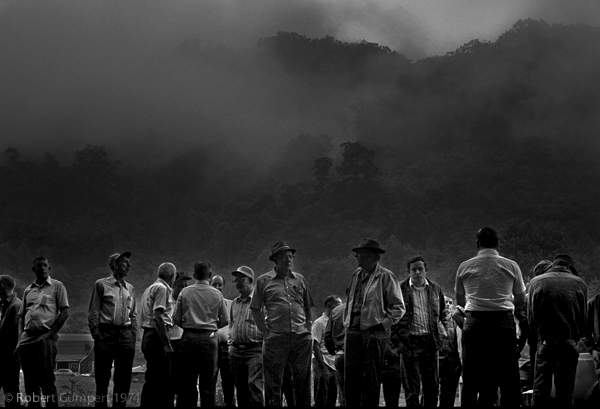
1. Harlan County, Kentucky: Morning on the Highsplint picket line.
2. Screenshot of Skype conversation with Robert Gumpert, 10 July 2014. (Roger May)
3. Harlan County USA directed by Barbara Kopple. (Roger May)
4. Harlan County, Kentucky: Picket line at the Highsplint mine. The governor of Kentucky sent in the state police.
5. Harlan County, Kentucky: Basil Collins miner foreman and leader/manager of the scabs confronts picketers with a 45 in his right pocket.
6. Harlan County, Kentucky: UMWA on a 13-month strike at Brookside mines and on the pick line at Highsplint mine. A meeting of the Brookside women's support group.
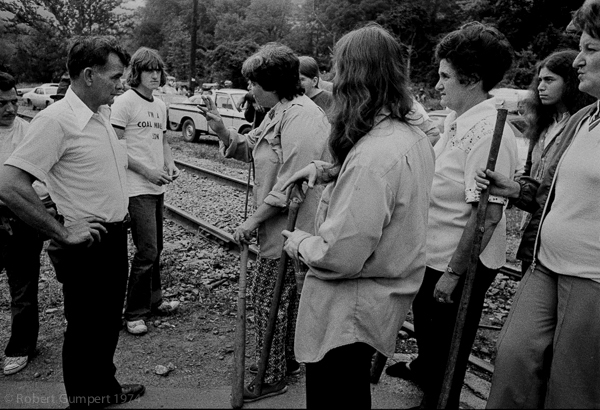
7. Harlan County, Kentucky: UMWA on a 13 month strike at Brookside mines and on the pick line at Highsplint mine. Women of the Brookside women's support group talk with Harlan County sheriff Billy Williams at a roadblock.
8. Harlan County, Kentucky: On the pick line at Highsplint mine.
9. Harlan County, Kentucky: Coal miners meet before heading to the picket line. Many local, small businesses supported the UMWA, the miners, and the strike.
10. Harlan County; Kentucky: Picket line at the Highsplint mine. The Kentucky governor sent in the state police and they proceeded to keep the strikers from blocking the scabs from working.
11. Harlan County, Kentucky: Scabs and gun thugs led by Basil Collins confront strikers on the pick line at Highsplint mine.
12. Coxton, Kentucky kitchen.
13. Harlan County, Kentucky: Highsplint picketers move to another mine.
14. Harlan County, Kentucky: Funeral of Lawrence Jones, killed by a scab during a confrontation away from the picket line.
15. Harlan County, Kentucky: Funeral of Lawrence Jones, killed by a scab during a confrontation away from the picket line.
16. Harlan County, Kentucky: Funeral of Lawrence Jones, killed by a scab during a confrontation away from the picket line.
17. Harlan County, Kentucky: The wife and daughter of Lawrence Jones at his funeral. Mr. Jones was killed by a scab during a confrontation away from the picket line.
18. Retired miner at a Charleston, West Virginia rally for Harlan County, Kentucky strikers.
19. Charleston, West Virginia. Meeting of coal miners called by the United Mine Workers of America (UMWA).
20. Coal mining family at home just outside of Everts, Harlan County, Kentucky. After a 13-month strike, they won the right to have an election.
21. Harlan County, Kentucky: striking father Samson Blevins and his kids at home near Everts, Harlan County, Kentucky.
22. Coal mining family at home just outside of Everts, Harlan County, Kentucky. After a 13-month strike they won the right to have an election.
23. Harlan County, Kentucky: striking father Samson Blevins and child at home near Everts.
24. Coxton, Kentucky. Old miner with black lung and the breathing equipment he needs.
25. Harlan County, Kentucky: striking father Samson Blevins at home near Everts.
26. The Blevins family having a meal together at home. Samson Blevins, a coal truck driver, was on strike at the Highsplint mine.
27. Harlan County, Kentucky: Father and son in the Everts, Kentucky apartment above the Blevins family.
28. Harlan County, Kentucky: The Coxton, Kentucky home of a coal miner.
29. Harlan County, Kentucky: Family living upstairs from the Blevins, Everts, Kentucky.
30. 1974: Coal mining family at home just outside of Everts, Kentucky.
31. Harlan County, Kentucky: Coal mine, not on strike and not union, mining 29-inch coal seam.
32. Harlan County, Kentucky: Coal mine, not on strike and not union, mining 29-inch coal seam.
33. Brookside coal camp, early morning with the mine in the background. Harlan County, Kentucky.
34. Harlan County, Kentucky: Victory photo after the miners of the Highsplint mine voted to join the UMWA.
Looking at Appalachia | 50 Years After the War on Poverty


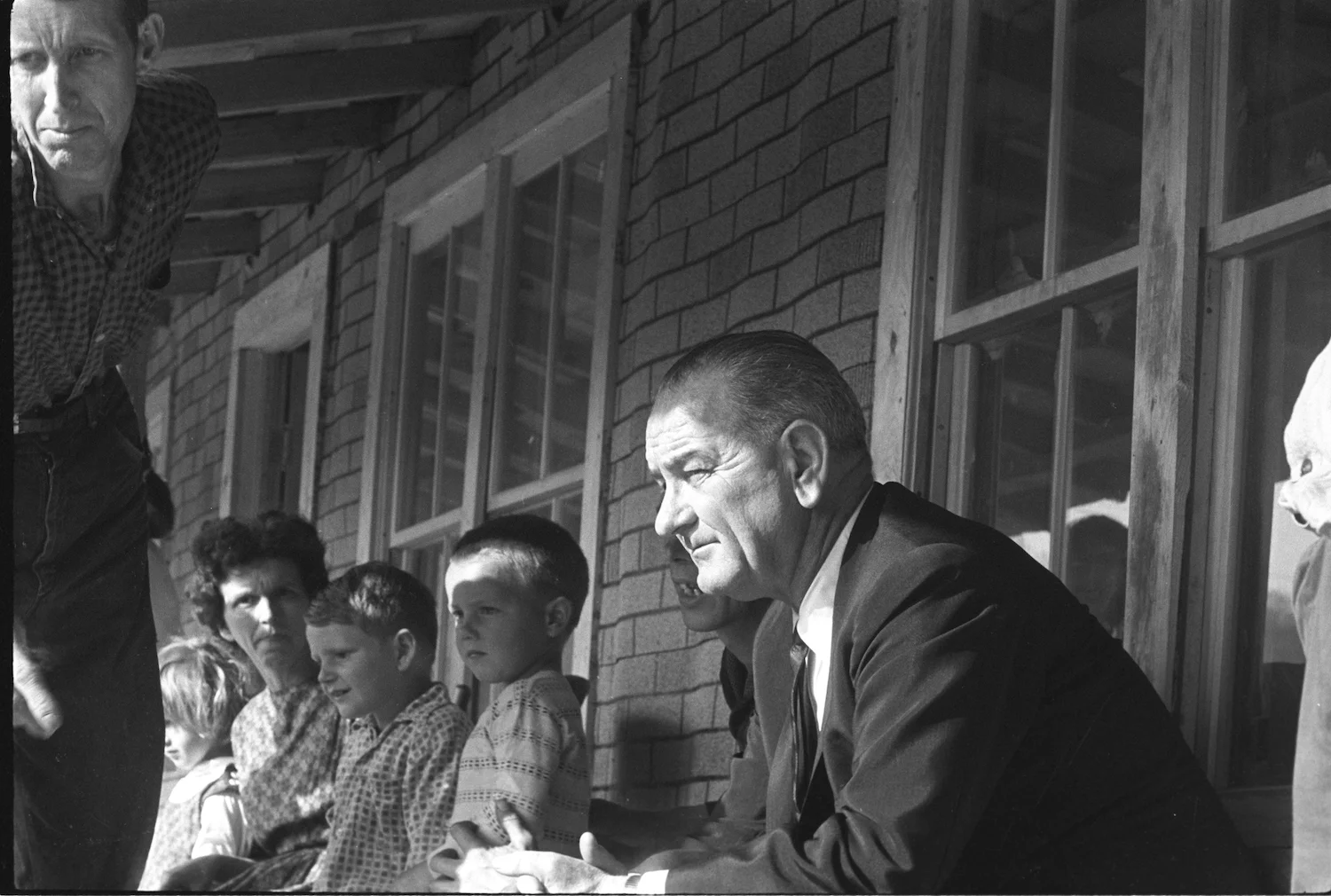
Overview In 1964, President Lyndon Johnson declared unconditional war on poverty in the United States; and nowhere was this war more photographed than Appalachia. A quick Google image search of “war on poverty” will yield several photographs of President Johnson on the porch of the Fletcher family home in Inez, Kentucky.
Many of the War on Poverty photographs, whether intentional or not, became a visual definition of Appalachia. These images have often drawn from the poorest areas and people to gain support for the intended cause, but unjustly came to represent the entirety of the region while simultaneously perpetuating stereotypes.
In an attempt to explore the diversity of Appalachia and establish a visual counter point, this project will look at Appalachia fifty years after the declaration of the War on Poverty. Drawing from a diverse population of photographers within the region, this new crowdsourced image archive will serve as a reference that is defined by its people as opposed to political legislation.
This project is evolving and I value your input and feedback. Please stay tuned for updates.
Submission Guidelines Submissions are not limited by style, however:
1. All work submitted must be the copyright of the photographer.
2. Photographs must be made in calendar year 2014.
3. Photographs must be made in one of the 13 state’s regions the Appalachian Regional Commission defines as Appalachian (here).
4. Submissions are open through 31 December 2014.
Please provide as much information as possible about each photograph, but at minimum the date, city, county, and state. Submissions must be in .JPG format, sized at 1500 pixels wide, 72ppi. File names must include your last name and the city and state where the photograph was made (example: maychattaorywv2.jpg). It is imperative that you follow these submission guidelines, otherwise the work will not be considered. Please include a link to your website.
Photographs will be indexed by the state in which they were made. You are not limited to submitting work about one state, however please be aware of the ARC map boundaries. To be clear, this project is not seeking poverty pictures. Will poverty be included? Yes. Poverty exists to be sure, however the purpose of this project extends far beyond that.
(Note: Please consider that by submitting images to this archive, you’re agreeing to the possibility of their inclusion in a group exhibit, catalog, book, etc. All photographers will be contacted to discuss details of any and all ideas for exhibition. All photographs remain the copyright of their creator.)
Email submissions to rogerdalemay@gmail.com.
Defining Appalachia For the purpose of this project, Appalachia (map) is defined by the list of counties in each of the following states:
Alabama: Bibb, Blount, Calhoun, Chambers, Cherokee, Chilton, Clay, Cleburne, Colbert, Coosa, Cullman, De Kalb, Elmore, Etowah, Fayette, Franklin, Hale, Jackson, Jefferson, Lamar, Lauderdale, Lawrence, Limestone, Macon, Madison, Marion, Marshall, Morgan, Pickens, Randolph, St. Clair, Shelby, Talladega, Tallapoosa, Tuscaloosa, Walker, and Winston.
Georgia: Banks, Barrow, Bartow, Carroll, Catoosa, Chattooga, Cherokee, Dade, Dawson, Douglas, Elbert, Fannin, Floyd, Forsyth, Franklin, Gilmer, Gordon, Gwinnett, Habersham, Hall, Haralson, Hart, Heard, Jackson, Lumpkin, Madison, Murray, Paulding, Pickens, Polk, Rabun, Stephens, Towns, Union, Walker, White, and Whitfield.
Kentucky: Adair, Bath, Bell, Boyd, Breathitt, Carter, Casey, Clark, Clay, Clinton, Cumberland, Edmonson, Elliott, Estill, Fleming, Floyd, Garrard, Green, Greenup, Harlan, Hart, Jackson, Johnson, Knott, Knox, Laurel, Lawrence, Lee, Leslie, Letcher, Lewis, Lincoln, McCreary, Madison, Magoffin, Martin, Menifee, Metcalfe, Monroe, Montgomery, Morgan, Nicholas, Owsley, Perry, Pike, Powell, Pulaski, Robertson, Rockcastle, Rowan, Russell, Wayne, Whitley, and Wolfe.
Maryland: Allegany, Garrett, and Washington.
Mississippi: Alcorn, Benton, Calhoun, Chickasaw, Choctaw, Clay, Itawamba, Kemper, Lee, Lowndes, Marshall, Monroe, Montgomery, Noxubee, Oktibbeha, Panola, Pontotoc, Prentiss, Tippah, Tishomingo, Union, Webster, Winston, and Yalobusha.
New York: Allegany, Broome, Cattaraugus, Chautauqua, Chemung, Chenango, Cortland, Delaware, Otsego, Schoharie, Schuyler, Steuben, Tioga, and Tompkins.
North Carolina: Alexander, Alleghany, Ashe, Avery, Buncombe, Burke, Caldwell, Cherokee, Clay, Davie, Forsyth, Graham, Haywood, Henderson, Jackson, McDowell, Macon, Madison, Mitchell, Polk, Rutherford, Stokes, Surry, Swain, Transylvania, Watauga, Wilkes, Yadkin, and Yancey.
Ohio: Adams, Ashtabula, Athens, Belmont, Brown, Carroll, Clermont, Columbiana, Coshocton, Gallia, Guernsey, Harrison, Highland, Hocking, Holmes, Jackson, Jefferson, Lawrence, Mahoning, Meigs, Monroe, Morgan, Muskingum, Noble, Perry, Pike, Ross, Scioto, Trumbull, Tuscarawas, Vinton, and Washington.
Pennsylvania: Allegheny, Armstrong, Beaver, Bedford, Blair, Bradford, Butler, Cambria, Cameron, Carbon, Centre, Clarion, Clearfield, Clinton, Columbia, Crawford, Elk, Erie, Fayette, Forest, Fulton, Greene, Huntingdon, Indiana, Jefferson, Juniata, Lackawanna, Lawrence, Luzerne, Lycoming, McKean, Mercer, Mifflin, Monroe, Montour, Northumberland, Perry, Pike, Potter, Schuylkill, Snyder, Somerset, Sullivan, Susquehanna, Tioga, Union, Venango, Warren, Washington, Wayne, Westmoreland, and Wyoming.
South Carolina: Anderson, Cherokee, Greenville, Oconee, Pickens, and Spartanburg.
Tennessee: Anderson, Bledsoe, Blount, Bradley, Campbell, Cannon, Carter, Claiborne, Clay, Cocke, Coffee, Cumberland, De Kalb, Fentress, Franklin, Grainger, Greene, Grundy, Hamblen, Hamilton, Hancock, Hawkins, Jackson, Jefferson, Johnson, Knox, Lawrence, Lewis, Loudon, McMinn, Macon, Marion, Meigs, Monroe, Morgan, Overton, Pickett, Polk, Putnam, Rhea, Roane, Scott, Sequatchie, Sevier, Smith, Sullivan, Unicoi, Union, Van Buren, Warren, Washington, and White.
Virginia: Alleghany, Bath, Bland, Botetourt, Buchanan, Carroll, Craig, Dickenson, Floyd, Giles, Grayson, Henry, Highland, Lee, Montgomery, Patrick, Pulaski, Rockbridge, Russell, Scott, Smyth, Tazewell, Washington, Wise, and Wythe.
The following independent cities in Virginia are also within the Appalachian Region: Bristol, Buena Vista, Covington, Galax, Lexington, Martinsville, Norton, and Radford.
West Virginia: All counties: Barbour, Berkeley, Boone, Braxton, Brooke, Cabell, Calhoun, Clay, Doddridge, Fayette, Gilmer, Grant, Greenbrier, Hampshire, Hancock, Hardy, Harrison, Jackson, Jefferson, Kanawha, Lewis, Lincoln, Logan, Marion, Marshall, Mason, McDowell, Mercer, Mineral, Mingo, Monongalia, Monroe, Morgan, Nicholas, Ohio, Pendleton, Pleasants, Pocahontas, Preston, Putnam, Raleigh, Randolph, Ritchie, Roane, Summers, Taylor, Tucker, Tyler, Upshur, Wayne, Webster, Wetzel, Wirt, Wood, and Wyoming.
(Map source: Appalachian Regional Commission | www.arc.gov)

(President Lyndon B. Johnson visit to Tom Fletcher residence during Poverty Tour of Appalachia. Serial Number: 215-21-WH64. Date: 04/24/1964. Credit: LBJ Library photo by Cecil Stoughton.)
Looking at Appalachia | Susan May Tell
 SEEN AND FELT: Appalachia, 2012
Having grown up during the years when the United States of America was a manufacturing giant, it was important for me to reconcile those early memories with the reality of the present day--to see what this region, known to have fallen on hard times, looks like now.
This is what compelled me during the summer of 2012 to drive through rural Appalachia and the Rust Belt: parts of West Virginia, Pennsylvania and Ohio. I stayed in campgrounds; slept in the back seat of my 90's rust bucket.
The trip began in the small Allegheny River town of Natrona in Western Pennsylvania and ended along the Ohio River in the even smaller mill town of Mingo Junction, Ohio. This 65-mile distance — according to a map — took 4,000 miles to cover. There was some crisscrossing back and forth as I followed suggestions of local folks met along the way who recommended places that evoked a perceptible connection between the past and present and which they believed important for an outsider to see. Each encounter was detailed in the journal I kept during the trip.
With Tri-X black-and-white film in my Leica rangefinder camera, I walked around the huge shuttered steel mills, along train tracks and through deserted downtowns with ghost-like streets that had once been thriving.
I didn't approach this project as a photojournalist, choosing instead to photograph spontaneously, to allow myself to be seduced by a scene’s visual aspects and its impact on my gut.
Personal work has always been more about the journey and less the destination. It’s about discovery, needing only to press the shutter at moments when I’m moved by what I’m seeing. In literary terms, it is about creating an “objective correlative” between the inner and outer, the seen and felt.
My work is known for its very formal compositions: lines, angles, dividing what is within the frame. It is known equally for its powerful emotions: feelings of isolation and melancholy. Taken together, these seemingly disparate elements create photographs that are direct yet poetic, mysterious, quiet and understated.
As the journey was nearing its end, I couldn't help but think about the places seen and photographed: towns, main streets, mills, and the ever-present utility wires and clouds. The gradual and steady accumulation of having connected with these "things" informed my ideas about present-day Appalachia. The trip increasingly felt like a 6-week eulogy to what no longer existed and echoed what poet William Carlos Williams' believed: "no ideas but in things!"
More of Susan May Tell's work can be seen here.

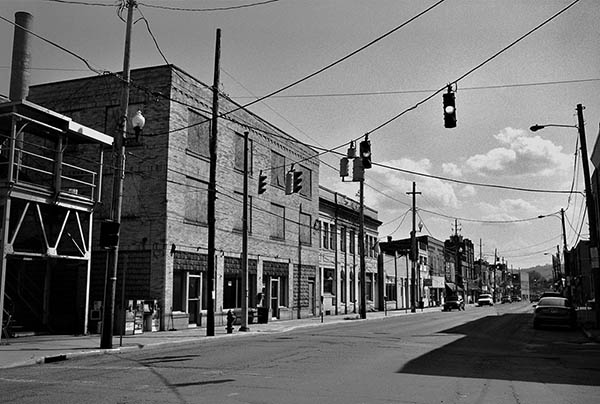
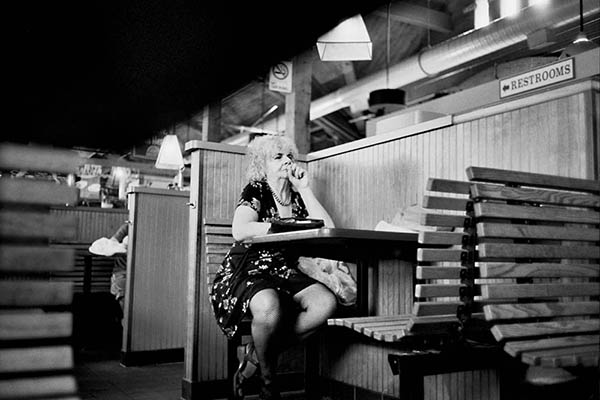
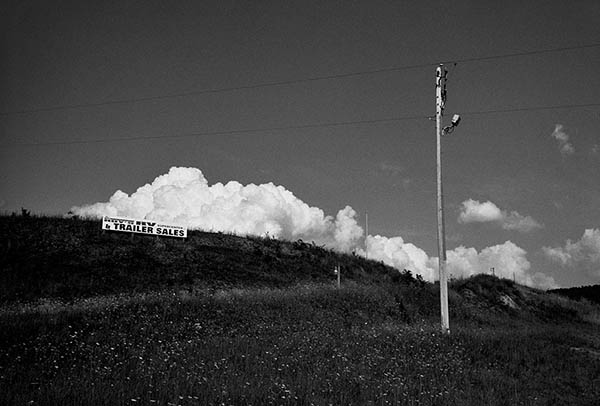
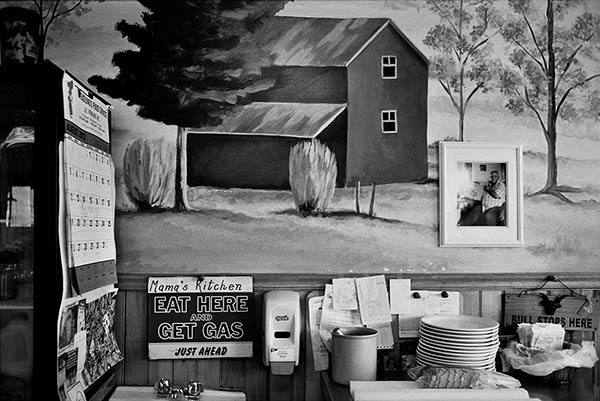
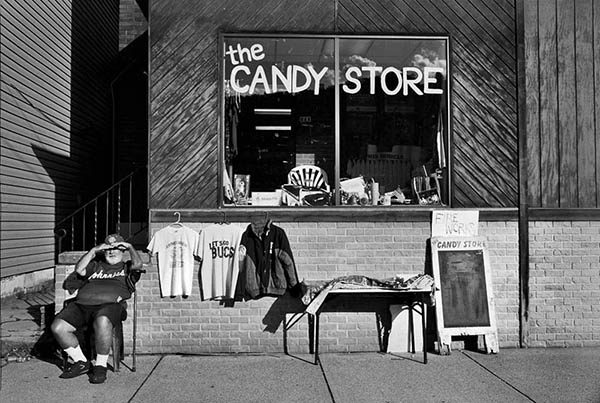

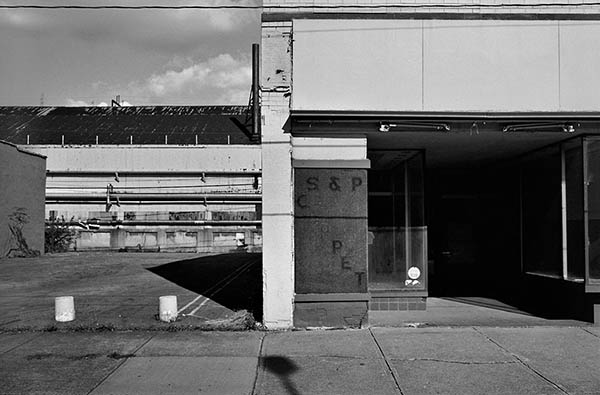
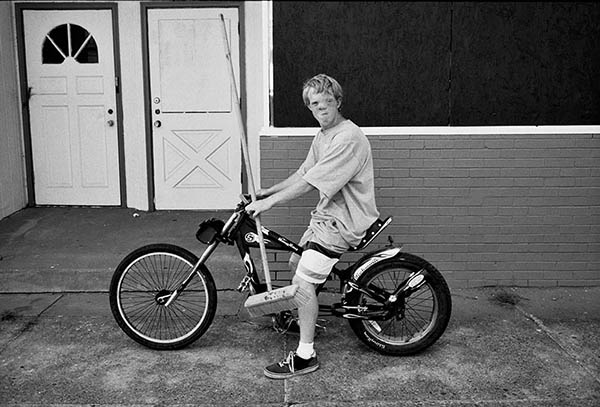


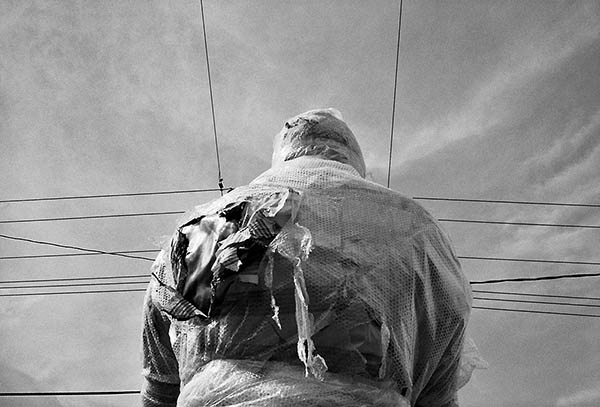

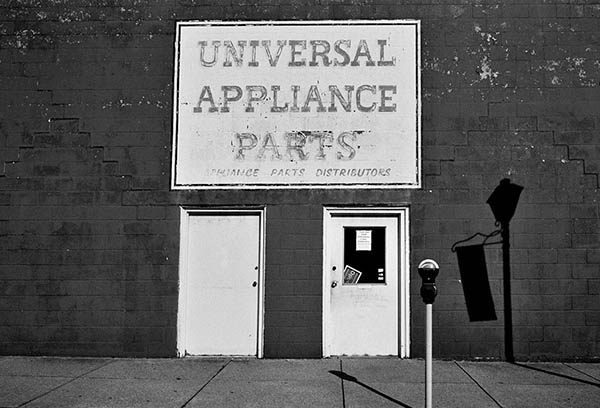
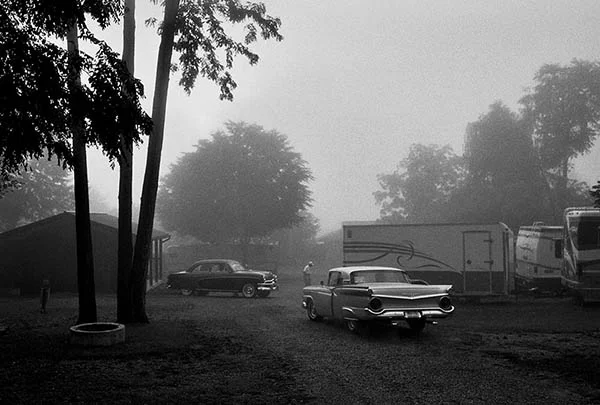
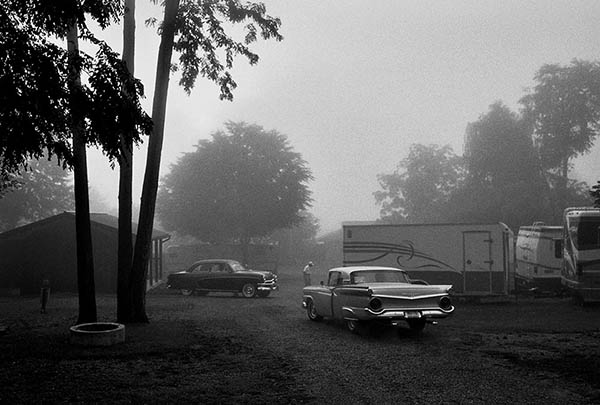
All photographs and essay “SEEN AND FELT: Appalachia, 2012” © Susan May Tell. All Rights Reserved. 1. Appalachian Mist, Altoona Pennsylvania, 2012 2. Weirton Steel Mill, Weirton, West Virginia, 2012 3. Main Street, Mingo Junction, Ohio, 2012 4. Time Out, Wheeling, West Virginia, 2012 5. Replica, Elkins, West Virginia, 2012 6. Mama's Kitchen, Elkins, West Virginia, 2012 7. The Candy Store, Johnstown, Pennsylvania, 2012 8. Spirit of Brownton, Brownton, West Virginia, 2012 9. S & P Carpet, Mingo Junction, Ohio, 2012 10. Odd-job Man, Mingo Junction, Ohio, 2012 11. Steel Mill Memories, Steubenville, Ohio, 2012 12. Wilkinsburg Reflected, Wilkinsburg, Pennsylvania, 2012 13. Appalachia Crossroads, Altoona, Pennsylvania, 2012 14. Union Local Flag, Belmont, Ohio, 2012 15. Universal Appliance Parts, Wheeling, West Virginia, 2012