The Patch: Connecting the FSA Photographs of Wolcott and Shahn

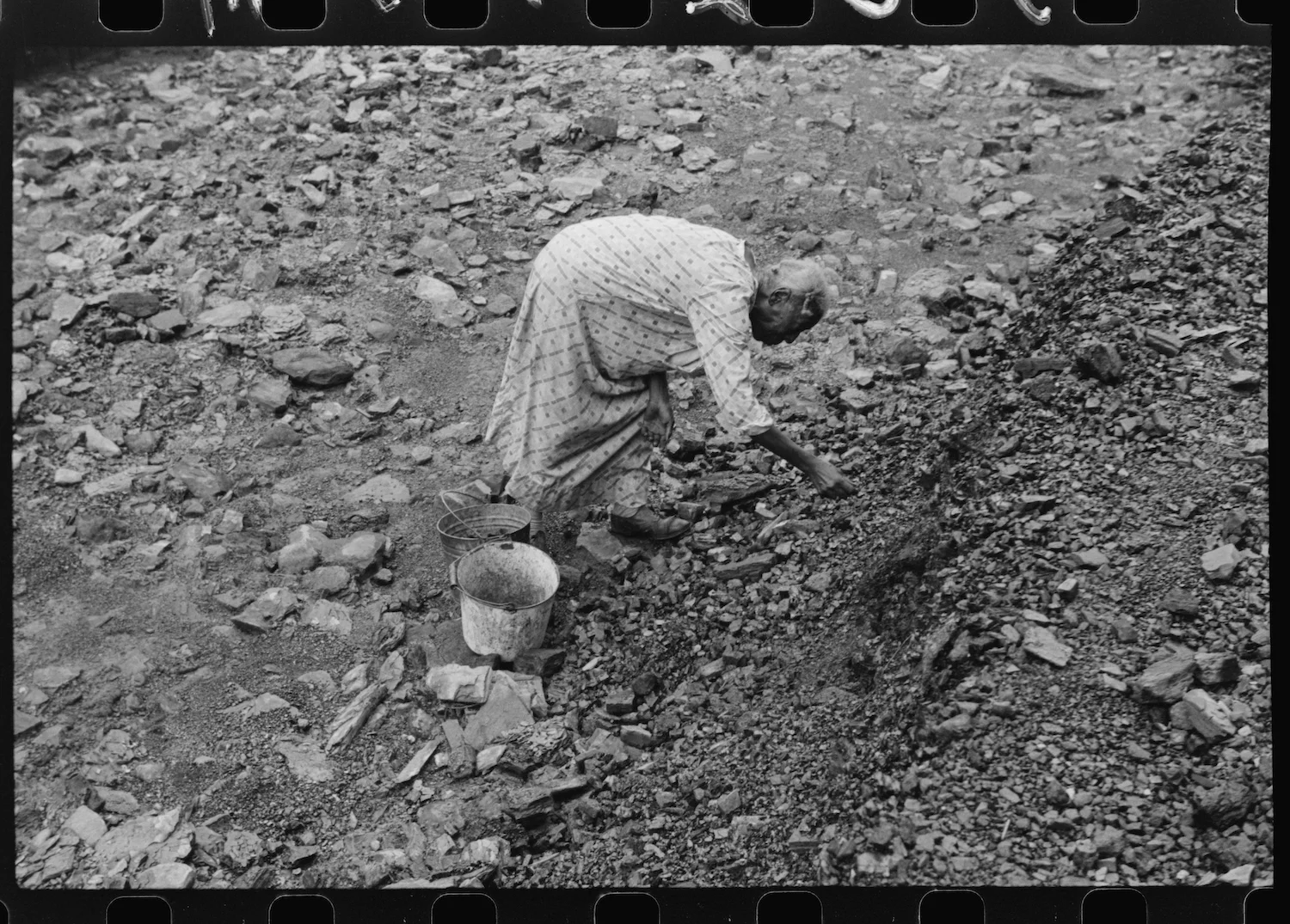
Negro woman picking up coal from old slate heaps in mining community. The "Patch," Cassville, West Virginia. Marion Post Wolcott, September 1938, Farm Security Administration - Office of War Information Photograph Collection (Library of Congress).
When I look at this photograph, I try to make a mental list of all the filters I might be applying to it, whether intentional or not, and the ways of seeing that undoubtedly influence my perspective. For example, I am a mid-forties white male studying a photograph of an elderly Black woman. There is no shortage of collections of photographs – or writings on such - by white men about Black bodies, about women’s bodies. Though this is not the primary focus of why I’m interested in this photograph, I must be aware that it affects how I see the picture. I am also aware of my place of origin, both as a person and a photographer, and how those are inextricably related to both coal and to West Virginia. I am also a student of historical photographs from the region, so I likely spend more time studying composition, location, time period, and the photographer who made the picture. I also consider how or if the subject matter of the photograph has changed over time, whether a particular building might still be standing, what a deforested mountainside might now look like some decades later, and so on.
At first glance, this photograph seems otherworldly, perhaps I can convince myself that if I squint just so, I can picture an astronaut on the moon bending down to collect a sample to study back on earth. Instead, I am left with a reminder that for as long as coal has been mined in these hills, we have been offered only the scraps that remain from toiling underground. That which has been thrown out, thrown away, discarded as no good and of no use, this is where we find ourselves.
I know that Marion Post Wolcott was around 28 years old when she made this photograph. She made this picture during the first year Roy Stryker hired her as the first full time woman photographer of the FSA (Dorothea Lange had been working since 1935, but part time). This picture was likely made on her first assignment and her visit to West Virginia. Stryker was known to punch holes in photographs he deemed not fit to print, which you can see below as two of the five images Wolcott made of the woman bear evidence of Stryker’s hole punch.

The series of five photographs made by Marion Post Wolcott of the woman picking coal from a slate dump in West Virginia in September 1938. Note the middle two images, which bear the evidence of Roy Stryker’s hole punch.
By my best guess, I reckon this woman to be in her 80’s. For argument sake, let’s say 80. This picture was made in September 1938, which would mean she was born around 1860. Was she born a slave? What was her childhood like during the Civil War? We can never know for certain, but suffice it to say, this woman had seen many things through the course of her life at the making of this series of photographs in Monongalia County, West Virginia.
Aesthetically, this photograph is hauntingly beautiful. Black and white photography still dominated most picture making at the time (Kodachrome had been introduced three years prior in 1935), but I can’t imagine this photograph much different as a color image. The entire frame, from corner to corner, is composed of a pallet of blacks, grays, and whites. The perforations (sprocket holes) visible at the top and bottom of the frame indicate a 35mm film camera, which by this time had been used widely by the public for two decades. If I had to guess, I’d say she was using a Leica.
While researching other FSA-era photographs of West Virginia, I noticed that Ben Shahn also made pictures in Cassville a few years earlier. One picture in particular stood out to me. It showed several miners’ shacks with crudely made outhouses perched on the hill behind them. Then, I noticed the pattern of the slate dump located behind the houses to the right of the frame. After comparing Wolcott’s and Shahn’s photographs, I’m convinced they were not only from the same coal camp, but damn near the same location.
I am fascinated by the FSA photographs of West Virginia and the coal-producing areas of Appalachia. There is so much rich history contained in them seemingly waiting for us to visit them, spend time with them, learn from them, and hopefully sometimes connect with them.

The Patch, a shanty town at Cassville, Scotts Run, West Virginia. Ben Shahn, October 1935, Farm Security Administration - Office of War Information Photograph Collection (Library of Congress).
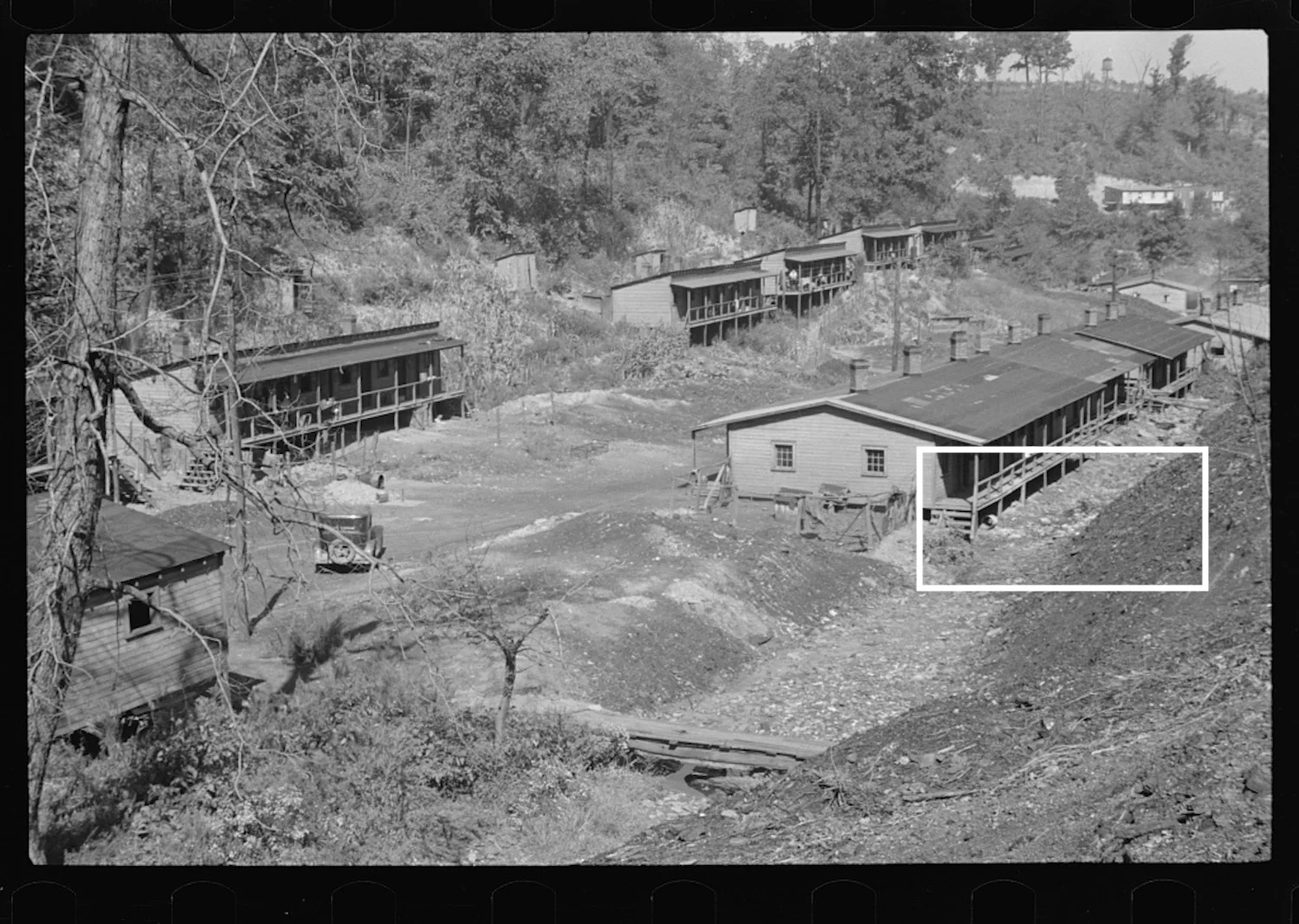
Area where I believe Marion Post Wolcott made her picture of the woman collecting coal in 1938.

Area indicating what I believe to be the shadow of a porch using Ben Shahn’s 1935 photograph as reference.

Composite of Ben Shahn’s 1935 photograph (cropped for detail) from Cassville and Marion Post Wolcott’s 1938 photograph (inset) from Cassville showing a woman picking coal from a slate dump. The composite is not exact, but I believe points to this being the same location.
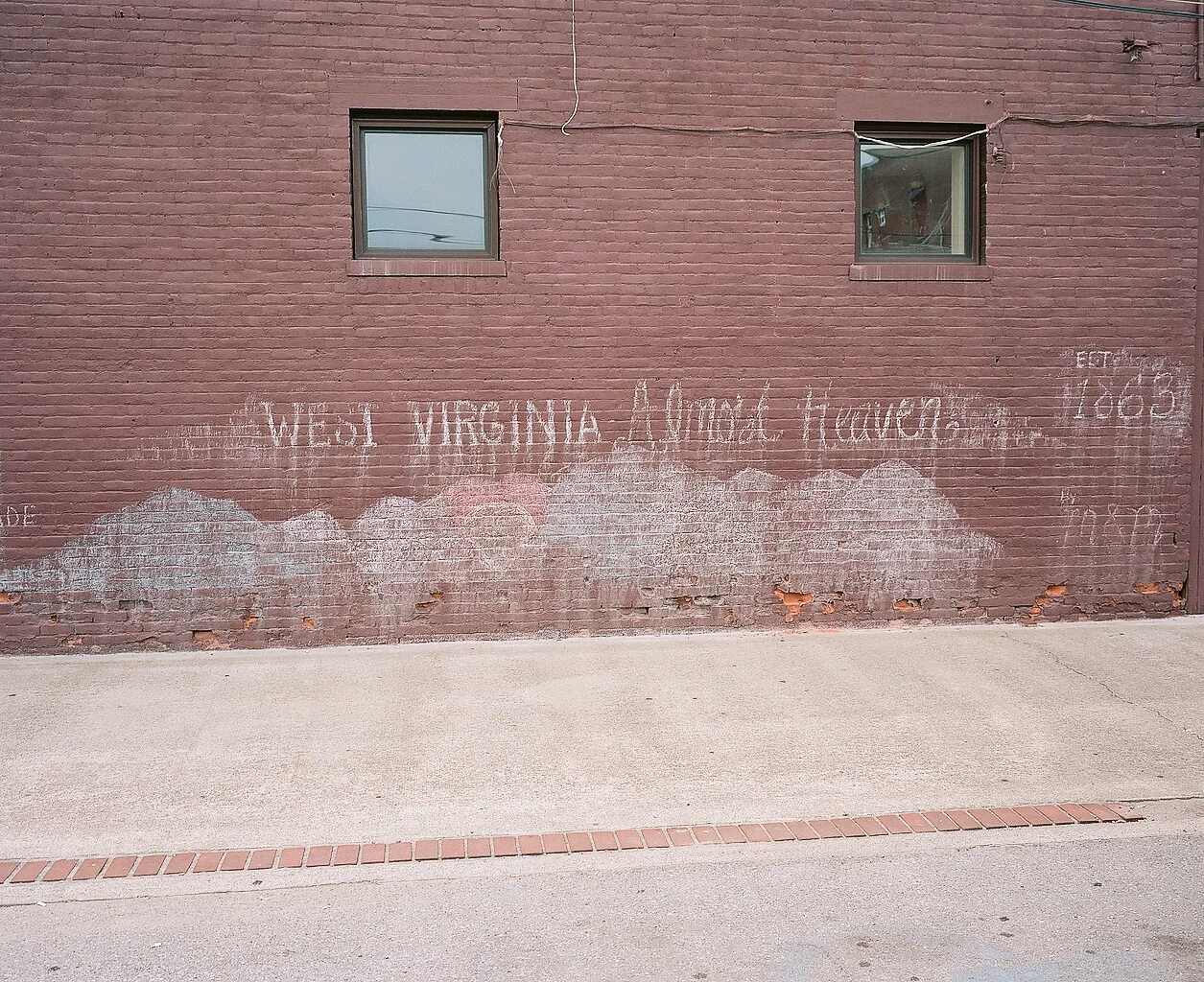
Not an Almost Heaven West Virginia
We tell ourselves the stories we need to hear, need to believe to get by. But I’m tired of getting by. We say Almost Heaven while so many live in downright hell.
They say, “Why don’t those people just move away and get jobs somewhere else?” They say, “Pull yourself up by your bootstraps.” Well, have you ever considered moving away from the only place you’ve ever known, the land that is woven into your DNA? Have you been able to reach the bootstrap attached to the boot on your neck? The boot that tells you if you want to make something of yourself you have to go somewhere else to do it? The boot that tells you coal is king and Jesus saves and just say no to drugs. The boot that has been in your life for so long you forget it’s there sometimes and have to look hard to find it because you’ve grown accustomed to thinking that this is all there is.
You see, Almost Heaven doesn’t complicate the narrative. It doesn’t reconcile colonialism and tourism in a mind. It doesn’t unfurl the banner of the long line of takers and collect the tears of the coal miner’s widow. It doesn’t listen to the kid who might want to leave or might not want to leave but goddamnit just wants to know there’ll be a home to come back to. It doesn’t speak for the countless voices buried at Hawks Nest or answer the question of freedom formed into a brick made by the hands of West Virginia slave after 1863.
West Virginia is my home, my heart, the place I returned to after too many years away. This is where I’ll die and where, until then, I’ll work with you and anyone who wants to see a different West Virginia, not an Almost Heaven West Virginia.
Williamson, Mingo County, West Virginia.
History, privilege, and reflection

As a white man, it has always been easy to move around in the world, to go where I please, to feel relatively safe, and to have my voice heard. As I’ve started to examine the privilege I have – the privilege I was simply born with and have done nothing to earn – I’ve been asking a lot of questions and trying to wrap my head around some things.
When I consider how Appalachia is, and has historically been, portrayed, I think of the structures and systems that have been intentionally put in place to “other” Appalachia. When I consider the story of West Virginia and the long history of colonization and rule by extractive industry, I think about the influence of power, money, and fear.
When I think about working to deconstruct the stereotypes of our region, specifically through visual scholarship, I am keenly aware of the challenges involved. I cannot fight against the willful stereotyping of Appalachia without acknowledging the harm that has been done to the region long before it was called Appalachia by white men.
Everywhere I look, I am aware of how history, white history, has been written or rewritten to proclaim the accomplishments of white men, express their benevolence, or justify their acts of murder, rape, theft, war, and expansion, to bring about a civilized society.
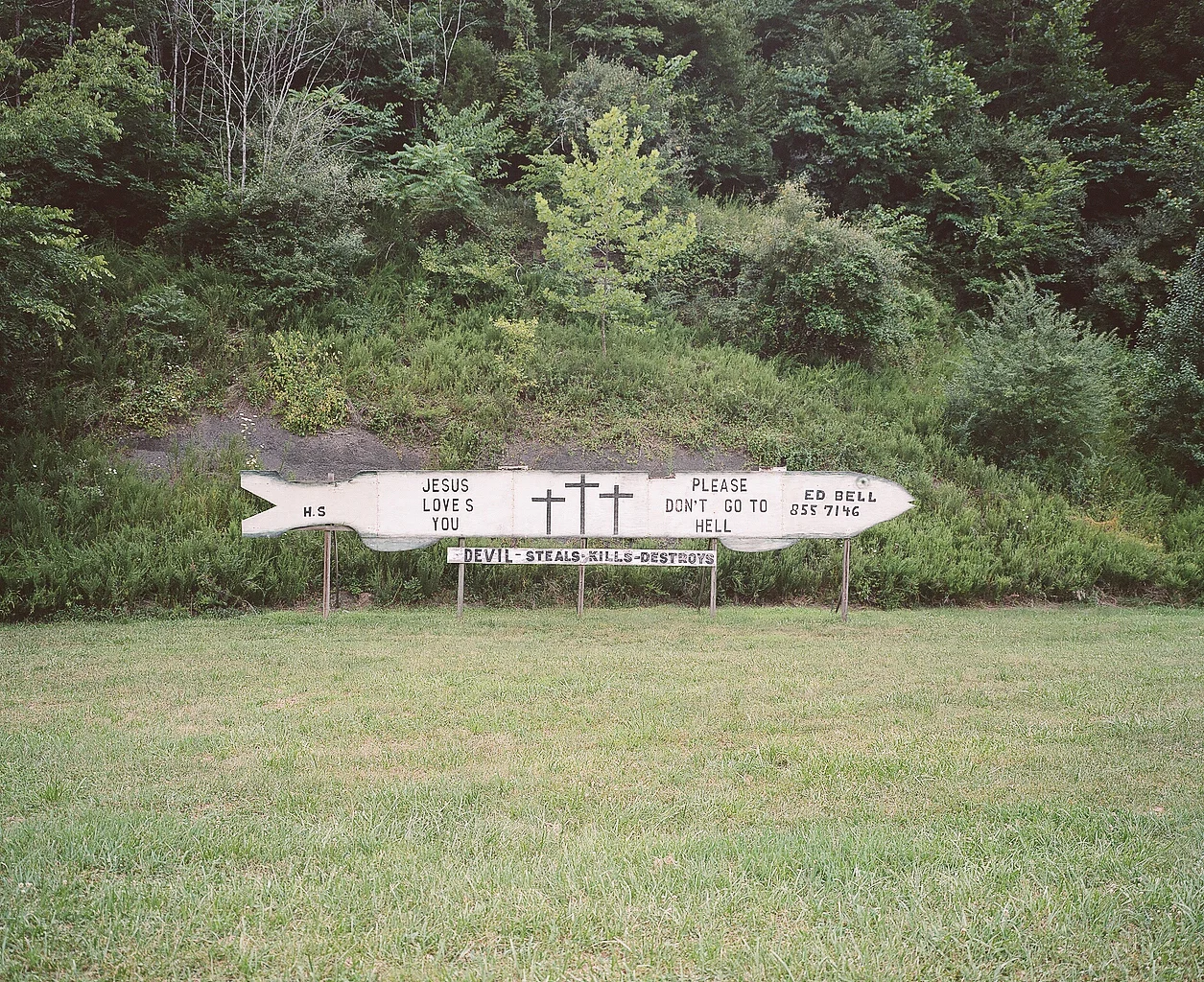
I recently did an erasure exercise of this sign in Mingo County to read “Nearby, white leader and white settlements in effect exterminated tribe.”
Mr. Bell Prayed for Me

I’ve driven by this sign several hundred times over the last few decades. I’ve stopped to make pictures of it a few times as have countless others undoubtedly. I made this picture one Sunday a few weeks ago with a new-to-me camera after a long, but productive day of looking and listening and turning around and going back.
When I got the film and scans back, I settled in on this picture and thought about the times I’d seen it in the early morning fog, the driving rain, and when it was nearly invisible, blanketed in snow. I knew there was a name and phone number on the sign, but never paid it much mind.
Looking at the picture again yesterday, I picked up the phone and called the number. A man’s voice sang hello on the other end. “Mr. Bell?” I asked. It was, he said. I told him who I was and that I was calling to ask about the sign on US 119. For the next 10 minutes, Mr. Ed Bell, who is “88 and a half” proceeded to tell me about himself, his sign ministry, and about how wonderful it was to receive a phone call out of the blue about one of his signs.
He reckons this particular sign was put up about 20 years ago. If you’ll notice on the far left, you’ll see the initials “H.S.” Mr. Bell told me he dedicated the sign to his good friend Harlena Shepherd, who gave him $25 to help make the sign all those years ago.
He told me I could call him anytime. He said he was going to pray for me as soon as we got off the phone. “You’ve made my day. Thank you, young man,” he said as we hung up. Thank you, Mr. Bell.