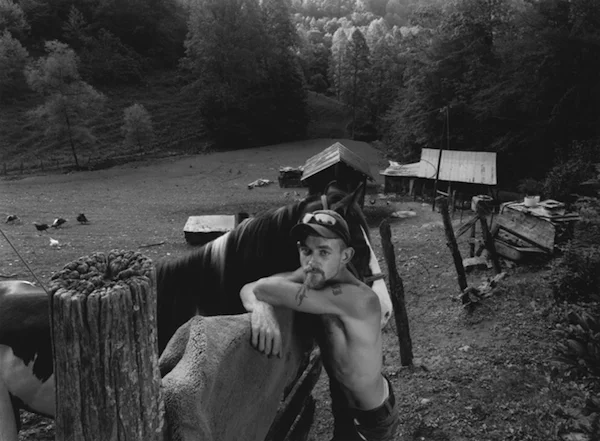
Looking at Appalachia | Shelby Lee Adams - Part Two

 Last week, I published Shelby Lee Adams' essay "The Work of Looking," as a result of our phone and email conversations about his life and work in Appalachia. Part of our conversation was centered on the Appalachian stereotype and how we as viewers, both Appalachians and non, look at mountain people, culture, and place.
For years now, Shelby Lee Adams’ work has challenged me, both as an Appalachian and a photographer. I’d never been able to sit with his work very long as it almost always elicited a strong, visceral, and ultimately defensive response. Frustrated by the stark depiction of poverty and implied stereotypes of Appalachia and her people, I dismissed his work as the kind I didn’t want to make. And then we talked.
What started to surface for me during the course of our conversations were my own biases and the implied stereotypes I bring to the table when looking at photographs - especially photographs from Appalachia. I didn't want to deal with the hard work of looking at my own prejudices, so it was easier to dismiss the work as typical stereotyping of Appalachia. There is no real work involved in this way of thinking. It doesn't require anything of me. It's safe, but it isn't honest.
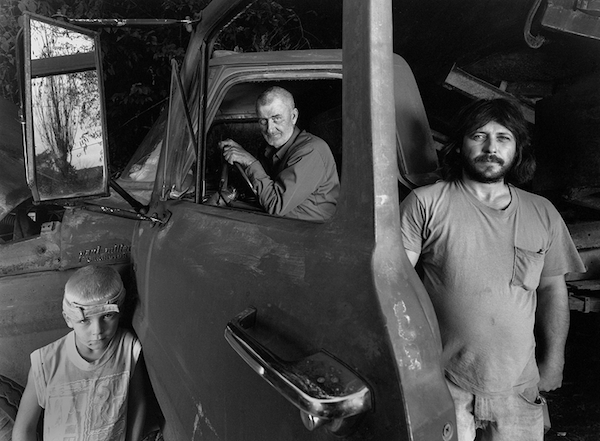
Several months ago, I contacted Candela Books founder Gordon Stettinius and asked for a copy of Adams’ latest book, Salt & Truth, to review here. Since the book was released nearly a year ago, I didn't expect they'd actually send one, but they did. I also didn't expect that spending time with the work would ask me to take an honest look at how, and why, I look at Shelby Lee Adams’ work the way I do. But when I sat with this beautifully edited, sequenced book, it did just that.
Salt & Truth is Adams’ first book with Candela and his fourth book overall: Appalachian Portraits (1993), Appalachian Legacy (1998), and Appalachian Lives (2003). Salt & Truth (2011) contains 80 plates in its 128 pages along with introductions by James Enyeart and Catherine Evans. Perhaps the most powerful feature of Salt & Truth, is Adams' own eleven-page commentary, "The Roots of Inspiration," wherein Adams writes:
"Many American ideals are dedicated to sleek, fashionable, and powerful images of ourselves. When presented instead with a more complete picture of someone who looks dissimilar, some will balk and accuse the presenter of the descent of the people and community. We have oppressed tenuous people for centuries by hiding them in the shadows...People's faces reflect what God has given them but also reveal what others have inflicted, shunned, or propagated."
Adams' work has become so iconic that it’s nearly impossible to have a serious discussion about Appalachian photography without including him. His work has been widely praised - and criticized - by a number of people, yet it has continued, strong and steady for nearly 40 years. There's something to be said for anyone - photographer, historian, or preacher - that continues to go back to the same communities year after year, earning and keeping the trust and friendship of the people. You can't continue to make this kind of work and have these types of familial connections if the people you're photographing feel taken advantage of.

“I love his work. I've had so many conversations about this, and I've had some people seriously attack me for liking his work. I deliver the mail 110 miles through these mountains, so I go up hollers and see places that a lot of people who have lived here their entire lives have never seen. I know several of the people in Shelby's books. I know family members of them too. I feel very deeply about his photos and I see the beauty and I think it's important for people to see. This is a whole culture of people that are rarely seen and often ignored. They're the folks being destroyed by mountaintop removal (mining). They're the folks that are shunned when they go into town. They deserve to be seen, and he's the only person documenting that culture (that I know of). And I have to say that the people in Shelby's books are not a minority, at least not here. I've noticed at times that it is difficult for people to see the whole picture. Look at the photo on the cover of the book. I see a guy that looks like so many other guys around here: no shirt, tattoos, sunglasses for riding his 4-wheeler. I've seen arguments where people thought Shelby should have made him put a shirt on. How silly! He was hanging out shirtless, he got photographed shirtless. But mostly what I see in that photo is that amazing time of day when the sun is hitting the mountains just right and lights up one part of it so that it can take your breath away. Shelby captured that. He saw that. I've seen people call his pictures disgusting, and I can't fathom how someone could say that about another person. These are human beings and if we look at the photos and see something disgusting, then I believe that is a problem inside of ourselves, and not the problem of the photographer or the subject.” - Cindy Shepherd, Oneida, Kentucky

Jöerg Colberg over at Conscientious, in his piece “Photography and Place: Appalachia” writes:
“I believe the best and possibly only way to deal with the problem of representation is to embrace the bias. So let’s not call it bias, let’s call it what it really is: The artist’s creative vision, which is coupled with the artist’s personal integrity. That’s what it comes down to. I believe the best way to present a body of work about a place is to say: This is what this place looked like to me. I’m not showing you the place, I’m showing you my view of it. Now deal with it!”
Colberg continues:
“I personally believe that as much as any artist can do whatever they want, they still have the personal responsibility to understand and navigate the context their work lives in. However highly you regard yourself as an artist, you work does not exist in a vacuum. It is being placed into at least the history of photography (around 170+ years), and it also is being placed into our culture, that odd, malleable thing that keeps shifting and moving.”
Adams', in his own words, puts his work in context in Salt & Truth:
"It is the spirit of the mountaineer living in the hollers that motivates and interests me. The visual representation of this culture has rarely been made from inside. I don't deny, nor do I see, poverty as a focus in my work; once the "poverty" filter is removed, a different world emerges. The culture is multilayered in expressing the fullness of life. Mountain people are more accepting of diverse representations of themselves than the viewer might imagine because they know themselves and are spiritually sel-assured."
From Estelle Jussim's, Propaganda and Persuasion:
“Educators may prate about photographic literacy, but what is needed is an understanding of how any picture could miraculously transform painful information into coherent social action. For the obvious truth is that a single photograph, unaccompanied by verbal messages, cannot simultaneously contain both the image of the problem and the solution to the problem. A photograph, therefore, would seem to be able to pose the question, to imply a situation for which some other medium might be needed to provide the answer.”

So what are our expectations of Appalachian photographs? How willing are we to be self-aware when looking at this kind of work? Any kind of work? What are our own biases? We can’t oversimplify Shelby Lee Adams’ photographs because it requires thought and honesty. Truly there is work involved in looking at these photographs and though some of his work isn't always easy to look at, I'm grateful that Shelby Lee Adams' work asks me to put my hand to the plow.

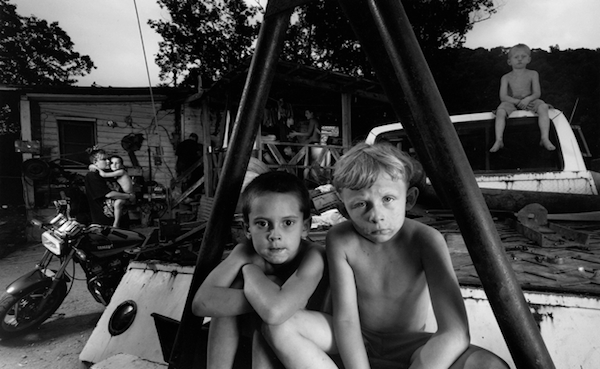
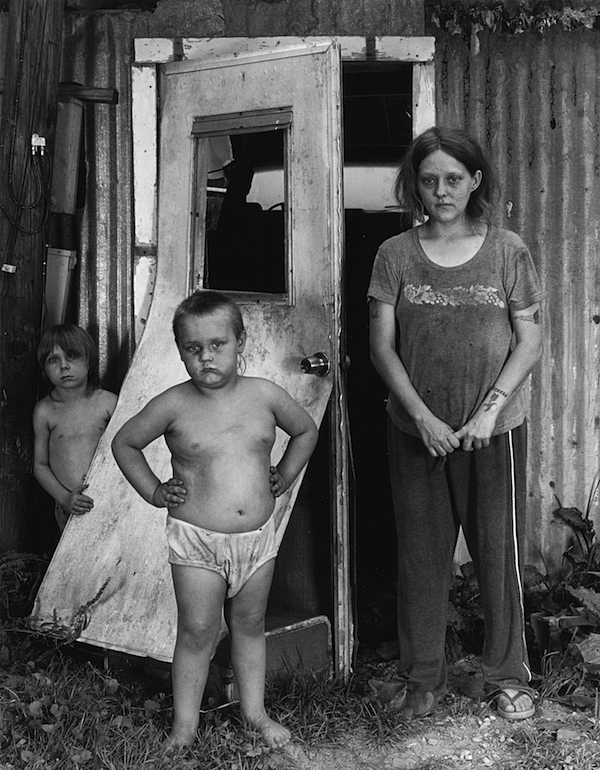
Seven black and white photographs from Salt & Truth © Shelby Lee Adams. 1. Eagle's Nest, 2008. 2. Lloyd Dean with Family and Coal Truck, 2002. 3. Dan, Krissy and Leddie, 1993. 4. Robbie and Tyler on Wrecker, 2003. 5. Melony, 1996. 6. Alma Gail and Boys, 2003. 7. Brother Ish, 1994.
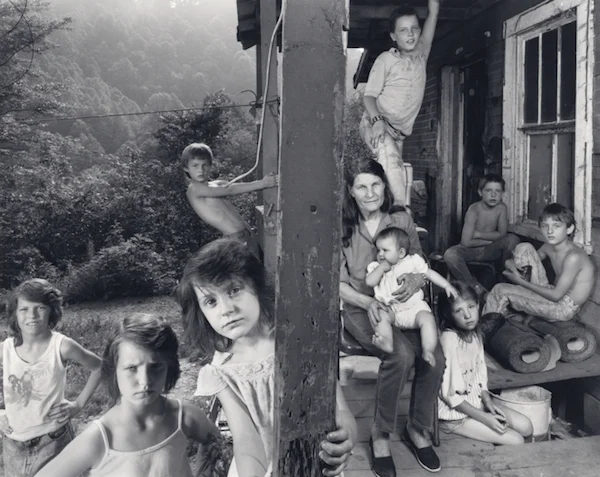
Looking at Appalachia | Shelby Lee Adams - Part One
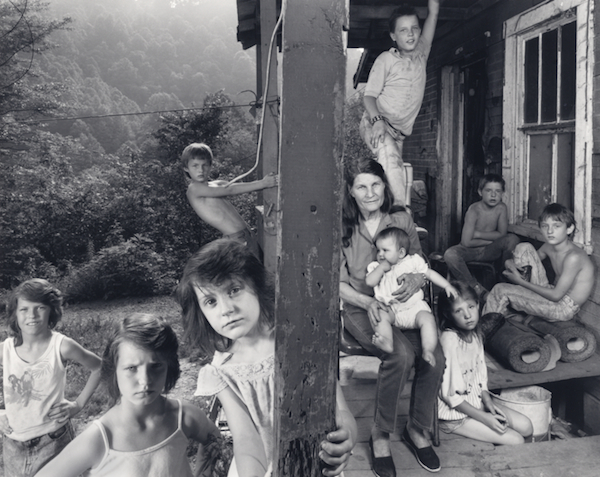 The next photographer featured in the series Looking at Appalachia is Shelby Lee Adams. Shelby contacted me via Facebook last month and was kind enough to agree to collaborate on this series. After nearly three hours of phone calls and many email exchanges, he wrote the following essay, published here for the first time.
Shelby Lee Adams' photography has been published in four monographs - Appalachian Portraits (1993), Appalachian Legacy (1998), Appalachian Lives (2003), and Salt & Truth (2011). He has received numerous grants and awards, most recently a Guggenheim Fellowship in 2010.
The Work of Looking
I was born and raised in a holler in Eastern Kentucky, lived and grew up in the middle part of Johnson’s Fork, in Letcher County, Kentucky. My families, on both sides, were farmers. One grandpa was also a timber man and the other a teacher. Neither of my grandfathers worked in the mines, but we knew many miners and discussed their lives and working conditions. Two of my uncles were doctors - one became disabled after serving throughout World War II. I became a part time unofficial medical assistant to the other uncle when he went into the hollers making house calls. My uncle Doc Lundy was a great resource and introduction. The mountain people loved him; he greatly appreciated their openness, sense of humor and generosity of spirit. We’d go out and visit, riding in his Willis Jeep. He loved the people and I think that transferred over to me. He was sort of my childhood mentor and helped introduce me to the mountain culture. Perhaps the earthiest and richest cultural view is in the hollows. My father and others didn’t see the culture the way my uncle did, so there was always this difference in my own family. It may explain why I photograph the way I do, in a direct, straightforward manner, working with a cumbersome view camera, expressing some tensions and divisions within the photographic compositions.
I think of my work as an insider’s view even though I now live in Massachusetts, making long-term return visits. Similar to how I grew up traveling with my parents, going back and forth with my father’s many jobs, but always returning to Johnson’s Fork. When your blood’s connected, and you're born and raised in a place, you’re always connected. My work is all done by personal introductions. I’ve never worked through agencies like VISTA, the Peace Corps, or government welfare offices; always by personal introductions and word of mouth. That’s how I’ve worked for close to 40 years now. I say that with pride.
In 1964, President Lyndon Johnson's War on Poverty was in the news; it was a big deal in our region. LOOK, LIFE, The Saturday Evening Post, and Charles Kuralt’s, famous program, “On the Road,” among others were all doing work and stories in different parts of Appalachia. I attended high school from 1964 through 1968. My uncle would call from his office with inquires he received from the media requesting introductions and I would gladly show people around after school. They told us when we first together we would all receive pictures within a month or two, further, adding how proud they were to be with us.
I soon regretted sharing our rural life with some photojournalists. When I read and saw examples of the essays done, I felt betrayed. They wrote degrading descriptions about our people and homes. For example, a home was referred to as "a run down, rotting shack." It may have been different from a city brick home, but it still was someone’s home with children inside to consider. This could have been described as a modest dwelling in need of repair. Some were described as broken and poor. If asked, someone might describe themselves as, “one of God’s children, rich in spirit.” It seemed little consideration was given to the people’s feelings or the deeper life they actually lived and certainly the culture was considered and seen only one way – poor.
We never received any pictures from the photographers. We were mailed publications later, second hand magazines, sent to us by a church group from Chicago. That sense of betrayal affected the entire region, not just me. It was an embarrassment to all and still troubles and affects many today.

Everyone assumes I was born a photographer. I was an art student attending Whitesburg High School, receiving the schools annual art award in 1968 (the year I graduated). I was always drawing and painting, mostly from nature. I knew a little about photography. I owned a 35mm camera and later attended the Cleveland Institute of Art. I took my first photography class my second year of art school at age 19. My teacher, Ralph Marshall, was a great man, an inspiring teacher. He grew up in England in a coal-mining town near Wales. He saw promise in my first Appalachian pictures that I didn’t recognize. He encouraged me after viewing my first photographs made back home. He made me feel that I was doing something special right away. It was his interest and the excitement of the medium itself that caused me to change majors from painting to photography.
Artists, not photographers, inspired my beginning search for creative growth. Goya, el Greco, (Francis) Bacon, Van Gogh, Rembrandt, and Corot, among others – they motivated my artistic pursuits more than photographers. I’m 61 years old now. I can look back at those same paintings and see how they nurtured and inspired my development when I was young. Timeless, creative work keeps inspiring and communicating from generation to generation. Just as specific mountain people were, and are, inspired sages to many of us, their photographs reflect iconic and everlasting. Painting has always been more stimulating to my photography’s development along with writing and reading great literature. I didn’t trust the practitioners of photography so much because of my experiences with the War on Poverty photographers. I came back to my roots visually through appreciating the passion, spirit, discipline, and dedication that artists and paintings could stir within me.
I’m not a documentarian per se. My work is autobiographical, people-oriented, personal and subjective, with humanistic and artistic concerns. I’ve never said I was a documentary photographer. I’m careful not to. When I teach workshops at the International Center of Photography, among other places across the country, I teach environmental portrait photography and lighting. Still I’m often written about as a documentary photographer and that approach itself has fortunately changed to be more open, individualized, and creatively more all-encompassing. Those changes in photography have happened during my career.
I am continually searching through my own roots. I love reading Southern literature. Faulkner, he got the dialect. He loved, and was, the culture. I’ve never veered from that. When home, what I do is visit, sit and talk for hours with people. I’m genuinely interested in what’s going on in people’s lives. We catch up. Some don’t understand that I have real relationships with diverse people. I try to be as personable as possible. The people are genuine and that’s what feeds a relationship; honest back and forth sharing with vulnerability. We build understandings together. When away, I keep in touch with people, mailing photos and cards, mostly talking by phone.

When looking at photographs - and this is part of my training as an artist - I realize people see, process, and react to what is in their mind's eye with some parts remaining unconscious, not totally responding to what is in front of their physical eyes, as much the mind's eye. This is true of photographer’s perceptions when working as well. We attach ourselves, bringing forth our own, often times, unresolved issues and react to the emotions and thoughts the photograph or situation evokes and brings forth in us individually, not necessarily at all what is reflected in the content of the photograph, or the life, or situation actually before us. The viewer, presenter, and subject are all participants in what I call, “The Work of Looking.”
Our ancestral mountain people are mythologized into our greater existence from our beginnings, a part of our childhood and permanent memories. If we are truly honest with ourselves, we know this cannot be erased. If you are from these mountains, your and my dreams and reality itself are engraved within this collective group consciousness forever. One can choose to repress, but sooner or later, the lives and images of our mountain people will return to us and keep returning until we come to terms with their importance, not just the ones we chose, but all.
“We all are the same, we need to really look at this situation right here. We really need to look at life. We are a blessed people because we're able to walk and able to talk, we have the freedom to get out and to work and raise our families and we ought to treat each other equally.” - Philip Zambala, friend and subject of Shelby Lee Adams
One reason I have continued to work as I do, using a formal view camera, Polaroids and lighting, is because of the complexity of this culture. You can have a descriptive photojournalistic documentary image, culturally enriching authentic mountaineer and a socially conscious politically charged picture, all represented in one picture, in one moment here. In essence, my work is about all those things and more with my own autobiographical and psychological pursuits expressed as well. Pictures can get complicated and share multiple purposes, yet remain separate - personal and meaningful to each of us.
In Eastern Kentucky today, we have vast problems with low self-esteem, both youth and adult, resulting in epidemic drug and alcohol abuse, suicides, and crime, causing many premature deaths. Too many of my own relatives, friends, and their children have died or been permanently damaged from this kind of predominately drug-related activity. I cannot help but believe that in our homes and schools, if we really recognized all equally, with total mutuality and solid support, our children today might not be so vulnerable to this ongoing travesty. Some country preachers testify and preach that in Appalachia we have greatly admirable traditional family values and at the same time, are known as a judgmental society. “Love your neighbor as yourself,” our preachers remind us.

What can an individual do? What I have done is gone into the heads of many hollers, without much of an introduction, not knowing if I would be accepted or shot at and still I’ve kept going. To look into the eye and shake hands with whomever I met, telling them I needed to photograph them because they were important and maybe their kind might be dying out. Some laughed and others said I was crazy, but they all invited me in to sit down and talk. I’d tell them my dream of photographing all the holler dwellers in Eastern Kentucky with dignity and respect. That is what I’ve tried to do and those people have not complained and that makes me feel worth something.
When you study a painting or a great work of art, it can be a spiritual exercise. You come back to it again and again, changing yourself as your perceptions change and mature. From my formal portraits made in the heads of the hollers, I want a direct, somewhat raw engagement where you and the subject are looking into seeing itself, discovering each other together on an unparalleled and equal course of discovery to create a flowing communicative relationship between the viewer and the subject. You are mirroring and they are mirroring humanity, one to another, humbly and heart felt, dropping guardedness. Sometimes some disturbing effects come forward, but they need to be confronted and perhaps cannot be seen in any other way. Together, through looking, we can become more genuine and carry that into real life relationships that bond and unite. But some of us don’t seem to want to see or experience the real other people, yet we all are in the same community.
For those who are interested, having the will to come forward and desiring to transform themselves by participating in engagement with photographs serving as a catalyst, one can break down the stereotype. You must keep coming back to do the work of “looking.” Through familiarity, prayer, and study, our weaknesses and fears bleed away, slowly clarifying as fresh mountain water clears after a slow rain. Humanity comes forward revealing itself and the stereotypes slowly disappear. We then overcome our uncertainties surrounding our culture and people, embracing a more total humanity, not excluding or hiding those in the shadows needing our help. That’s what real engagement is for me. That’s what I’m about - my work and this serious pursuit. That is what genuine art and serious photography has always been for me.

When embracing all of humanity, there is no elitism or poverty. If people in the hollers can do this, so can you, each in your own way. Photography is a powerful tool and I am one Kentuckian who is concerned about many of our people that some wish weren’t here. I know my process is now reaching others. Maybe only a few, one at a time. For some, it's a difficult cathartic experience, but a life-changing and affirming spiritual journey. To the people photographed and seen, maybe with real mature recognition for the first time, they are my purpose. They make it all worthwhile. My work in Appalachia is a labor of love. It’s not about money.
As a college professor, I’d tell my students, “If you photograph someone, you owe them a picture. That’s an obligation. That’s a good thing, a beginning to clear communication.” More people are appreciating my work today, some from far away, some at home. Maybe because they are freeing themselves and shedding the skin of petty cultural complexity, seeing more clearly, humanity just needing humanity.
Shelby Lee Adams August 31, 2012
All photographs and essay "The Work of Looking" © Shelby Lee Adams. 1. Leddie and Children, 1990. 2. Brenda, 2004. 3. Angela, 2006. 4. Freddie's Place, 2004. 5. Pauline Standing, 1979.
Looking at Appalachia | William Gedney - Part Three
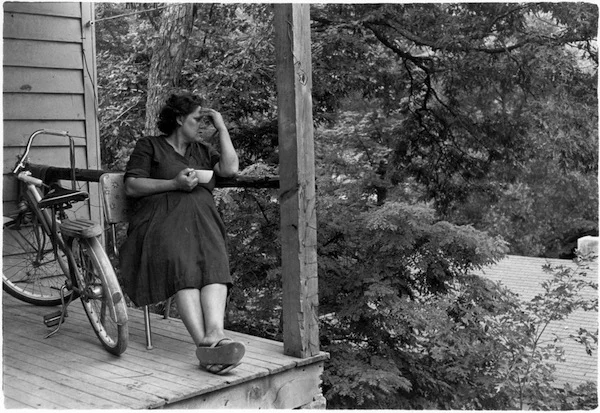
 Exactly 40 years ago this week, William Gedney returned to the hills of eastern Kentucky to reconnect with the Cornett family (pictured above with Gedney) whom he had spent more than a week with in 1964 (see below). The relationship between Gedney and the Cornetts is described in this beautiful vignette from What Was True: The Photographs and Notebooks of William Gedney coedited by Margaret Sartor and Geoff Dyer:
"We though of him as one of our kids. He was just a plain person, like us. At the store, Bill'd say to the kids, 'Do you want an ice cream? If you do, get one.' He wouldn't say, 'Go on, get an ice cream.' You could get along with him." On the day Gedney arrived, he told Willie he would sleep on the floor and offered to pay two dollars a day for his keep. Willie refused the money, but at the end of Gedney's eleven-day visit, found exactly twenty-two dollars left behind. After telling me this story in the spring of 1998, the still lively, white-haired Willy added casually, "He could'be come and stayed a lifetime, it would've been OK with me."
Thirty-five pages of What Was True are dedicated to Gedney's time in Kentucky, including twenty-seven photographs (ten from 1964 and seventeen from 1972) and snippets of correspondence with Vivian Cornett. Sartor continues:
"The Cornetts remained in touch with Gedney for more than fifteen years. Their letters, most of them from Vivian, were among his belongings when he died. Over the years, he sent them prints and sometimes money. Vivian wrote back with family news and included school photos of the children. On one particular occasion, fulfilling a promise made to himself, Gedney sent Willie and Vivian exactly half of the seventy dollars earned from selling his first Kentucky photograph, the one of the girls peeling potatoes in the kitchen."

Three girls in kitchen, appeared on the cover of the Fall 1996 issue of DoubleTake.

"The excerpt published here is from the trips Bill made to eastern Kentucky in the 1960s and 70s. There he spent most of his time photographing one extended family. In his life in Brooklyn, Bill was an eccentric; he was even described as a kind of recluse by some of his friends. But as a photographer he made profound connections with the people he photographed. In these Kentucky photographs we can see that he is fully engaged with these hill people, with the lives played out in and around their cars and porches. The sensuality in these pictures reminds us of our sameness and, in fact, what is beautiful about our sameness." - Thomas Roma, DoubleTake, Fall 1996
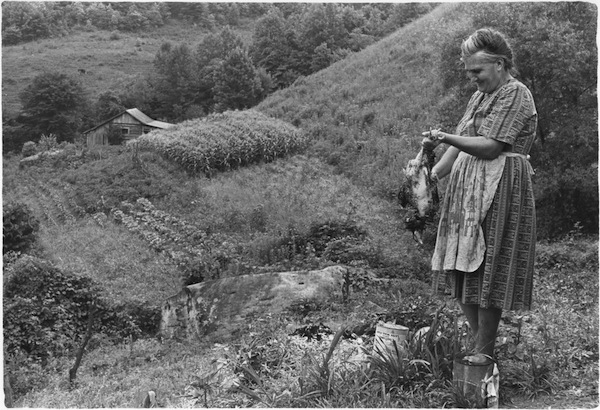

"For several years now, I have looked through thousands of William Gedney's photographs, read his letters, scanned his appointment books and grant applications, studied his notebooks and his journals. In my mind, I hear his voice, deep and articulate. After some time, I could also hear the silence, what was held back, hints of an unreachable place. In the photographs, this tension is part of their power - the cup half-empty. And the body revealing what the heart might want - and want to hide." Margaret Sartor, What Was True
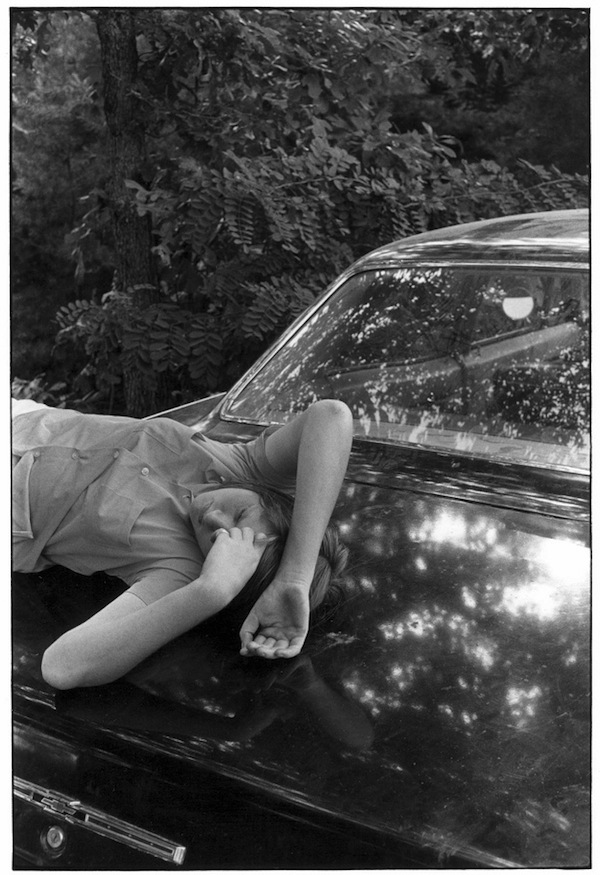
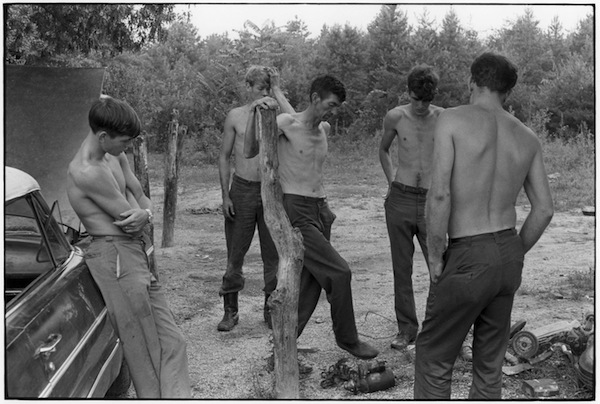


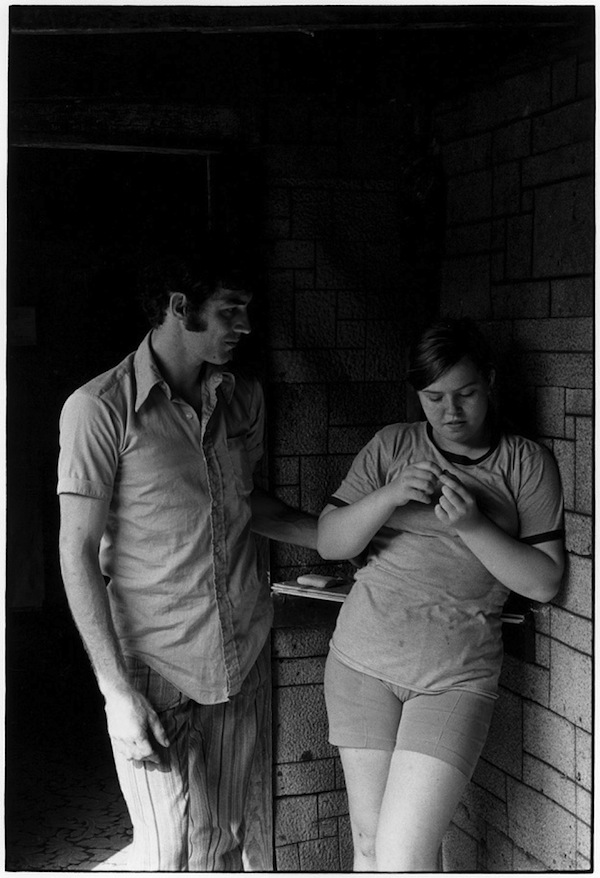


All black and white images (11) - William Gedney Collection, Duke University David M. Rubenstein Rare Book & Manuscript Library.
William Gedney's work never ceases to command my attention. It isn't forceful, overbearing, or gimmicky. He presents grace, beauty, and humanity in a people often marginalized and dismissed. These are things that are important to me, qualities he captured from the people and place that means so much to me. He didn't shy away from poverty or hardscrabble existence, instead he chose not to make it the focus of his work. Because of that, we get to see something so few who make photographs in Appalachia can show us. By pressing in close enough, quietly enough, in the words of Thomas Roma, he captured the beauty of our sameness.
Editor's Note: I'd like to thank Margaret Sartor for her time and willingness to answer my barrage of questions about William Gedney. Additionally, I would like to thank David Pavelich, Head of Research Services, David M. Rubenstein Rare Book & Manuscript Library at Duke University for his assistance in securing permission to use the images in this series as well as Amy McDonald, Assistant University Archivist, who cheerfully assisted me with box after box of Gedney's prints, contact sheets, and notes. Last, but certainly not least, huge thanks to Chris Sims at the Center for Documentary Studies for the generous, long-term loan of What Was True.
Elsewhere: Ahorn Magazine featured some of Gedney's work here. It's well worth a look.
Looking at Appalachia | William Gedney - Part Two
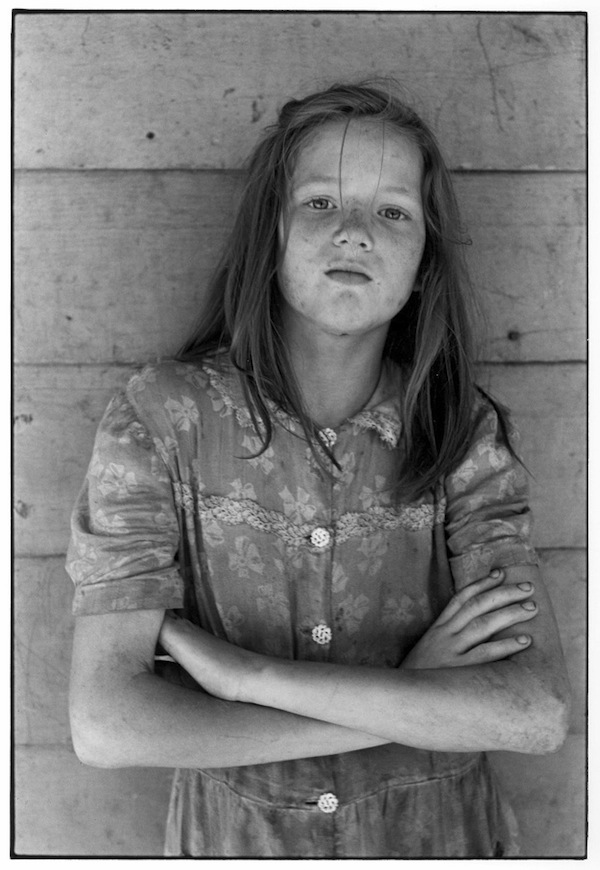 I had the good fortune of having coffee with Margaret Sartor back in June at the Nasher Museum on the campus of Duke University. She generously agreed to meet with me and talk about the work of William Gedney and her experience researching it for her book, co-edited by Geoff Dyer, What Was True: The Photographs and Notebooks of William Gedney. Sartor is a photographer, writer, and teacher at Duke University and has curated exhibitions of photography at the International Center for Photography in New York, The Center for Documentary Studies at Duke University, and the San Francisco Museum of Modern Art.
One of the most pressing questions I've had about Gedney's work in Appalachia has simply been, why? Why Appalachia? I'm fascinated by his choice to leave New York and wander into eastern Kentucky to make photographs. I asked Sartor about this. She explained that he was very close to his grandparents, who were farmers in upstate New York. Some of his earliest photographic work was centered on his grandparents and it’s likely that his connection to them - the life they led, the simplicity of the land, the beauty of place, ultimately drew him to Kentucky.
To Sartor, Gedney was very interested in the authenticity of people and place. He had very little patience for inauthenticity or pretension (artistic or otherwise). He worked very unobtrusively, rarely confronting his subjects head on or imposing himself upon the situation.
"We can't pinpoint why we keep looking at an image but if we keep coming back, you know that it's something beyond the surface, you know, that somehow in describing the surface, the photographer has managed to get at something deeper...and really invisible." - Margaret Sartor
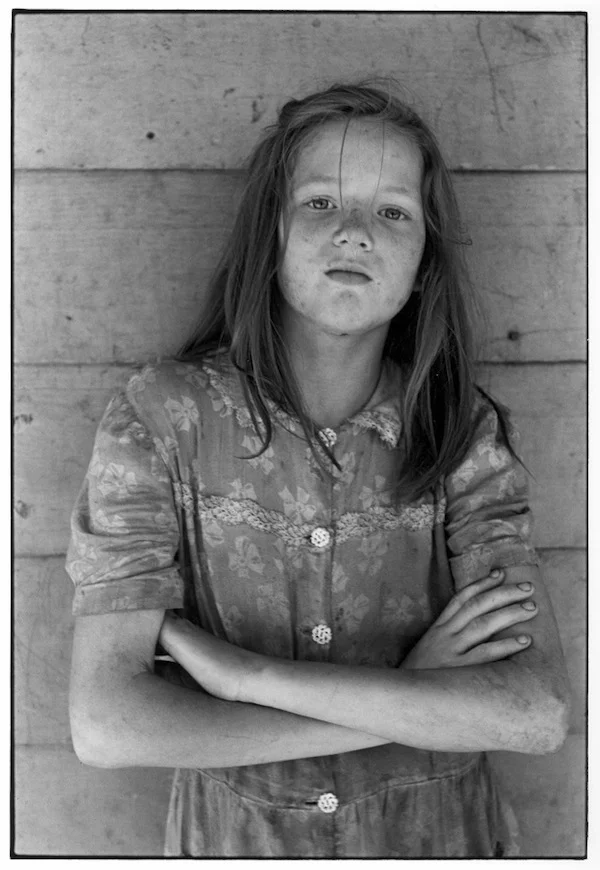
We talked about the photograph above, simply titled Young girl. Next to Three girls in kitchen, this is my favorite William Gedney photograph. There is so much here. The girl's head slightly tilted back and to the side, wisps of hair in her hace, her set jaw, arms crossed, and those eyes. Her gaze speaks volumes to me. Sartor and I spoke at length about this photograph.
"Her defiance is something we recognize (perhaps as adolescents) - it's a spirit. It's something much more lively than self-conscious. She's showing a side of herself to Gedney, yet not letting him in. As photographers, we've been on both sides of the camera. We work hard to try to get at who the person really is. Gedney had a special way of capturing that electricity - how the subject and photographer work it out. It's interesting that he got that from her (that she presented it to him) and that he would see that part of her spirit and not be looking for something else." - Margaret Sartor
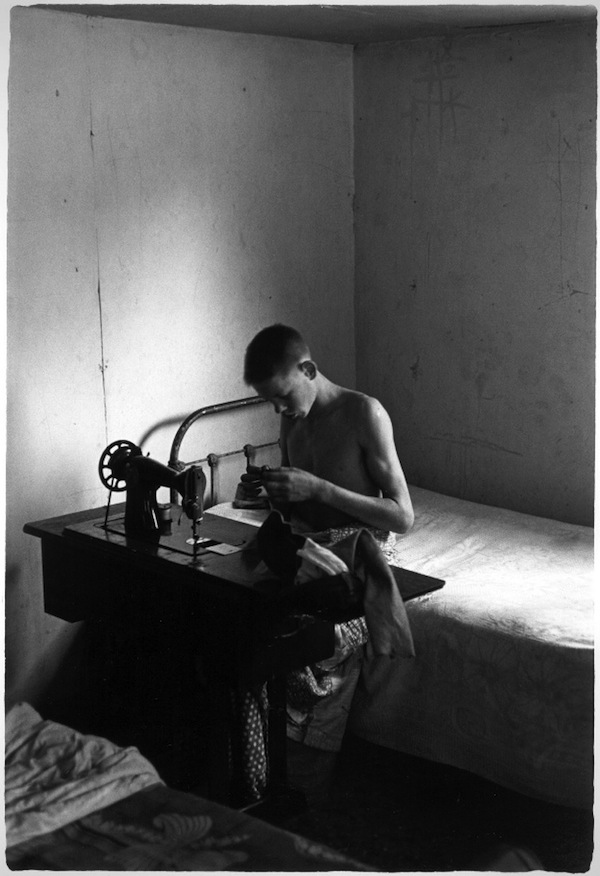
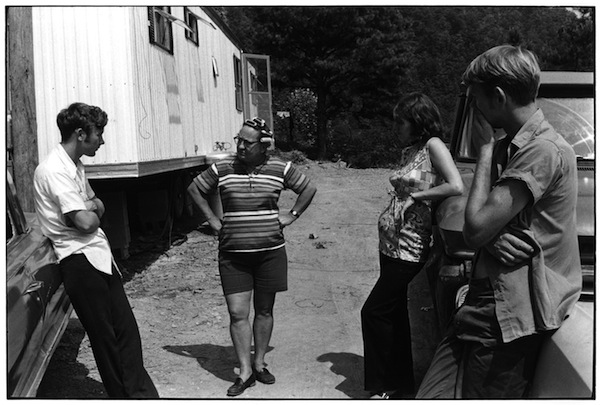
Gedney's Appalachia work is refreshing to me because it feels so incredibly real. Sartor noted that, "We keep looking because it (Gedney's work) feels so genuine." I couldn't agree more. His unassuming presence allowed him to capture moments so obviously absent from most of the work I've seen from Appalachia, that one has to wonder why so few photographs like this exist. Certainly at the time he was photographing in Appalachia, there was a stream of imagery coming out of there that I feel shaped the way we look at Appalachia today. For me, Gedney chose to see and show the deeper humanity of my home. How he saw the world, my world, challenges me to be truer, to be more authentic when I work.
Following are more of my selections from the Gedney collection that, for me, show the depth of the sort of quiet poetry he seemed to be working out (another great insight from Margaret Sartor).
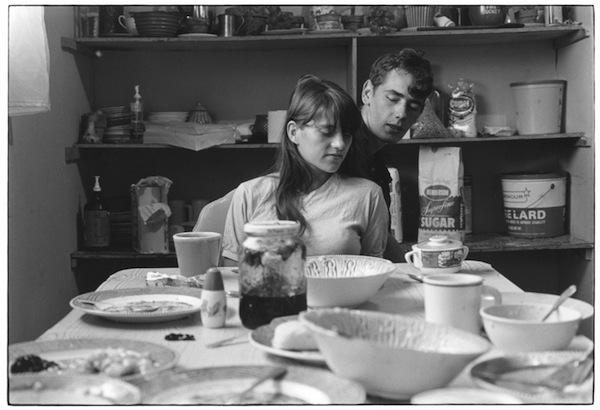

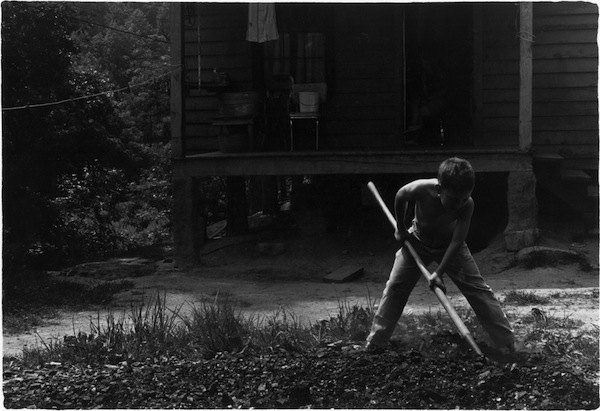
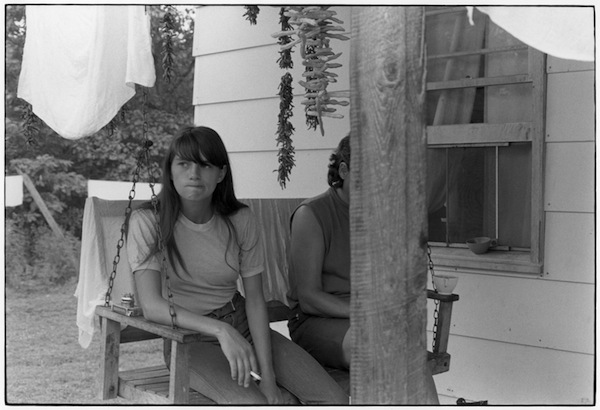


All photographs - William Gedney Collection, Duke University David M. Rubenstein Rare Book & Manuscript Library.