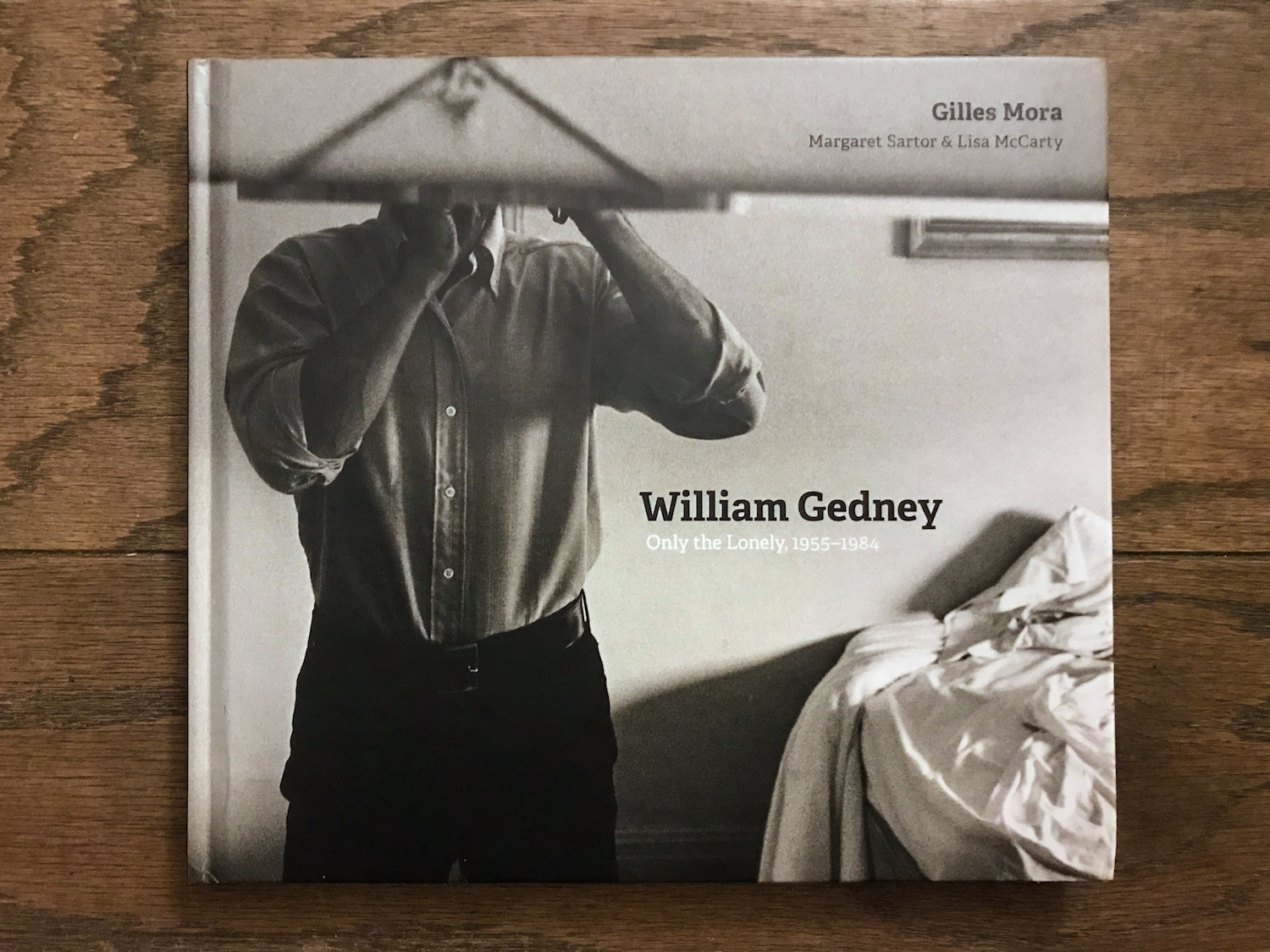
Review - William Gedney: Only the Lonely, 1955-1984
Hardcover | 10.5 x 9.5 inches | 160 pages | 160 duotone photographs | University of Texas Press, 2017 | Edited by Gilles Mora, Margaret Sartor, and Lisa McCarty
William Gedney’s work was once described as quiet poetry. I can’t think of a finer description of the photographer I’ve never met, but whose work has had a profound impact on my development as a photographer and understanding of photography in all its imperfections and limitations. Intimate is another word often used to describe his work, and although it truly is intimate, I worry that it has become something of a softball descriptor of work that is deeply complex and difficult to categorize. Only the Lonely provides us with a deeper dive into the expansive work of William Gedney. There are three distinct pieces of writing by the editors: “William Gedney, So Similar, So Different: Alone are the Lonely” (Gilles Mora), “Short Distances and Definite Places” (Margaret Sartor), and “Intimate Gestures: Handmade Books by William Gedney” (Lisa McCarty). The book is divided into eight sections of photographs: The Farm, 1955-1959, Brooklyn, 1955-1979, Kentucky, 1964, 1972, United States, 1964-1972, San Francisco, 1965-1967, India, 1969-1971 and 1980, Europe, 1974, and Gay Pride Parades, 1975-1983.
Only the Lonely, is the most recent significant work of this little known photographer. After his death in 1989, Gedney left the responsibility of his archive to Lee Friedlander, who has published dozens of books of his own work and is still actively making books, yet Gedney never lived to see his work in book form. Sean O’Hagan, who writes about photography for the Guardian, called Gedney a “pioneer of immersive documentary.” There has been somewhat of a resurgence in the work of William Gedney, for which I’m incredibly thankful. In 2013, photographer Alec Soth published Iris Garden, a beautiful book of Gedney’s pictures combined with the writing of John Cage (now out of print). Before that, only one other book had been published dedicated solely to the work of William Gedney. In 1993, Duke University became the repository for 51.3 linear feet of Gedney’s work. Margaret Sartor, a photographer, writer, and teacher at the Center for Documentary Studies at Duke, was approached by the library and asked to put together an exhibit of Gedney’s work. In 2000, Sartor and Geoff Dyer coedited What Was True: The Photographs and Notebooks of William Gedney (which quickly sold out and is also out of print).
William Gayle Gedney died on June 23, 1989 at the age 56. In his lifetime, he was awarded a John Simon Guggenheim Memorial Foundation Fellowship for photography (1966-67), a Fulbright Fellowship for photography in India (1969-71), a National Endowment for the Arts grant in photography (1975-76), and several other grants and fellowships. He had a show at the New York Museum of Modern Art (1968-69) as well as more than a dozen other exhibitions. I wrote about my desire for seeing Gedney’s Kentucky work come to fruition in book form exactly as he intended here.
In her essay “Short Distances and Definite Places,” Sartor writes of Gedney, “People trusted him. Moreover they trusted how he saw them.” This gets at the very heart of documentary and place-based work for me. It isn't enough to just earn the trust of folks who let you into their lives, although it is a critical and foundational step. Would that all of us in our documentary practice earn the trust of people to the extent that they trust how we see them. What a beautiful relationship to strive for and what a beautiful book to have as a reminder of its possibility.


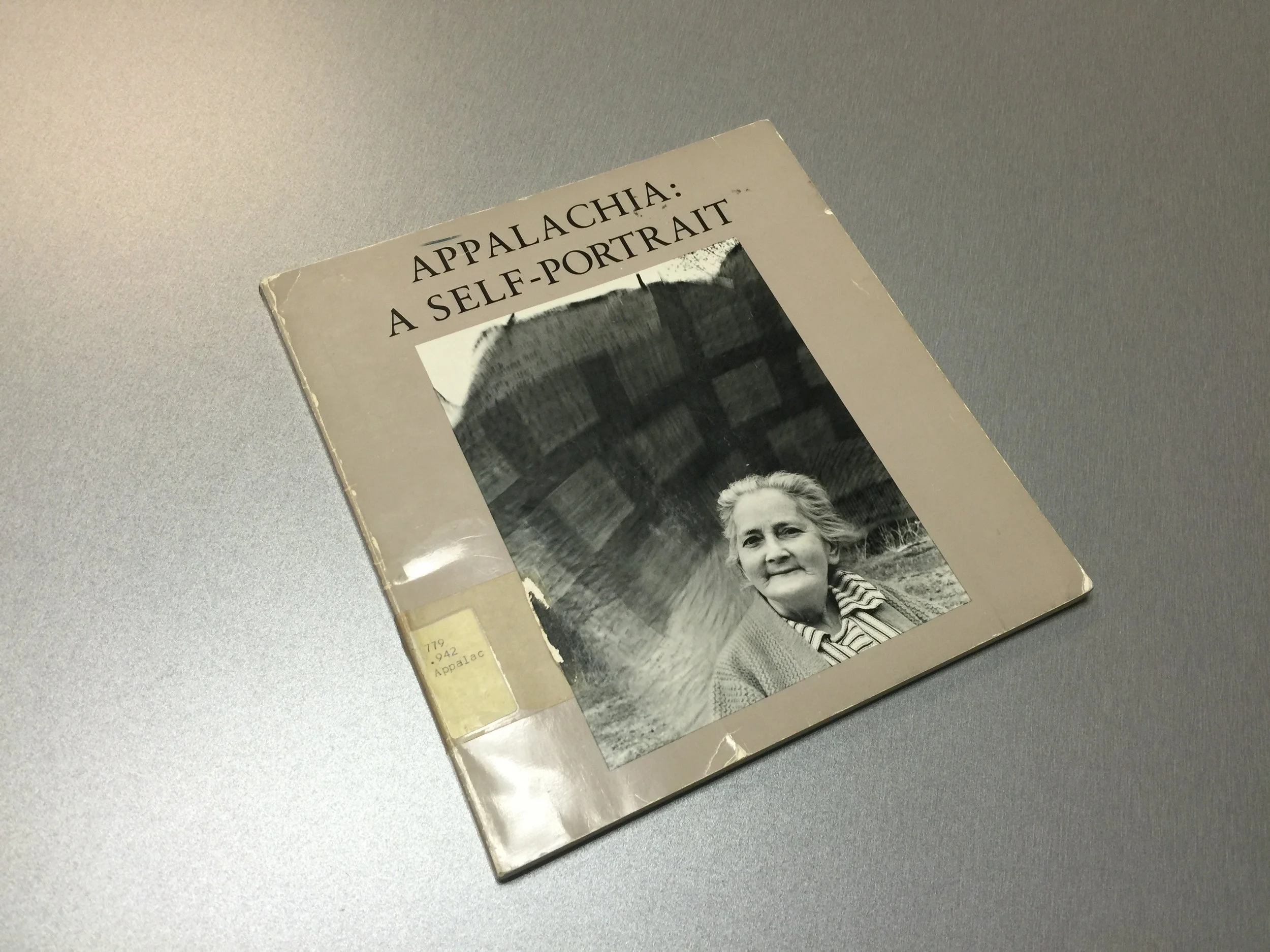
Review - Appalachia: A Self-Portrait

Softcover| 9 x 9.5 inches | 114 pages | 79 black and white photographs | Gnomon Press for Appalshop, 1979 | Edited by Wendy Ewald
A few years ago, as I was interviewing Shelby Lee Adams for this blog, he suggested I get my hands on a copy of this book. I'm glad I did. Published in 1979 by a group calling themselves the Mountain Photography Workshop, it's a result of work created by seven photographers: Lyn Adams, Shelby Lee Adams, Robert Cooper, Earl Dotter, Will Endres, Wendy Ewald, and Linda Mansberger. In 1976, the group was awarded a National Endowment for the Arts grant to document West Virginia and Kentucky's Appalachian regions. Since buying this book, I can't tell you how many times I've thought about doing something similar with a small group of photographers.
Ewald writes, "Each photographer chose one subject to document. We met every two months to talk about the work we had done. At the end of the year, as a group we began to edit the photographs and decide how best they could be used. We felt it was more important for each of us to look in depth at an aspect of the culture we were most concerned with rather than to document the region overall. This book is a result of our work together for a year and a half. It is a personal view of a people and a landscape, which has nurtured us as photographers and individuals."
The book begins with a foreword by Robert Coles, which I can't seem to escape. I mean that as a good thing. Coles' influence on many of the documentarians I admire so much is everywhere and I was glad to find it here as well. We're then treated to a lengthy forward by Loyal Jones, which if you aren't familiar with, please stop reading this now and go familiarize yourself with him. Do it.
As with most of the Appalachia themed books I've acquired over the years, I bought this one used. There's something I admire, prefer even, in the worn cover, the imperfect pages, and stray marks here and there. I believe I bought my copy for around $10 online, but I've seen a "collectible" copy listed for $400. This is a book that was created to be handled, to be studied, and used. I'd like to think it honors both the people and places photographed as well as those who made the pictures to be used as such.
Most of the book is devoid of text with the exception of caption information. When text is present however, it is pleasantly arranged in the voice of the person being photographed. We're brought in to glimpse the lives of Rena Meade (by Wendy Ewald) and C.F. "Catfish" Gray (by Will Endres) in near first-person accounts, which is really something wonderful. As I've said before, I'm a fan of text when it is done well or with purpose, but I don't always believe it's necessary. In these two cases, it adds a great deal to the images to better inform us of who we're looking at and learning about.
There seems to be an air of faithfulness to these images, which I think is challenging when you consider the total number of photographers involved. Two or three photographers, sure. But when you more than double that number (again, seven total), faithfulness and its pursuit can be diluted, subject to ego, arrogance, and self-centeredness. I find this collection remarkably absent of such pitfalls.
In Loyal Jones' foreword, A Remembrance, he shares, "John Campbell wrote that more is known that isn't so about this place and people than any other on the globe. Perhaps so. The old stereotypes and supposed facts are pervasive. Almost everyone has an opinion of this place, whether or not he has any firsthand knowledge. How does one describe this place and its people? It depends on who is doing the looking and his assumptions, attitudes, and cultural baggage. It depends on the relationship between the looker and the looked-at, the photographer and the photographed, the recorder and the recorded. In the end we who are part of the region and who try to describe it can only report what we have seen, what has happened to us and what we have come to believe. When we compare our pictures, we know that the same land and people are different to each of us. So it is everywhere."
This is another book I highly recommend. Given its affordability and availability, it would be a shame to not have a copy and to sit with it for a while.
I've included a few spreads here and some brief notes about the photographers who made them.
*Editor's note: The photographer's notes listed below are verbatim from the book, which was published in 1979 and are not current in reference to where the photographers are now.


*Earl Dotter's major work as a photographer in Appalachia has primarily focused on coal miners and their communities. From 1973 to 1977 he was the photographer for the United Mine Workers Journal. His work focuses on the workplace, health, and safety of Appalachian coal miners.
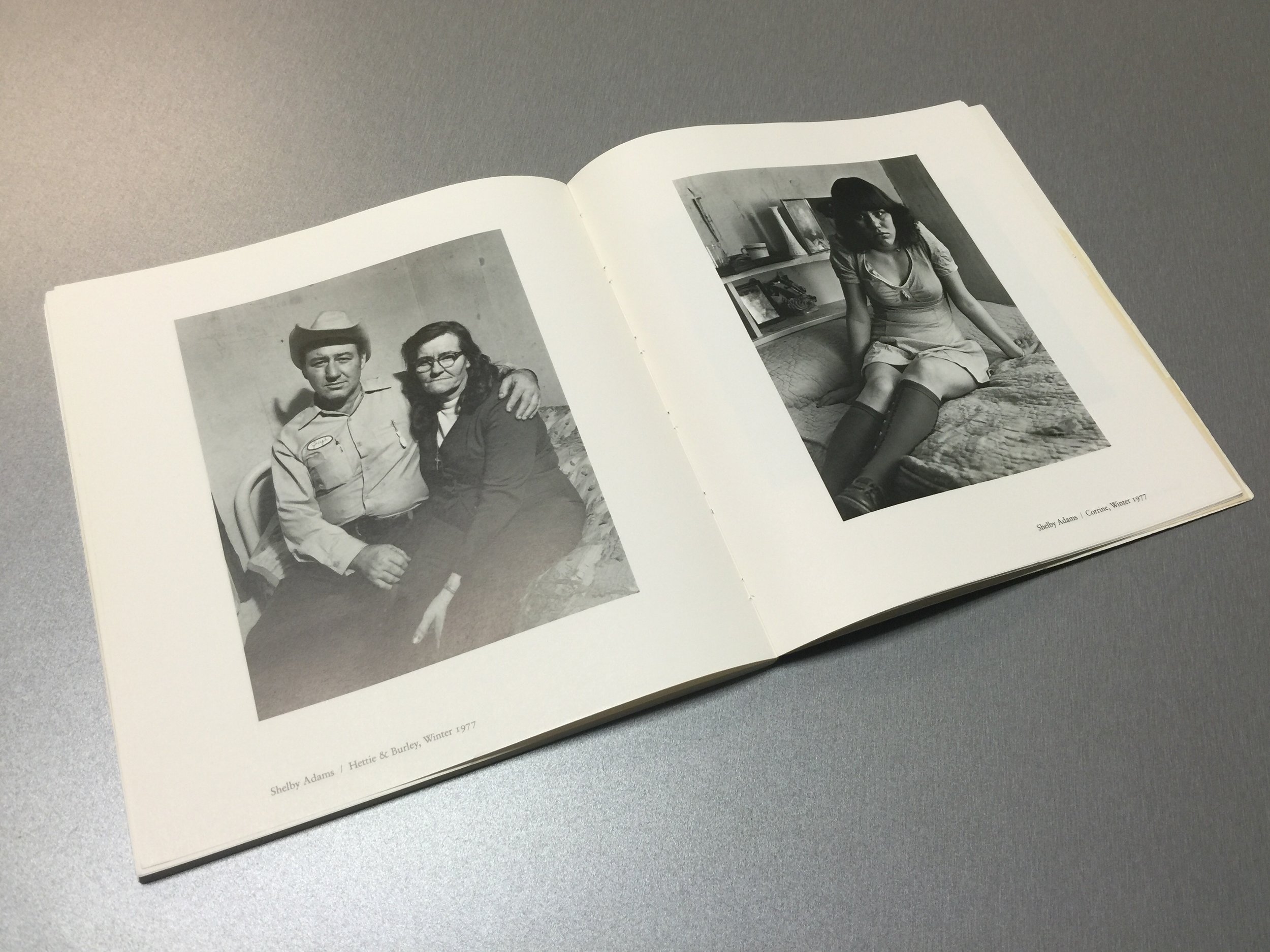

*Shelby Adams was born and raised in Letcher County, Kentucky. In 1968, he left to go to art school. He now lives in Cincinnati, but makes frequent trips back to visit his family and the two families he has photographed. He has take pictures of the Caudill family for four years and the Childers family for two years. He works with a 4x5 view camera and uses Polaroid film to let his subjects share in the excitement of making the images.
(This series of pictures from Shelby Adams (later Shelby Lee Adams and no relation to Lyn Adams) are some of his first published in book form. It wasn't until 1993 that his first monograph, Appalachian Portraits, would be published. Like many others in the book, Adams offers a minimal amount of text along with his twelve photographs of the Caudill and Childers families. RM)

*Robert Cooper began to photograph the area around his hometown, Sutton, West Virginia in 1966. In a way he photographs his autobiography by his evolving relation with his hometown and the surrounding area. He was worked on a photographic essay of Central West Virginia for several years and continues to work there now as a photographer-in-residence for the Arts and Humanities Council in Braxton County.
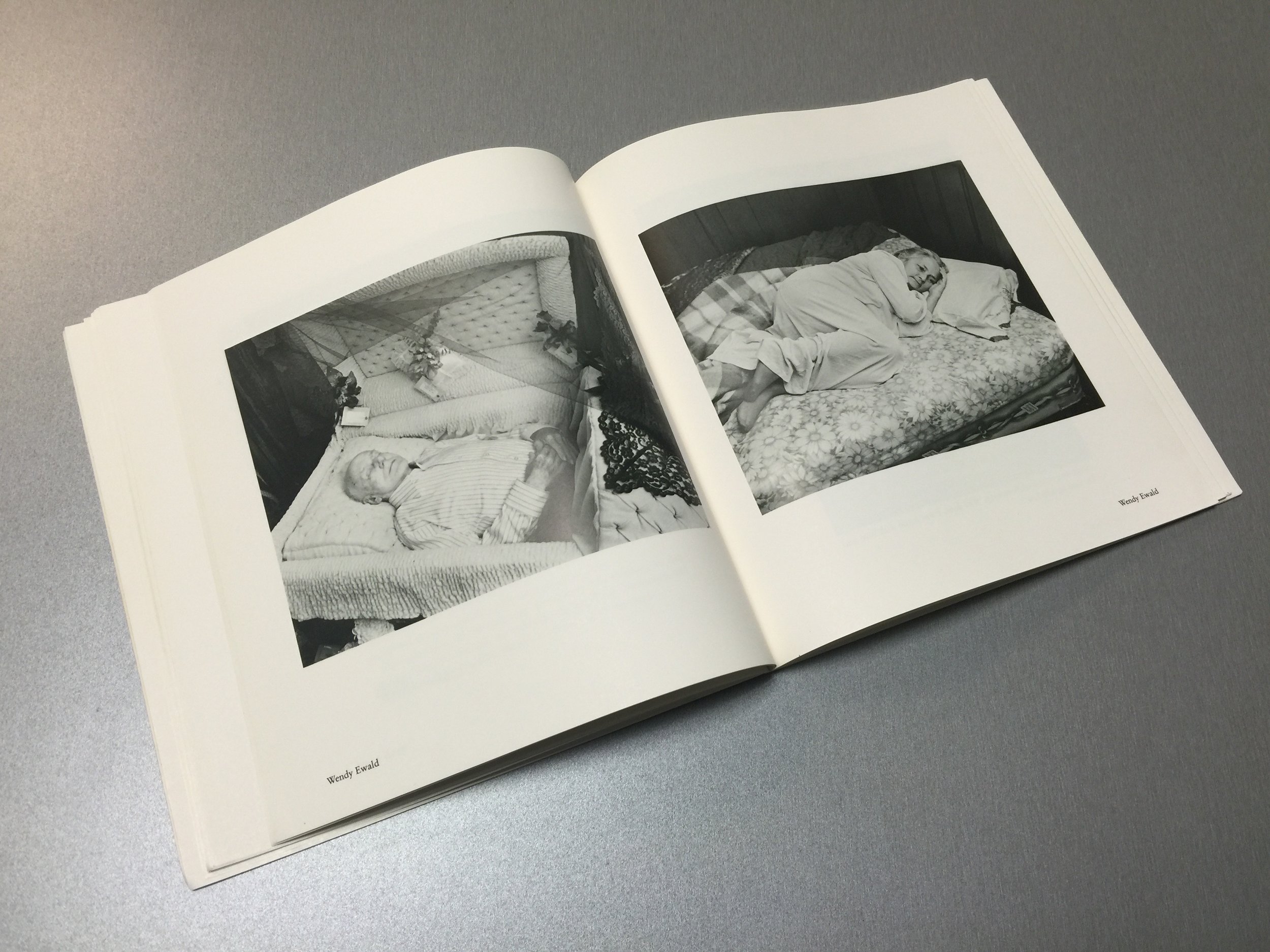
*Wendy Ewald moved to Letcher County, Kentucky in 1975. Soon after, she began photographing Rena Meade, who lives in Cowan, a neighboring community. Wendy portrays Rena's life, her relationships with the land and her family, and her passage through life's most difficult transition - the death of her husband of 40 years.
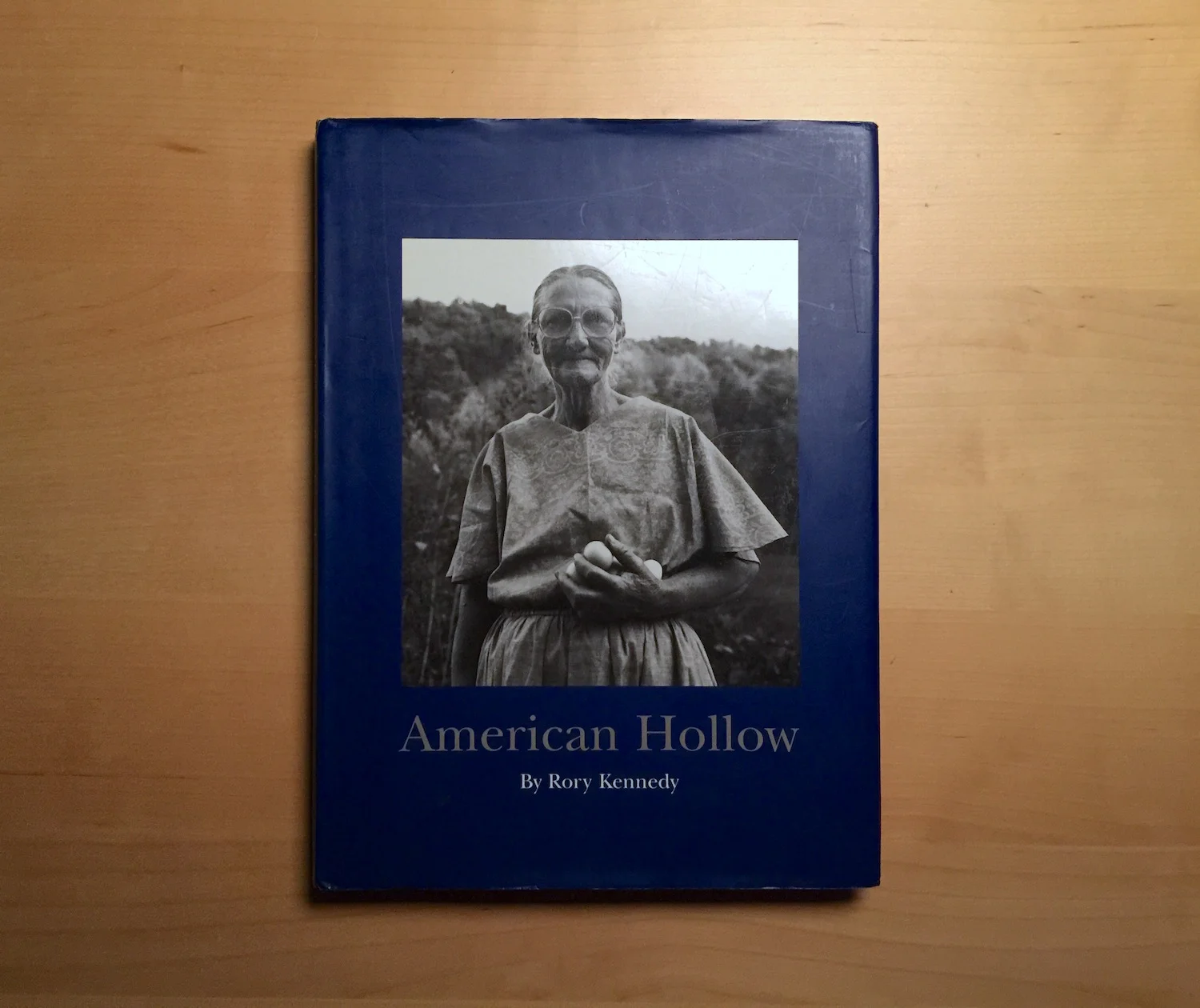
Review - American Hollow

Hardcover| 8 x 11 inches | 144 pages | 128 black and white photographs | Bullfinch Press, 1999 | Rory Kennedy | $35
The Kennedy name is not an unfamiliar one in Appalachia. Brothers John and Bobby campaigned there, visits that were well documented and widely circulated. Bobby's son, Robert Jr., has been a longtime environmental advocate working to shed light on the destructive practice of surface mining. For this film (HBO) and companion book, his younger sister, Rory, spent a year off an on with the Bowling family of Saul, Kentucky in Perry County.
I struggle with both the film and the book (for example, constantly referring to the Bowling family as a clan, written twice in the dust jacket alone), but I'm convinced that's not necessarily a bad thing. The issues addressed - poverty, welfare, and violence to name a few - aren't as black and white as we'd all like them to be. They never are. And while I struggle with some of the framing of the story, even its very premise at times, it really asks us to consider the complexity of issues - and people - we tend to generalize and marginalize, intentionally or not.

(Bass [Bascum] at the supper table.)
Nearly every review I read of the film American Hollow used the word "hardscrabble." I can't tell you how much I hate that word as it seems to be perpetually used to describe life in Appalachia. There should be a drinking game designed around this. In fact, Kennedy's introduction to the book begins, "American Hollow is a many-textured story about a hardscrabble life of poverty in a beautiful and unspoiled landscape." Drink.
She continues, "We expect Appalachia to be a place of inbreeds and six-fingered children, of hillbillies and moonshine, an America more backwards than backwoods. But in my year with the Bowlings, I discovered that the truth is not so simple. Early on, the Bowlings and I forged a powerful connection. They immediately opened up their home to me, and I spent more time with them, I was struck by their sense of dignity and pride as they survived life in this forgotten corner of America." Yes, she went there.

(Lisa Raisor, age twelve, jumping.)
The book's foreword was written by Robert Coles, distinguished Harvard professor, Pulitzer Prize-winning author, and founding member of the Center for Documentary Studies at Duke University (as well as cofounder of DoubleTake Magazine with Alex Harris). Coles poignantly writes, "The further hope, of course, is that the rest of us take notice of Appalachia, that we become thereby connected in mind and heart to a people both proud and vulnerable, who at a distinct remove from us, even as they salute the same flag we honor, speak the same language we favor. Under such circumstances a nation lives up to its name." Coles describes working in Appalachia as a young physician, which seemed to leave a lasting impression.
Most of the film's focus is on the Bowling family matriarch, Iree. She is really something. She birthed and raised children (thirteen in all), cooked, cleaned, sewed, gardened, doctored, quilted, and did just about everything else that needed to be done on the family land. "I feel like I'm rich, rich as the Lord wants me to be," she declares. She has dedicated her entire life to preserving the old ways, the traditions, and worked to care for her family. Kennedy writes, "Ultimately, I think she knows that her way of life won't survive much longer."
As one might imagine, there is a clear distinction between American Hollow the film and American Hollow the book. It bothers me to no end that photographer Steve Lehman's name is absent from the cover. It is understandably Kennedy's film, but it is very much Lehman's book. As such, it's hard for me let go of this oversight. Without question, the book is beautifully printed and bound. I appreciate text-heavy photobooks when the text isn't merely ornamental; here it is instrumental. The interviews, conducted by Mark Bailey, are masterful and work well in concert with Lehman's photographs. One particular interview with Ivalene Estep (the third child of Iree and Bass), is especially moving. "I've been taking care of kids all my life...It's like this circle we all get in and we're afraid to get out," Estep shares. This could very well be my family.
You can pick up a copy of American Hollow for incredibly little money (as of this writing, I count at least eight copies for less than five dollars including shipping). As I mentioned earlier, I struggle with this book but feel it's a good addition to any collection. It's certainly worth your time to sit with and study a while.

(Iree and Lonzo.)
A couple of side notes:
I met director Rory Kennedy at the Full Frame Film Festival in Durham, North Carolina in 2010 after screening the film (and she signed my copy of American Hollow). A few months earlier, I photographed her brother, Robert Jr., at a debate with Don Blankenship, former Massey Energy CEO, in Charleston, West Virginia. I met two Kennedys in the span of four months.
The film can be seen in its entirety here.
For the first time, I've added a flip-through of the book I'm writing about (below). It's not the best quality as I'm not a videographer (as evidenced here), but I thought it would be nice to provide a more complete overview of the book, its pace, sequence, and design. We'll see how this one is received and if there's a demand, I'll add more. Thanks for looking.
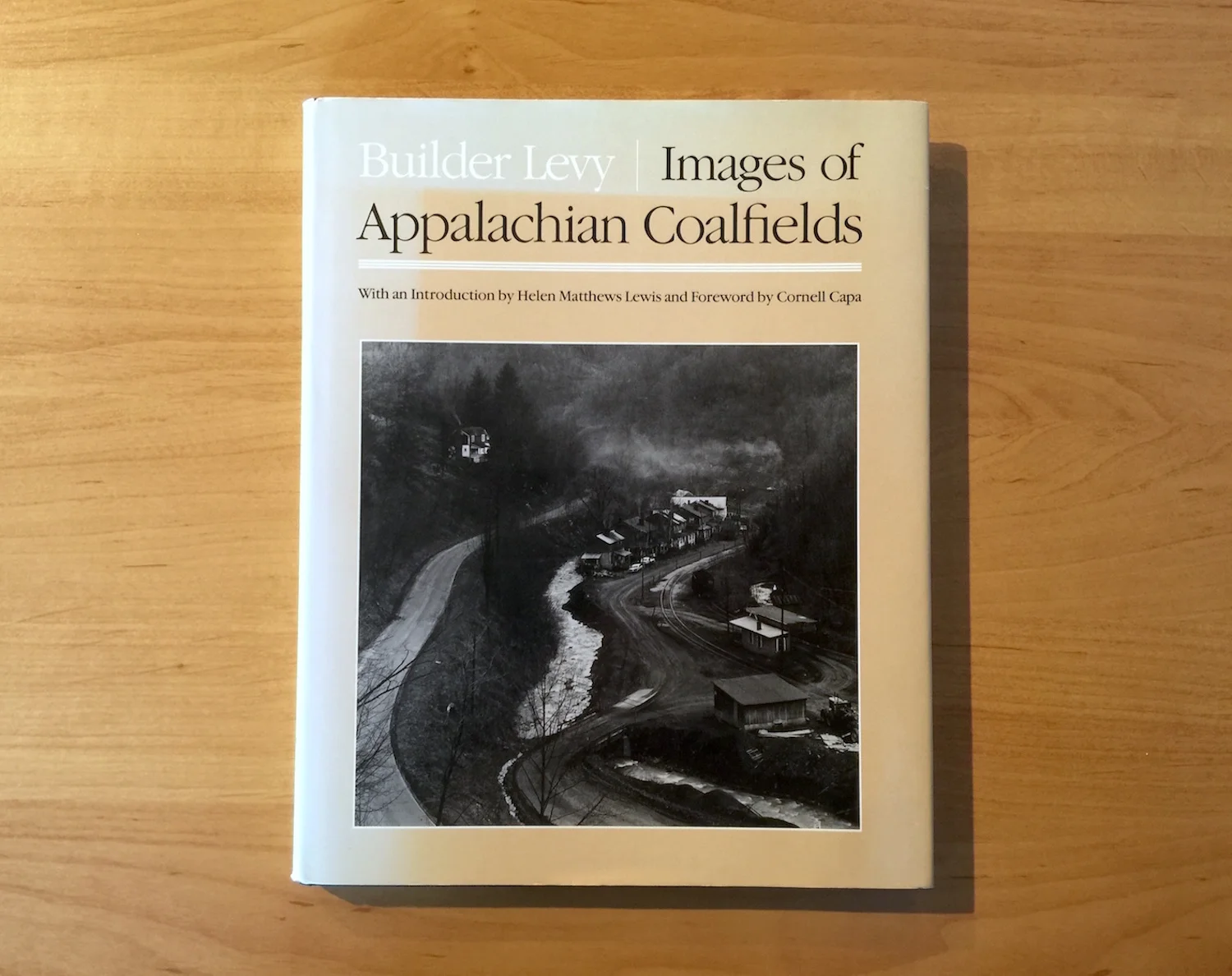
Review - Images of Appalachian Coalfields

Hardcover| 8 x 10 inches | 144 pages | 93 black and white photographs | Temple University Press, 1989 | Builder Levy | $25
Images of Appalachian Coalfields was probably the very first photobook specific to Appalachia I ever bought. In late 2009, I saw Levy's picture of Chattaroy, West Virginia native Nimrod Workman in Coal Country: Rising Up Against Mountaintop Removal Mining, the companion book to the documentary film, and wanted to know more about the photographer who'd photographed in my home town. Chattaroy isn't exactly that widely known (or photographed). An online search about Levy led me to his book, which I ordered right away.
When the book arrived, I sat down and pored over the pages and examined each photograph looking for more pictures from Chattaroy. Then, I noticed several pictures were made at Eastern Coal Company in Stone, Kentucky across the Tug River in Pike County. My pawpaw, Cecil May, was a mine foreman and worked underground for Eastern for over 40 years. I just knew I was going to see him in one of Levy's photographs. Well I didn't see my pawpaw, but I decided to email Levy to thank him for making the work and tell him the story about my connection to Chattaroy and Eastern Coal Company. That email struck up a conversation, which developed into a friendship. Later this month, I'll get to meet Builder Levy for the first time at the 2016 Appalachian Studies Association conference in Shepherdstown, West Virginia, where I'll be part of a panel with Levy and Dr. Sylvia Shurbutt of Shepherd University.
Images of Appalachian Coalfields begins with a powerful combination; a foreword by Cornell Capa, the brother of Robert Capa (yes, that Robert Capa) and an introduction by Dr. Helen Matthews Lewis. The introduction, twenty-two pages long, should be required reading for anyone making work in Appalachia. It's broken out by themes of work, community, and legacy, which sets the structure of how the photographs are presented (in identical sections). Lewis sets up the work with the care and scholarship anyone familiar with her work would expect, ending with, "The current plight of mining communities is strong evidence that the enrichment of the coal producers has resulted in the impoverishment of the region and its people."
The photographs from Levy's first book were made between 1968 and 1982. He started making pictures in Appalachia when he took a 10-day trip to Boone, North Carolina. On his return to New York, he made a detour through Mingo County and stayed with a VISTA worker who introduced him to some local folks. Working slowly over time and returning to the coalfields often, Levy began to build the body of work that would eventually become Images of Appalachian Coalfields.
One of the important things I gleaned from my early conversations with Levy was how important it was to him to give back prints. It's something I started incorporating into my practice because of him. I've given away at least three copies of this book (as well as Rob Amberg's Sodom Laurel Album, which I'll write about later) as examples of the kind of work I want to see more of, that I feel we all need to see more of. This isn't a book any MTV producer referenced as an idea for a new show. Instead, it's a deliberately slow an quiet approach to telling a story with grace and intention.
From the dust jacket: "Levy describes the sometimes mixed reaction he received from miners, foremen, and company guards at various mining sites. By "reading" the images, one senses that he did no simply gain access to witness but fully participated in the daily "mantrips," the comfortable hospitality, the unity of miners surfacing after a long day underground. Images of Appalachian Coalfields forces the reader to confront the life of a mining community, to recognize the faces of struggle, camaraderie, defiance, endurance, and to admire the intense vision of a photographer whose love of subject pays homage to the human spirit."
I've selected some of my favorite spreads from the book and included the caption information.

Spread one, pages 42 and 43. Left: Loaded coal cars in the mines, drawn by animals or men years ago, are now moved or "hauled" by motorized vehicles called "motors." (One of Eastern Associated Coal Corporation's mines; Boone County, West Virginia, 1982) Right: Several years after he was photographed, Andrea Kosto was killed by a large piece of slate that fell as he was trying to locate an obstruction under the loading tipple. (Sycamore Mining Company; Cinderella, West Virginia, 1971)

Spread two, pages 50 and 51. Left: Workers emerge form the mine at shift's end. (Wolf Creek Colliery; Lovely, Kentucky, 1971) Right: Since the late nineteenth century, Black miners have been among the leaders in the struggle to defend and expand the rights of all coal miners. (Old House Branch Mine, Eastern Coal Company; Pike County, Kentucky, 1970) [Editor's note: although not originally identified in Images of Appalachian Coalfields, the miner's name is Toby Moore. He appears on the cover of Levy's third book, Appalachia USA.]
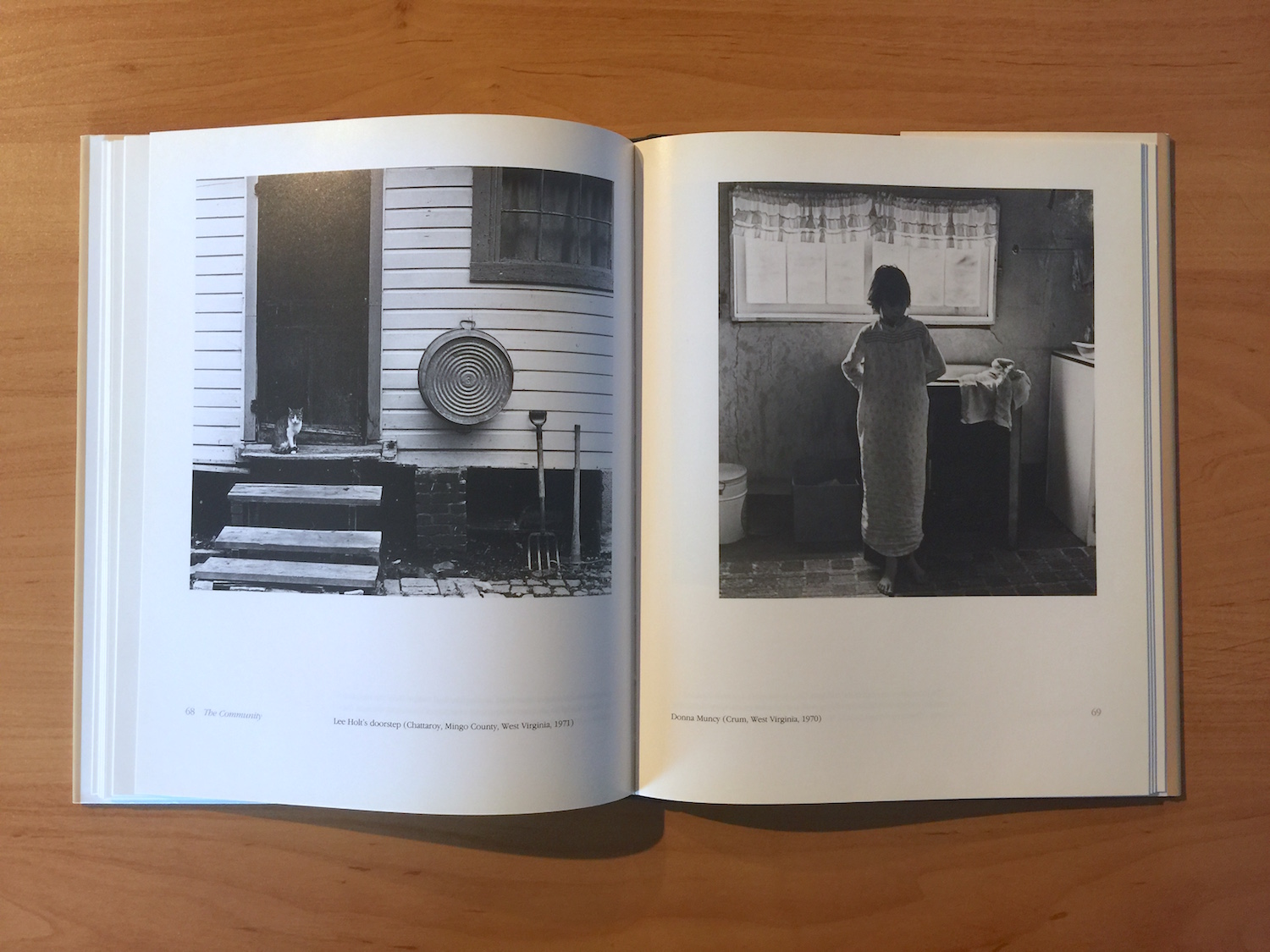
Spread three, pages 68 and 69. Left: Lee Holt's doorstep. (Chattaroy, Mingo County, West Virginia, 1971) Right: Donna Muncy. (Crum, West Virginia, 1970)
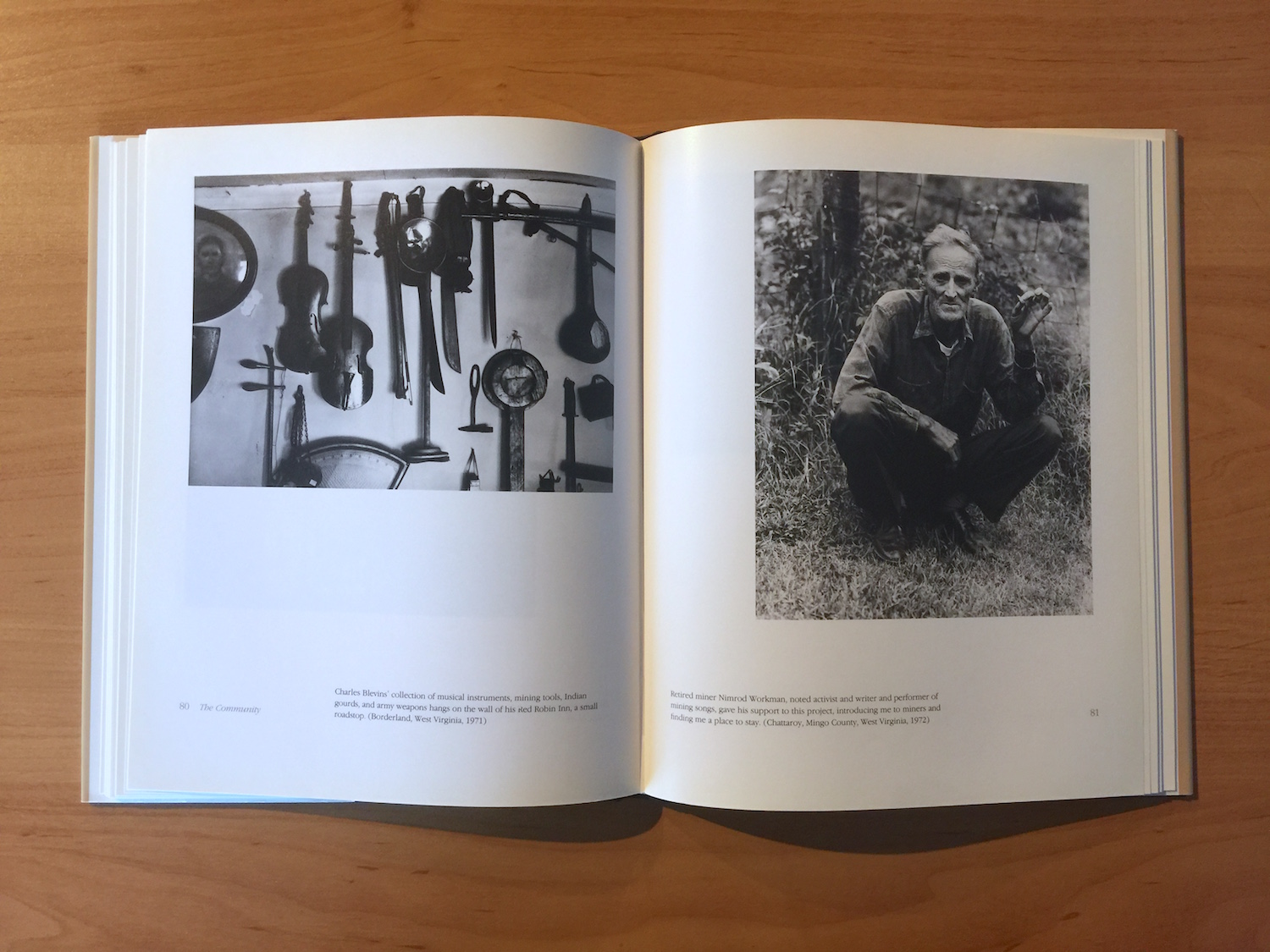
Spread four, pages 80 and 81. Left: Charles Blevins' collection of musical instruments, mining tools, Indian gourds, and army weapons hangs on the wall of his Red Robin Inn, a small roadstop. (Borderland, West Virginia, 1971) Right: Retied miner Nimrod Workman, noted activist and writer and performer of mining songs, gave his support to this project, introducing me to miners and finding me a place to stay. (Chattaroy, Mingo County, West Virginia, 1972)

Spread five, pages 110 and 111. Left: View from Highsplint bridge. (Harlan County, Kentucky, 1974). Right: Williamson, "Home of the Billion Dollar Coalfields." (Mingo County, West Virginia, 1972)
Long out of print, you can pick up a used copy of Images of Appalachian Coalfields relatively inexpensively online from a number of sites. I highly recommend this book.