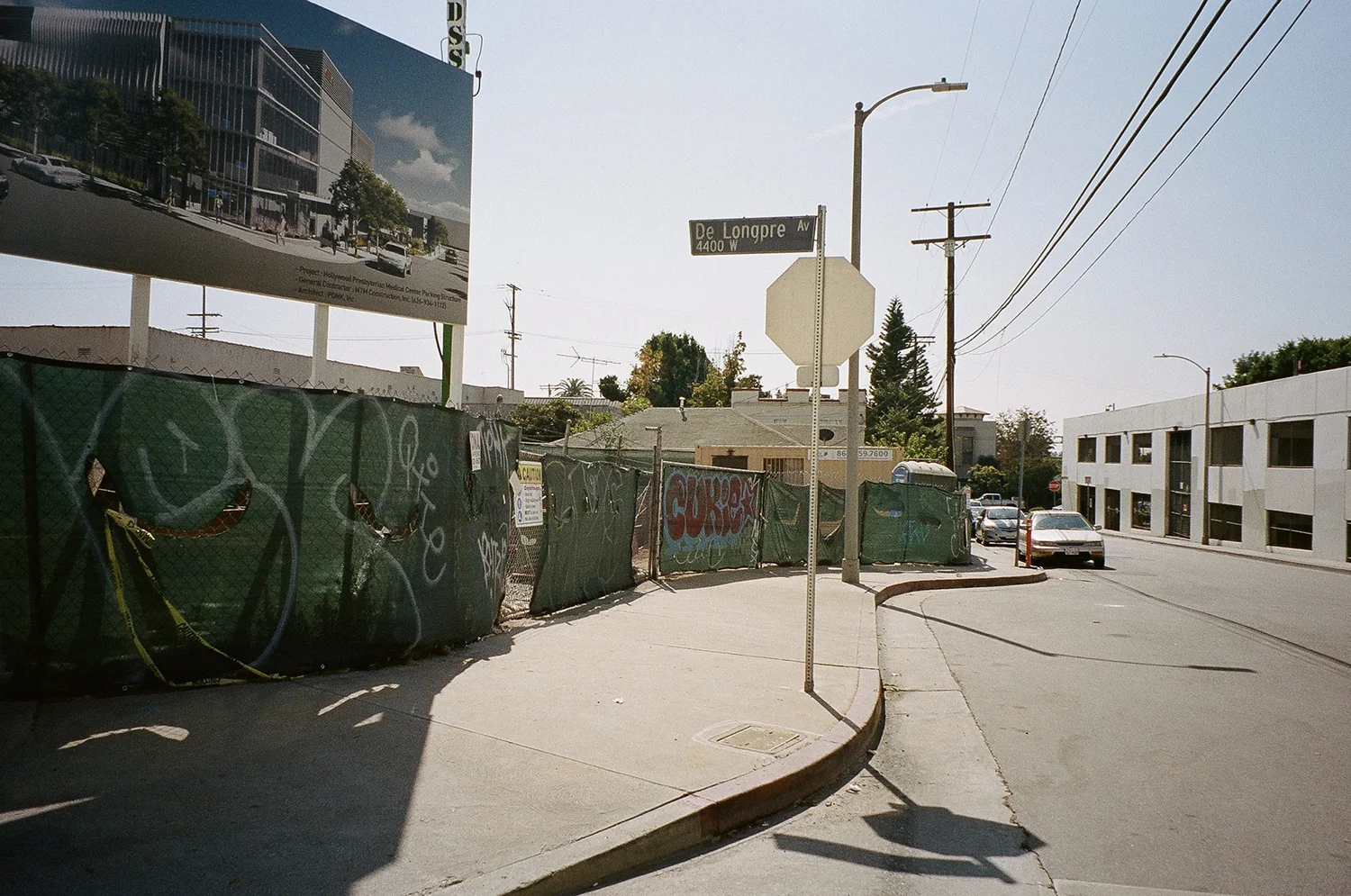
Heart in Place: Kwasi Boyd-Bouldin

You might be wondering why you’re looking at pictures of Los Angeles on a blog that deal primarily with work from Appalachia. From my desk in Charleston, West Virginia, Los Angeles is more than 2,300 miles away, but there is a proximity of heart for place I find in Kwasi Boyd-Bouldin’s photographs that I’d like to share.
I first learned of Boyd-Bouldin’s work via Twitter, though I can’t remember exactly who shared it. I scrolled through some of his images online and was drawn in by his straightforward manner of looking. His compositions suggested an eye of someone looking beyond the surface and beyond the stereotype of place. This is not the Los Angeles you’ve often been shown.
After several months of following Boyd-Bouldin’s work on Twitter, and later Instagram, it occurred to me that he is looking at his corner of Los Angeles in a very similar way I’m making work in West Virginia and Appalachia. Despite the geographical differences, there is a common thread of love for place, a desire to show a more realistic portrayal of that place through critical looking and thinking, and to document the impact of the physical changes in the landscape of one’s home.
For all the things I detest about social media, every now and again, there are redeeming qualities. Had it not been for social media, I might have never known about Boyd-Bouldin’s work. I might have never had the chance to reach out to him to tell him how much I appreciate what he’s doing and why he’s doing it. I might never have had the chance to ask him about his work and to share some of that work here.
Boyd-Bouldin’s work is becoming more widely visible. In February of last year, he was included in TIME’s 12 African American Photographers You Should Follow Right Now and in November of last year, the New York Times LENS blog featured some of his photographs and a brief interview. One of the things he said in that piece illuminated a foundational element in the work he makes and made me think about the work I make: “In part, he says, the project is his intention to document a vanishing L.A. Few who live outside it even know it exists. He wants “to present a portrait of the city that reflects the lives of people who live in Los Angeles, as opposed to the glossy fictional version that dominates the mainstream narrative.” Just substitute Los Angeles with Appalachia or West Virginia or Kentucky.
In his series The Displacement Engine, in which he provides much needed critical thinking and viewing on the issue of gentrification, he writes, "The effort to push vulnerable populations to the margins may seem to be organic but it is often an organized campaign. Perpetual, neighborhood wide rent increases coupled with a total sustained lack of local infrastructure (grocery stores, good public schools, etc...) are the ingredients needed to initiate the desired effect." In West Virginia it isn't the same type of gentrification but it is systematic erasure. Apply this lens to look at the organized campaign of the coal industry to keep an already vulnerable population marginalized. In Mingo County, West Virginia, there isn't a single grocery store in the entire county. Likewise, four of the county's five high schools (Burch, Gilbert, Matewan, and Williamson) closed their doors in 2011 before consolidating into one school, Mingo Central, which is built on a reclaimed surface mine site.
I trust you'll enjoy Boyd-Bouldin's work and his thoughtful approach to place. Scroll through for our brief conversation, including a list of photographers he recommends following. You can see more of Boyd-Bouldin’s work at his website Kwasi Boyd-Bouldin and The Los Angeles Recordings. You can also follow him on Instagram and Twitter.

Roger May: Can you talk about the importance of photographing the place you’re from and how that informs your pictures?
Kwasi Boyd-Bouldin: Most people’s idea of what life is like in LA (and Hollywood specifically) is completely based in fantasy. I didn’t feel that the city I grew up in was being accurately represented in the media so I started documenting things from my perspective. It’s always been my goal to depict what Los Angeles looks and feels like from the street level. I think everyone should photograph their neighborhood.

RM: How about the importance of film? How and when did you begin to incorporate film (and digital) into your work?
KBB: My relationship with film photography started out of necessity, it was the only affordable medium when I started to get serious about photography. Over the years I stuck with it because it became the easiest way to get consistent results. It forces me to incorporate the element of time into my workflow and that is something that I apply to all of my photography regardless of platform. I’ve gone back and forth over the years but recently I have shifted back to a digital workflow (Fuji X).
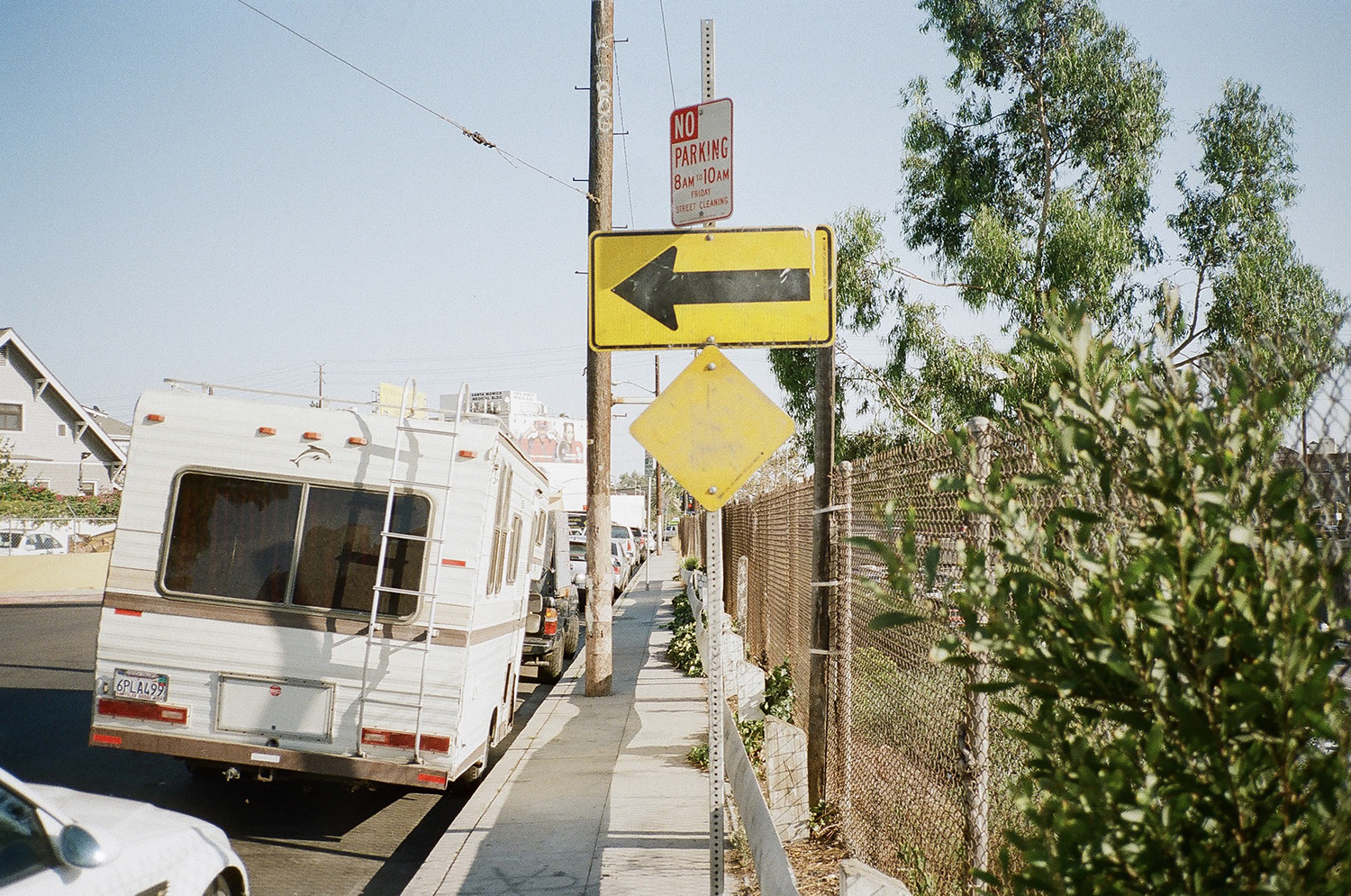
RM: Your work speaks to me on a number of levels, but I’m particularly interested in your relationship to place and how you work to show the human interaction or imprint on the landscape. What is it about the landscape you feel compelled to document?
KBB: I’m drawn to photographing the urban landscape because of an interest in depicting and navigating large systems. Los Angeles is a knot of interlocking cultures, neighborhoods, and influences and I’ve always been inspired by how everything intersects. And for me, the landscape is the universal element that connects all of these different components. Everyone leaves their mark in one way or another and by stepping back you can see how all of those marks look collectively. That perspective is what’s missing from mainstream depictions of L.A. (and most other places) so that’s what I have focused on with my work.

RM: Can you tell me a little bit about who and what inspires you? Do you care to share what you’re reading or listening to right now?
KBB: I have a wide range of creative influences ranging from a lifelong addiction to Anime and science fiction to random conversations to people I meet on the street. In the realm of photography I’m influenced by Jamel Shabazz, Gordon Parks, Stephen Shore, William Eggleston, Latoya Ruby Frazier, Thomas Struth, and far too many more to list.
My father played the flute and the xylophone and my two older brothers were in a semi-famous old school rap group called 7A3 so I have always been surrounded by music. As a result I listen to a bit of everything, my current rotation includes Kendrick Lamar, Thundercat, MF Doom, Kamasi Washington, Little Dragon, Flying Lotus, Jay Z, Dabrye, Prhyme, Madlib, and a ton of other artists I’ve forgotten.

RM: The issue of gentrification is something many living in towns and cities are becoming more and more aware of. How do you see photography holding space for that conversation and the intersection of art/documentary and socioeconomics/politics?
KBB: I think that documenting neighborhoods as they exist currently and how they are being transformed is critical. Photography can be a vital part of that conversation but more people from the areas that are being gentrified need to be given the platform to share their stories. It really comes down to which perspectives are valued and why some interpretations are prioritized above others. Using photography to contextualize the lives and surroundings of the people affected is just the start, there needs to be a conversation about how neighborhoods can be revitalized without forcing people out of them.

RM: Who are other photographers folks should be paying attention to right now?
KBB: I think that we’re in the midst of a golden age in photography and thanks to platforms like Instagram you can come across a lot of incredible work you would miss otherwise. I think the following people are doing amazing things: Luis Torres, Erwin Recinos, Idris Solomon, Sean Maung, Michael Santiago, Scott Hurst, Aaron Turner, Gioncarlo Valentine, Jon Henry, Wendel White, and Nadia Huggins.


Beauty & Simplicity: Walking an Old Camera with Instant Film

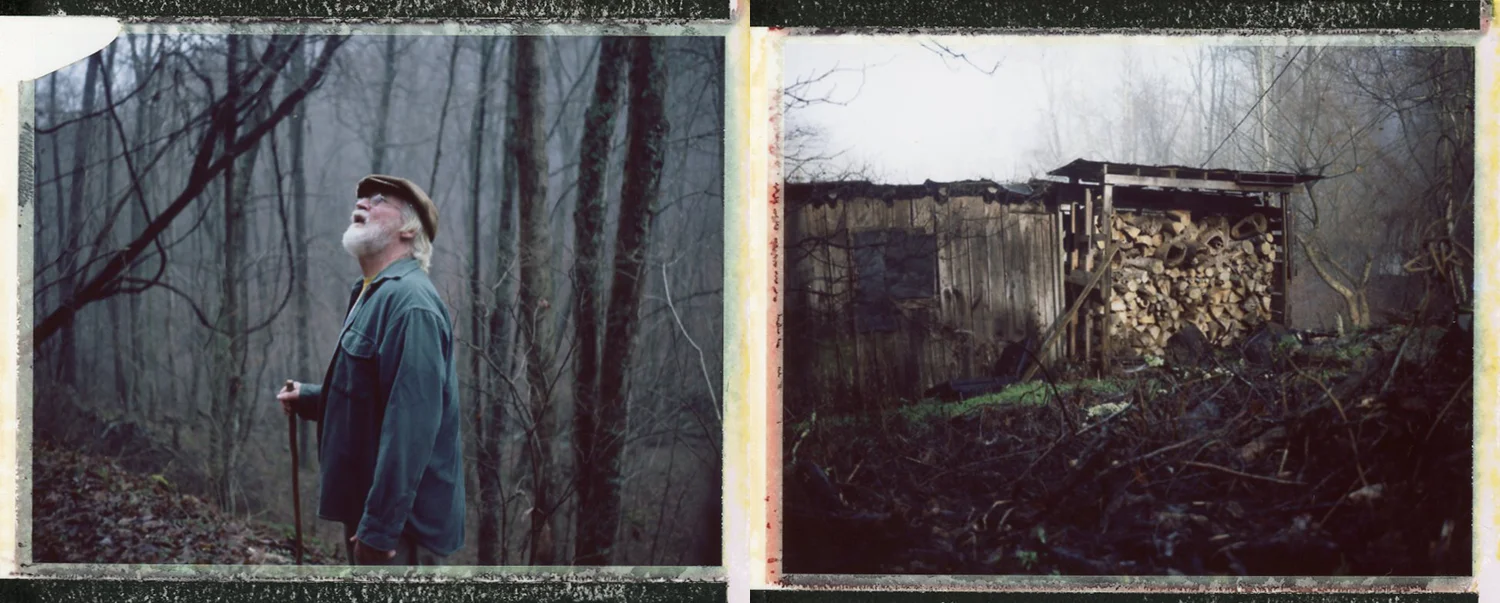
[Left: my father-in-law, Wayne Justice on a walk on the family property the morning after Christmas. Elgood, West Virginia (Mercer County). Right: the Justice family woodshed. Both photos were made 26 December 2015.]
I'm old enough to remember Polaroid film when it was still as readily available as SD cards are today. Even as a kid, there was something special about the smell of pack film, the pitched whine of the camera as it pushed out the picture, and the wait for the image to appear. I've been spending time with some of the photos from my childhood thanks to my Mom and my aunt Rhonda who have loaned me several family photo albums (also now a thing of the past as most of our photos live on our devices or online). Talk about nostalgia.
A couple of years ago, my good friend Nic Persinger reintroduced me to instant film. Around that same time, I'd picked up a Fujifilm Instax 210, which was a little more similar to the Polaroid cameras I grew up with. Nic suggested I try a Land Camera, one of Polaroid's most popular series. He sent me one to try out (a 1969 model, which you can pick up for about $3) and I've never looked back. The camera shoots pack film, which is still made by Fujifilm, and comes in color (FP-100C) or black and white (FP-3000B), and produces a 3.25" x 4.25" (approximately) print. Film runs about $10 for a box of color film and $25 for black and white. This isn't a how-to article, but rather one that will share my love for these cameras and this film. I also wanted to share some of my favorite pictures I've made with this combination over the last couple of years and a little bit about what I do with these pictures. (These were scanned on an Epson V600 flatbed scanner.)

[Row one, left to right: Ed Shepard, Welch, West Virginia; Doug Dudley, Mingo County, West Virginia; Downtown Williamson, West Virginia; and Baisden, West Virginia. Row two, left to right: Curtis Meade, Red Jacket, West Virginia; Walmart, Kimball, West Virginia; Grant's Supermarket, Princeton, West Virginia; and Baisden, West Virginia.]
I carry my Polaroid in my camera bag whenever I'm in the field. Cumbersome as it is, it's almost always with me. I can say that I've probably given away as many of these pictures as I've kept. I've found them to be wonderful leave-behinds, small mementoes to thank folks when I make their portrait with either my digital or film cameras. If you've never seen the look on a kid's face when they see a Polaroid for the first time, you're missing out. Most adults are still giddy to get a one of a kind print handed to them. There's a real magic to it.

[Row one, left to right: Abandoned church near St. Matthews, South Carolina; Donny Brook Road, Raleigh, North Carolina; Sugar Grove, Virginia; and Bluefield, West Virginia. Row two, left to right: Monongah, West Virginia; Jefferson Davis Highway, Virginia; Cary, North Carolina; and Harlan County, Kentucky.]
Instant film has made a comeback in the last few years. In fact, PDN just reported that Fujifilm's Instax film was the bestselling item in Amazon's camera department over the holidays. There's something about holding a picture you've made. And there's something to giving them away. With so much digital content pushed today, it's a real pleasure to hold an actual photograph. Each picture is unique in and of itself, a true one of a kind. I love that about this process. The pictures are imperfect - beautifully imperfect and individual.
Here are some technical notes about the camera I use. Again, this isn't a how-to article, but I wanted to share some basics.

I have a model 340 Polaroid Land Camera, which I've customized with the state of West Virginia on the camera's cover. At the far right, you can see the modifications Nic made so that the camera now takes three AAA batteries instead of the native 4.5 volt battery. Often with these cameras, batteries have been left inside for decades and have corroded. There are tons of how-to articles and videos on how to modify Land Cameras, which I'll leave up to you to find. As far as battery usage goes, I can say that I've shot hundreds of exposures without changing the batteries a single time.

These cameras are beautifully simple and straightforward. At left, you can see the view window and the focus window. This is a rangefinder, so you compose your image in the view window and use the rangefinder pushbutton to focus (1). When your image is in focus, cock the shutter (3) and press the shutter release (2). That's it. You pull the white numbered tab (which is numbered 4) and you have your print. I usually wait two-three minutes before peeling apart the print and negative. (Note: I've recently peeling my prints away in a manner that leaves the black border - as seen in the first two images at the top. I just like the aesthetic of the border it leaves behind.) Once the prints have completely dried, I store them in archival sleeves by Gaylord Archival. There is also a process by which you can scan the negative, but I haven't tried it. Here's a link to the manual for the Polaroid 340 Land Camera.

Earlier this year, I thought it would be fun to share work with folks and have access to film at the same time. I thought I'd run out of film, then a box slid from underneath my seat. I had an idea which goes like this: If you'd like a Polaroid (Fuji) print, send me a box of film and specify the number you'd like me to send you (just one, selected from 1-10) and when I've made the picture, I'll drop it in the mail to you. If you'd prefer a picture from my archive, that works too. Some local camera shops carry this film. I've also ordered it from B&H or Amazon.
Please limit your selection to one per box of film you send. And holler if you have any questions. Here's to more film and more heartwork in 2016. Thanks!
Looking at Appalachia | Susan May Tell
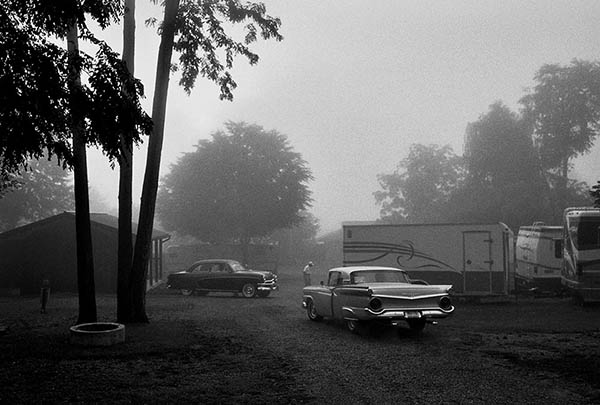 SEEN AND FELT: Appalachia, 2012
Having grown up during the years when the United States of America was a manufacturing giant, it was important for me to reconcile those early memories with the reality of the present day--to see what this region, known to have fallen on hard times, looks like now.
This is what compelled me during the summer of 2012 to drive through rural Appalachia and the Rust Belt: parts of West Virginia, Pennsylvania and Ohio. I stayed in campgrounds; slept in the back seat of my 90's rust bucket.
The trip began in the small Allegheny River town of Natrona in Western Pennsylvania and ended along the Ohio River in the even smaller mill town of Mingo Junction, Ohio. This 65-mile distance — according to a map — took 4,000 miles to cover. There was some crisscrossing back and forth as I followed suggestions of local folks met along the way who recommended places that evoked a perceptible connection between the past and present and which they believed important for an outsider to see. Each encounter was detailed in the journal I kept during the trip.
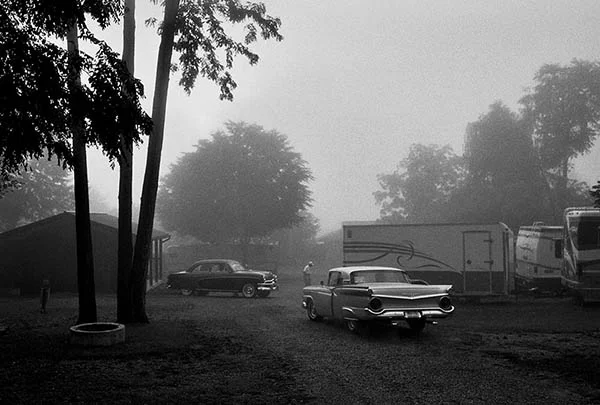
With Tri-X black-and-white film in my Leica rangefinder camera, I walked around the huge shuttered steel mills, along train tracks and through deserted downtowns with ghost-like streets that had once been thriving.
I didn't approach this project as a photojournalist, choosing instead to photograph spontaneously, to allow myself to be seduced by a scene’s visual aspects and its impact on my gut.
Personal work has always been more about the journey and less the destination. It’s about discovery, needing only to press the shutter at moments when I’m moved by what I’m seeing. In literary terms, it is about creating an “objective correlative” between the inner and outer, the seen and felt.
My work is known for its very formal compositions: lines, angles, dividing what is within the frame. It is known equally for its powerful emotions: feelings of isolation and melancholy. Taken together, these seemingly disparate elements create photographs that are direct yet poetic, mysterious, quiet and understated.
As the journey was nearing its end, I couldn't help but think about the places seen and photographed: towns, main streets, mills, and the ever-present utility wires and clouds. The gradual and steady accumulation of having connected with these "things" informed my ideas about present-day Appalachia. The trip increasingly felt like a 6-week eulogy to what no longer existed and echoed what poet William Carlos Williams' believed: "no ideas but in things!"
More of Susan May Tell's work can be seen here.

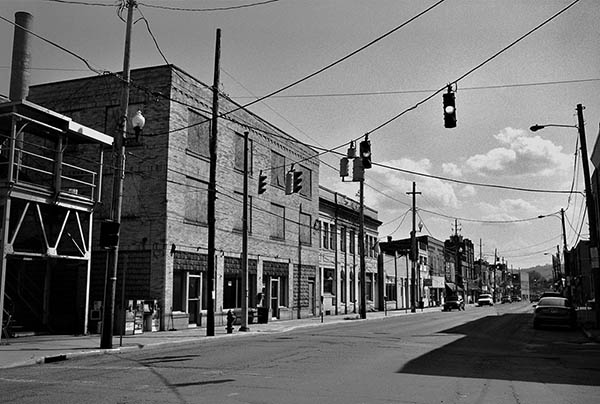
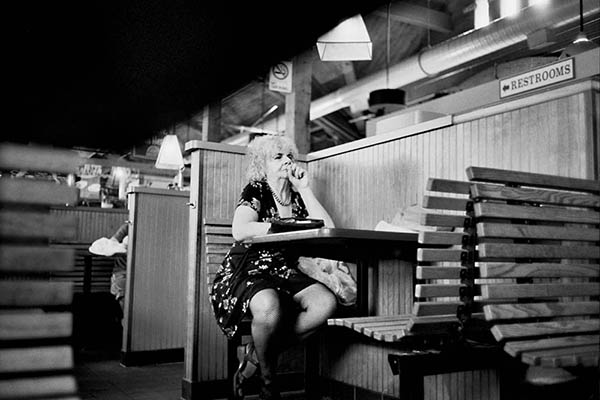
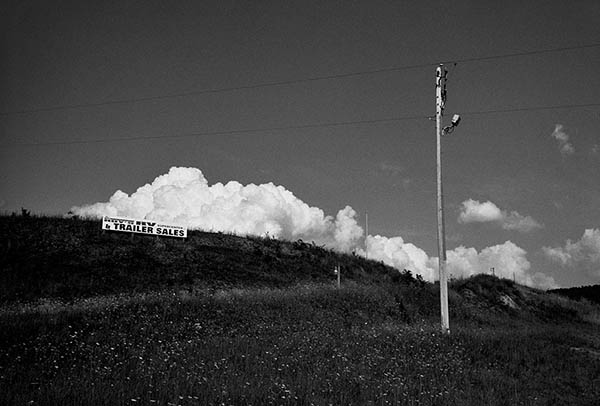
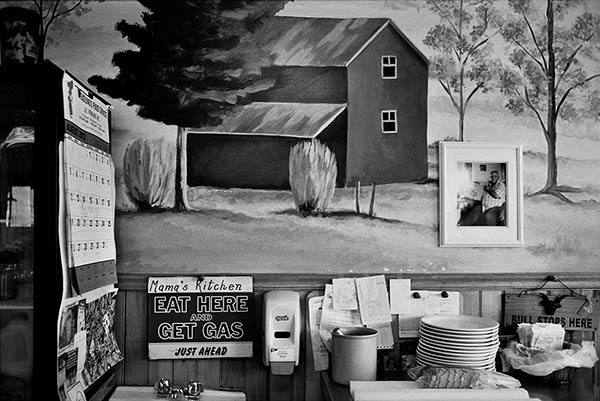
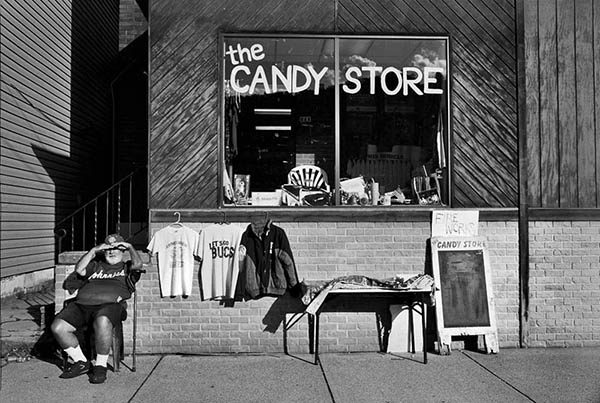

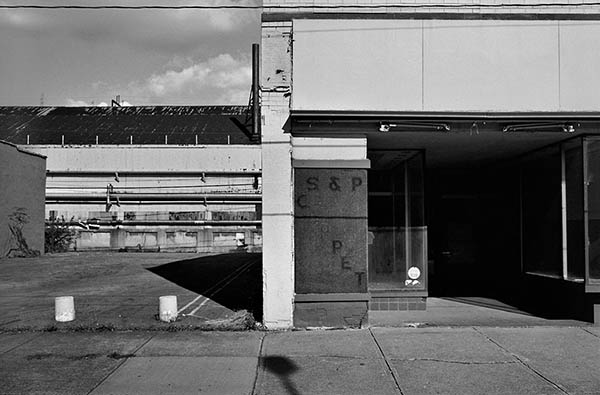
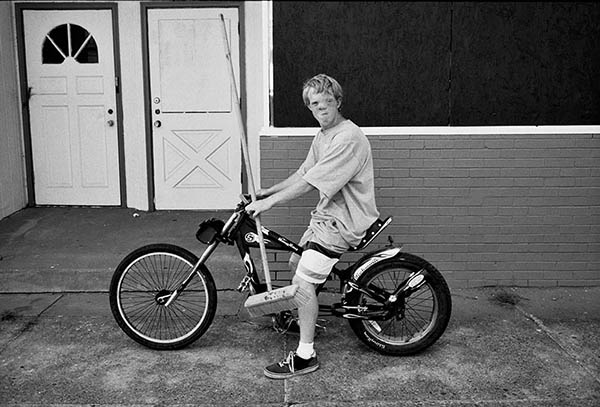


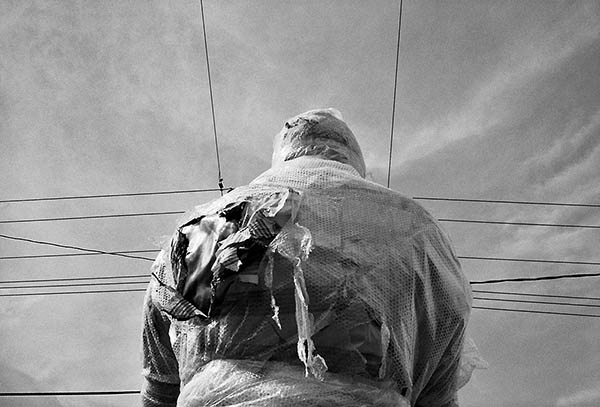

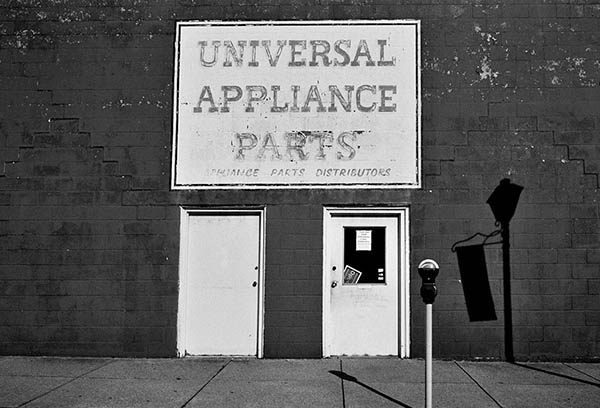
All photographs and essay “SEEN AND FELT: Appalachia, 2012” © Susan May Tell. All Rights Reserved. 1. Appalachian Mist, Altoona Pennsylvania, 2012 2. Weirton Steel Mill, Weirton, West Virginia, 2012 3. Main Street, Mingo Junction, Ohio, 2012 4. Time Out, Wheeling, West Virginia, 2012 5. Replica, Elkins, West Virginia, 2012 6. Mama's Kitchen, Elkins, West Virginia, 2012 7. The Candy Store, Johnstown, Pennsylvania, 2012 8. Spirit of Brownton, Brownton, West Virginia, 2012 9. S & P Carpet, Mingo Junction, Ohio, 2012 10. Odd-job Man, Mingo Junction, Ohio, 2012 11. Steel Mill Memories, Steubenville, Ohio, 2012 12. Wilkinsburg Reflected, Wilkinsburg, Pennsylvania, 2012 13. Appalachia Crossroads, Altoona, Pennsylvania, 2012 14. Union Local Flag, Belmont, Ohio, 2012 15. Universal Appliance Parts, Wheeling, West Virginia, 2012
Looking at Appalachia | Sarah Hoskins - Part Two
 We all have different reasons for why pictures resonate with us. Sometimes those reasons are easily defined and sometimes it's a bit of a mystery. As a photographer and as someone who spends a good deal of time looking at photographs, one of the most beautiful qualities of a picture is its ability to offer me something familiar without necessarily having a direct connection to the subject, something I can't quite put my finger on that keeps me coming back.
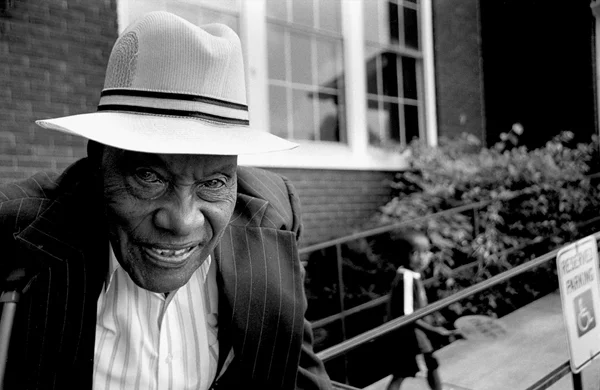
Sarah Hoskins' dynamic photographs offer us a look into something familiar, where there exists an established, poetic intimacy. Though the people in these photographs aren't familiar to me, I recognize the intimacy, the humanity. We are inundated with pictures today that attempt to photograph humanity, yet lack a true sense of humanity behind the camera (and in the distribution of the pictures once made). There is something to be said for commitment to long form projects like Hoskins'.
Trust is something that is established and maintained over time. Cultivated. Appalachia has historically been misrepresented, as have African-Americans. When you combine these two truths, it would seem as if the deck is stacked against anyone trying to make serious work here (rightfully so), yet Hoskins connected and she stayed. This is what the process of staying, sticking around, of not taking looks like. There is making and sharing and returning to make and share again. She is not asking for vulnerability without offering her own. For me, this negates the question of whether or not an outsider can truly document a community not their own.
As Hoskins and I spoke by phone again a few days ago, she was baking cookies - eight dozen, in fact - in preparation for a road trip back to Kentucky to attend a wedding of someone in the communities she's photographed for years. Her entire family was invited to share in this special day with what's become her extended family, her community.
Capturing these images on film is a testament to the pace and cadence of her work. She told me she has about one percent of her images edited and printed, which means what we've seen thus far barely scratches the surface of the work she's compiled. Like the lasting friendships Hoskins has built for more than a decade, these photographs will stand as a testament to the love and strength of a Homeplace I hope we all are fortunate enough to find.
Stay tuned for details on how you can win a set of signed postcards from Sarah Hoskins.


All photographs © Sarah Hoskins. 1. Farrier Duane, 2012. 2. House of History, 2004. 3. Kayla's Baptism, 2010. 4. New Car, New Zion, 2010. 5. Miss Margaret Raglin, Zion Hill, 2009. 6. Ironing Curtains, 2009. 7. Mac, 2006. 8. Family Reunion, 2003. 9. Apples and Basket, 2004. 10. Homecoming, 2003. 11. Lydia at 100, 2006. 12. Walker Sisters, 2012. 13. Window View, 2003. 14. Richard Hughes, First Annual Zion Hill Days, Zion Hill, 2007. 15. Merytle B on her way to church, 2011.