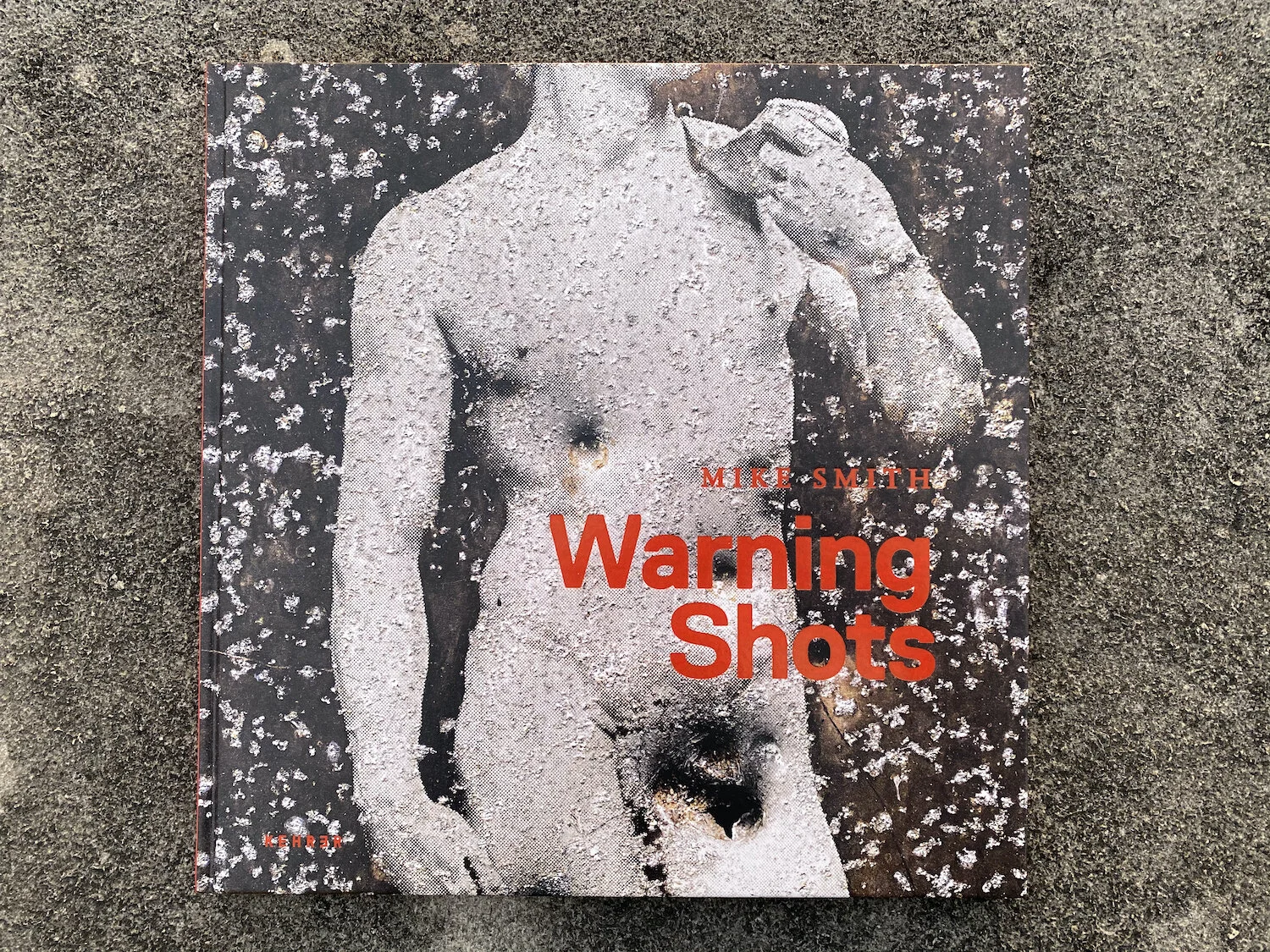
Review - Mike Smith's Warning Shots

“Is this still a red and blue world? I see it as dark as night. Not that it is obscure; rather, it’s opaque.” Eudora Welty, On Writing, 1949.
Warning Shots by Mike Smith is not an easy book of pleasing pictures from the quaint, rural South. This is not a book filled with hope of a brighter future, at least not at first glance. It is dark as night.
It’s in this darkness of shadow that we see the first person emerge after a dozen photographs into the book. It’s Smith’s shadow cast onto the first few steps of a home whose lawn is decorated by black lawn-jockeys.
For four decades, Mike Smith has photographed east Tennessee and the surrounding region with the kind of obsession one has that can only be described as love. I don’t mean a first love, or new love, or romantic love. I mean the kind of love that finds its way from your bones to your head and back to your heart. Welty also writes about the notion that you can write (or photograph) from love with straight fury. I sense fury throughout this body of work.
In Diana C. Stoll’s introductory essay, “Shooting in the Dark,” she writes, “These are not quiet or inscrutable metaphors - and maybe that is the point. In these benighted times, guesswork no longer has a place; so Smith lays it all out for us, clear as day.” Stoll couldn’t be more spot on. This book is anything but quiet.
Mike Smith began teaching photography at East Tennessee State University in 1981 and taught there until he retired in 2018. That, in and of itself, is an incredible accomplishment as it seems rare that one works in the same job or with the same company for an entire career. His work there greatly influenced generations of photographers, many of whom would point to Smith as the reason they studied photography and continue to practice.
This work was assembled during the 2016 election cycle. Given the dates the pictures were made, they suggest this climate isn’t as new as we might think, or better yet, think we’ve somehow outgrown. Too often, we don’t think about pictures because we aren’t required to. We are inundated with loaded images. We are spoon-fed pictures. We are lulled into a sugar coma by the ease of pictures that require little of us. This is not that.
Spending time with this book, with these pictures, makes me uncomfortable. I’m glad for it. If it doesn’t make the viewer uncomfortable, doesn’t evoke some visceral response, some reflexive withdrawal, there is something seriously wrong with the viewer. There is no safety, no safety net in these photographs.
The first chains placed on a slave brought from Africa, the first Native American pushed off the land, the first chunk of coal extracted, the first tree felled, this is our evidence and yet we are surprised by it and want nothing more than to look away or suggest something is “wrong” with “those people.” This is our inheritance.
These pictures, while made in Appalachia, represent a far wider reach than rural east Tennessee. In the closing essay, “Troubling Images,” Eric Paddock writes, “As Smith’s photographs penetrate to these sad, alienated and frightening layers of the region’s landscape, we know they lie below the surface in other parts of the country, too."
Images like this convince us we can know a place, point to it, but allow us to miss, perhaps withdraw from the much heavier, more painful work of looking inward, or asking of ourselves what part do we play in this?
*Editorial note: I received a complimentary review copy of Warning Shots from Kehrer Verlag.
Preview Warning Shots here.
Review - Sheron Rupp's Taken From Memory

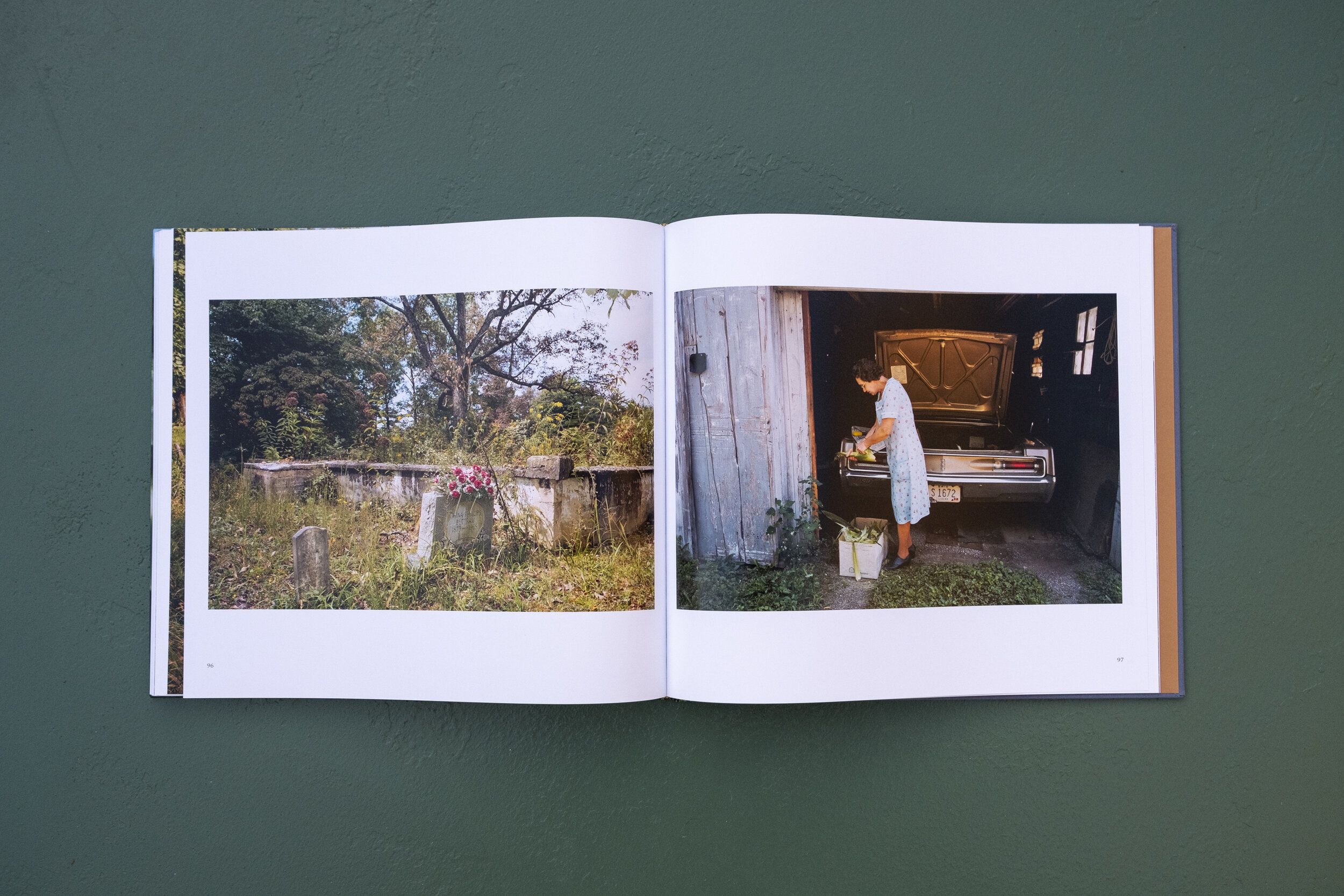
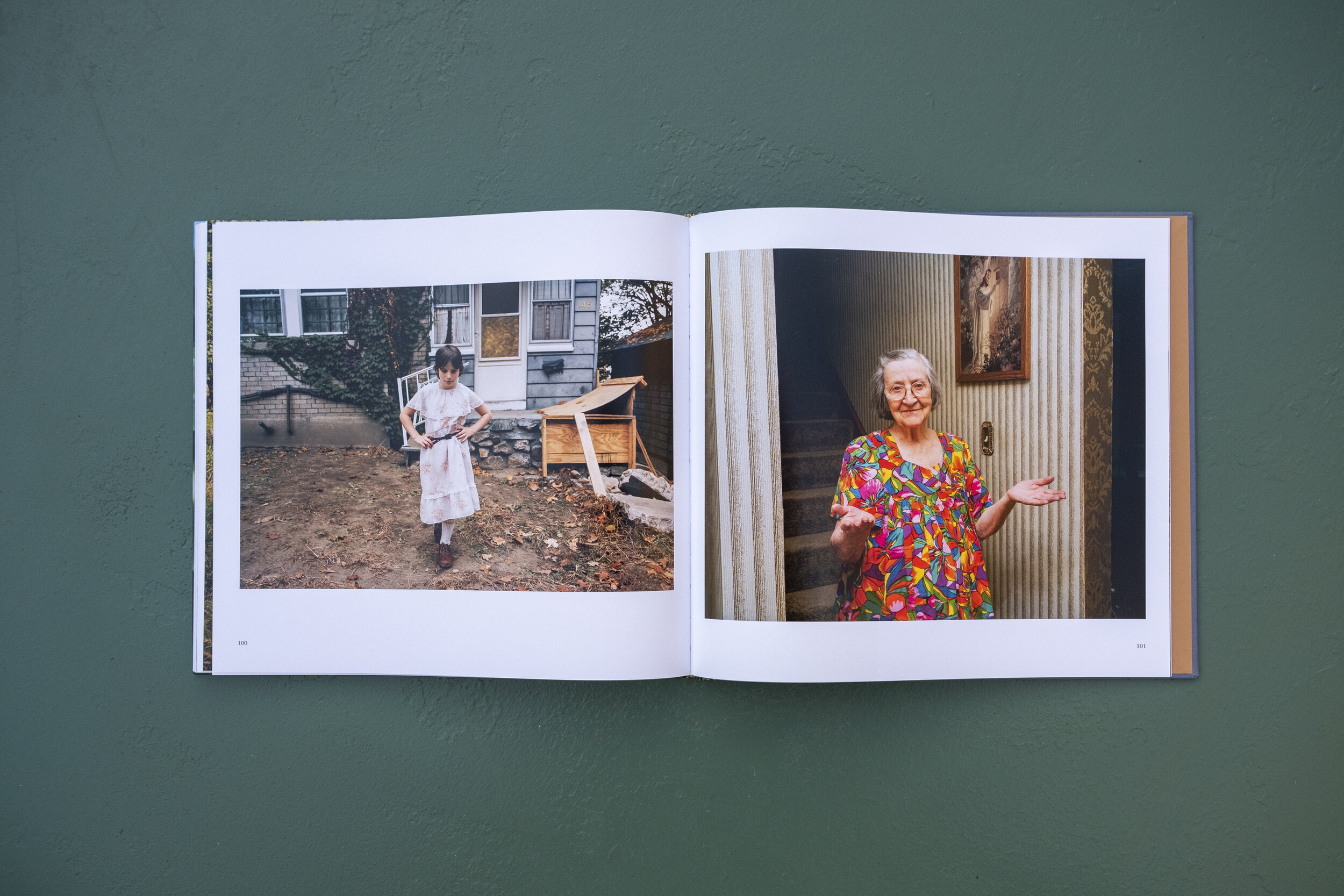
It usually doesn’t take me six months to share my thoughts about a photobook, but nevertheless here we are. When I saw the first spreads of Sheron Rupp’s book earlier this year, I reached out to Kehrer Verlag’s public relations folks and asked for a review copy. The book arrived in early June and I knew before I reached the end it would be one of my favorite photobooks, and one of the most beautifully designed and printed books I’ve seen. That part didn’t take six months.
In July, my daughter was to give birth to her first child a few states away, so I stacked Rupp’s book in a neat pile of other work I planned to get to and prepared to become a grandfather. I looked at the book often, familiarizing myself with its pictures, the organization of the work, and the feelings – all the feelings – the book generated for me.
My granddaughter, Waylon Jane, lived for 24 days. In early August, my family and I found ourselves grieving in ways we never thought possible. On the surface, I tried to maintain some sense of normalcy, but inside, spiritually, emotionally, creatively, I was coming apart at the seams. I carried Rupp’s book back and forth to work, thinking I’d write about it at some point, needing to write about it at some point. It moved from my backpack back to my desk and then to the bookcase by our front door. Every time I walked by it, I was reminded that I wasn’t ready to write about it yet. And a couple of days ago, I picked it up, looked through it again and decided it was time.
One of the great gifts that books like Taken From Memory gives us is the opportunity to connect to something so beautiful, so tangible, and to be able to hold in our hands moments of inexplicable wonder and refined curiosity. It has the familiarity of a family photo album without a snapshot aesthetic. So much attention to detail is given that it’s hard to imagine making a handful of pictures like these much less the 75 included in the book. It is in every sense of the word, astounding.

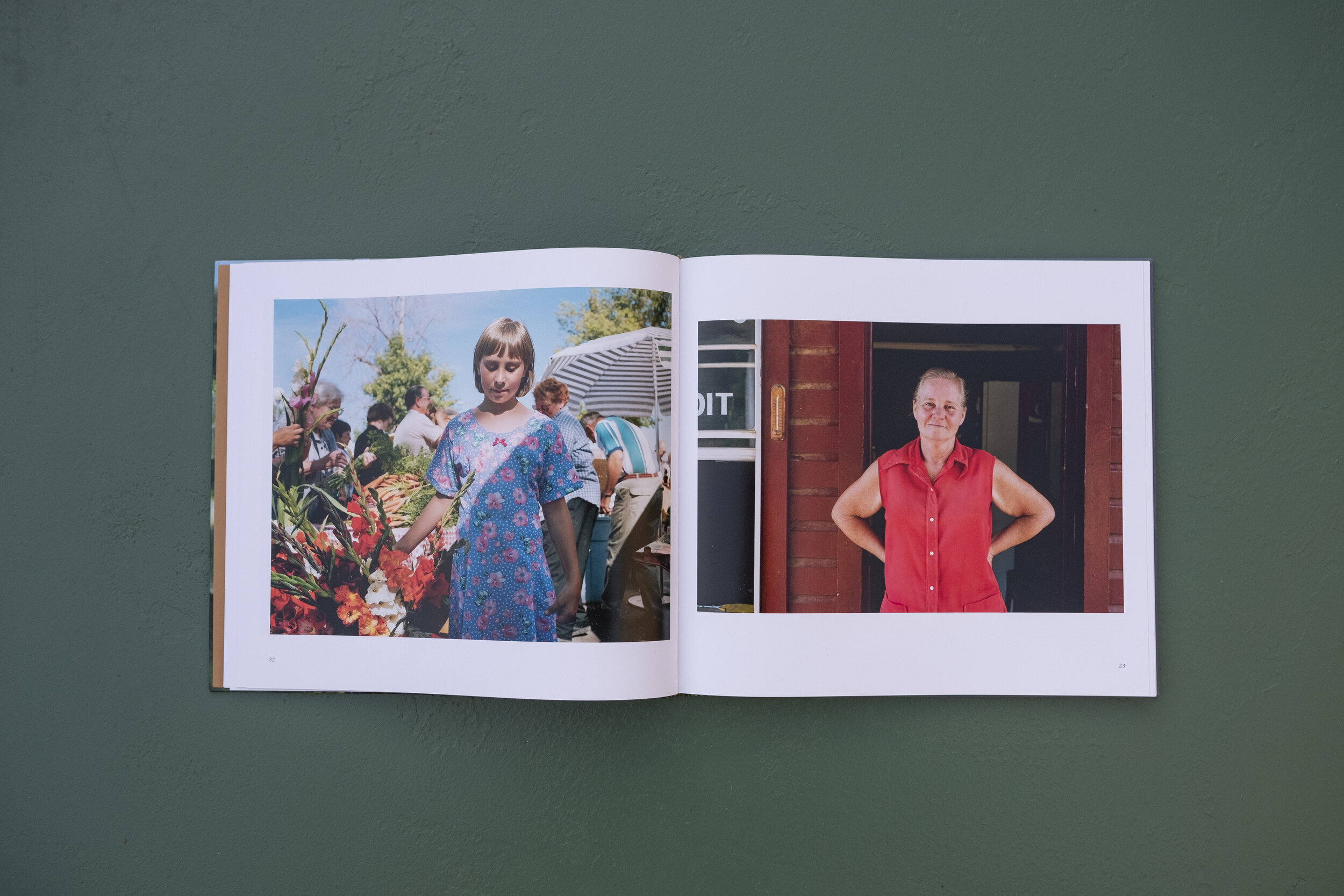
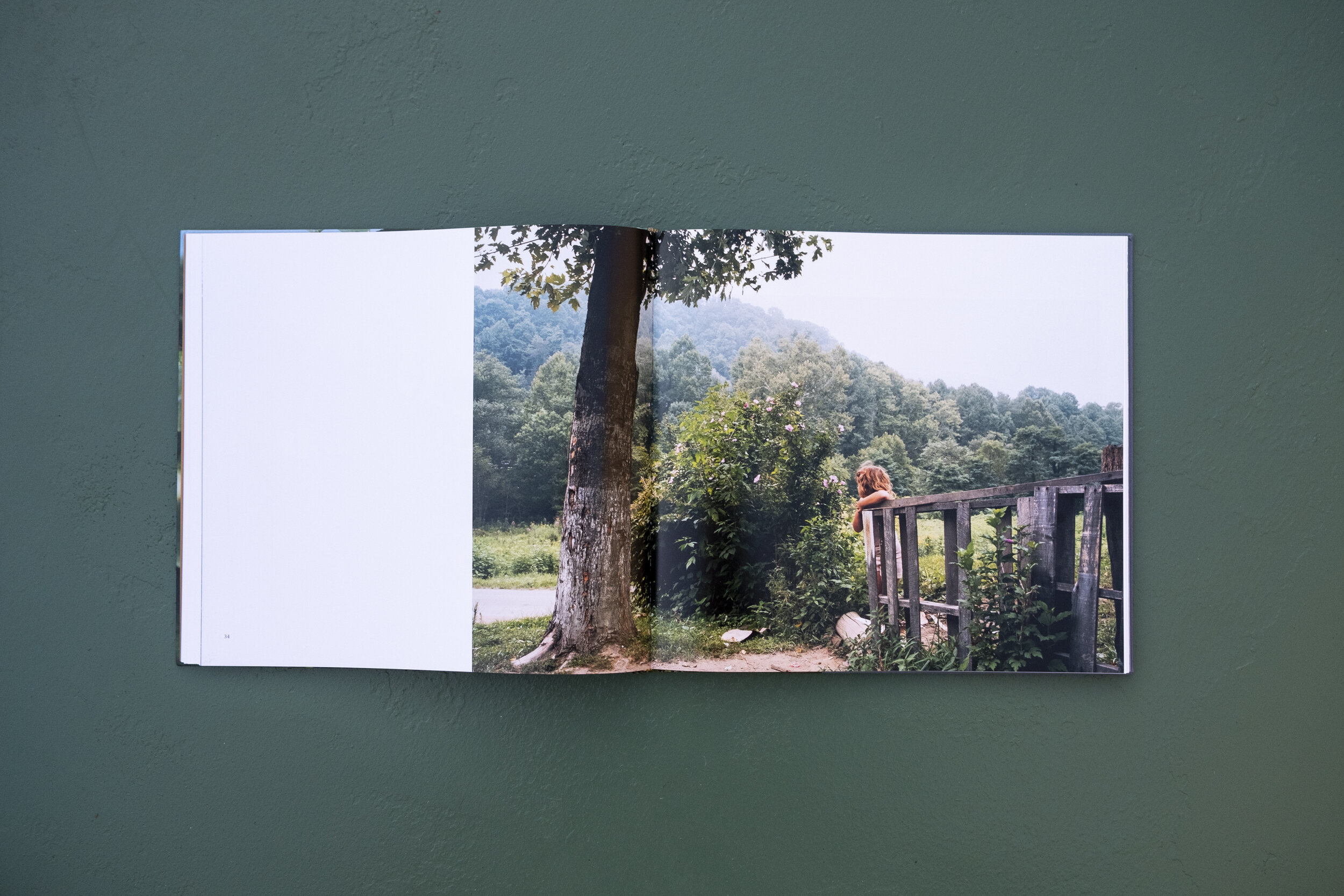
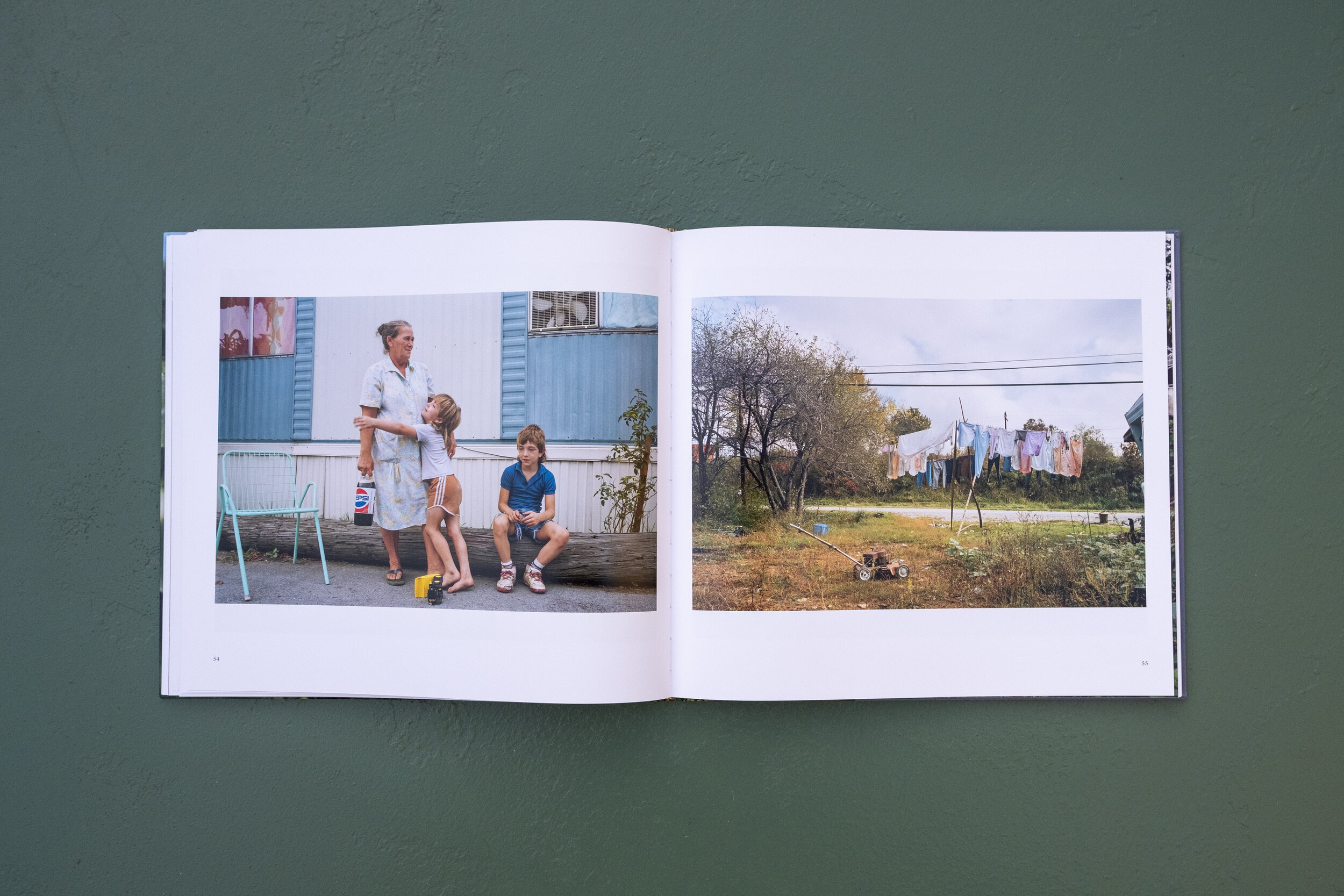
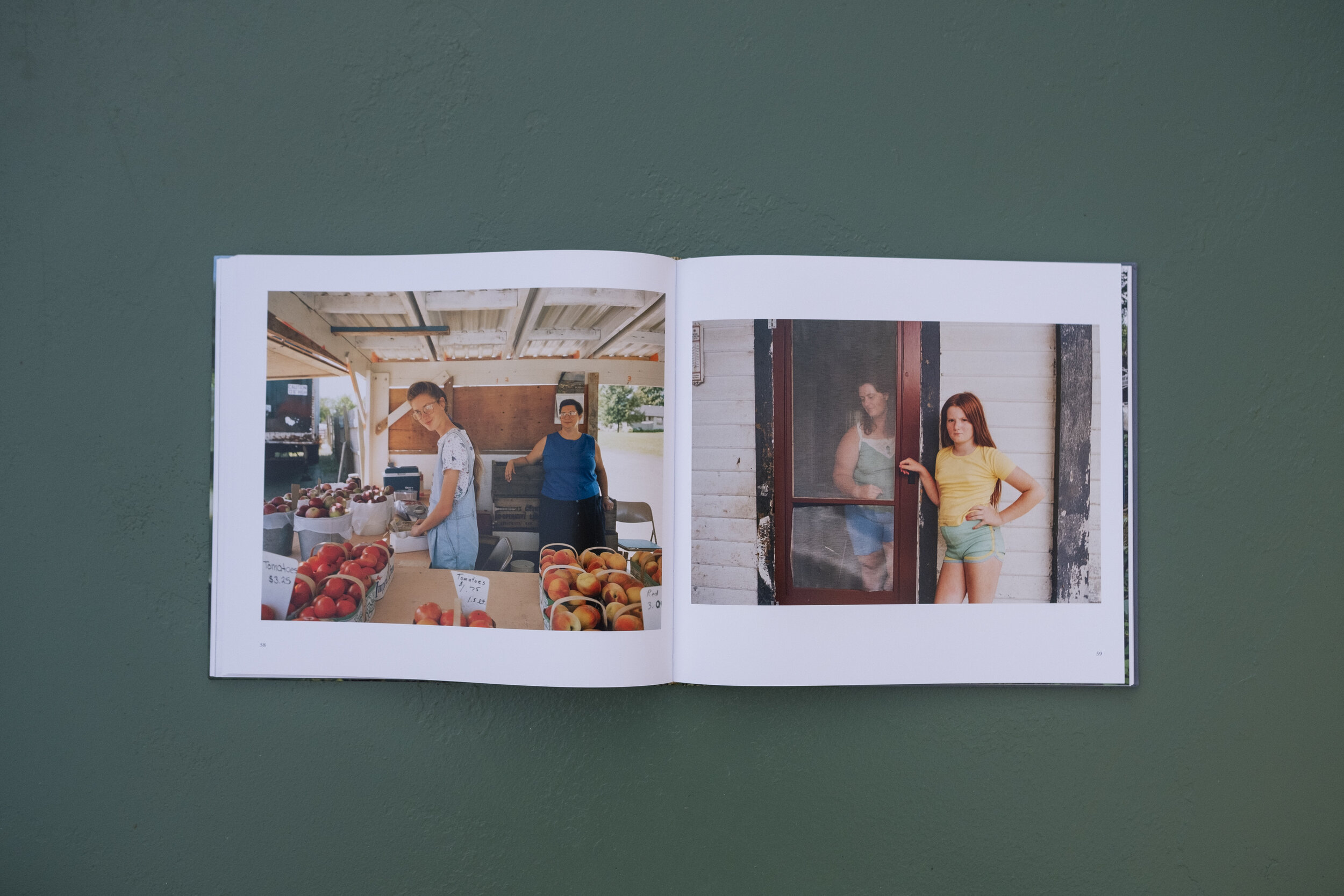
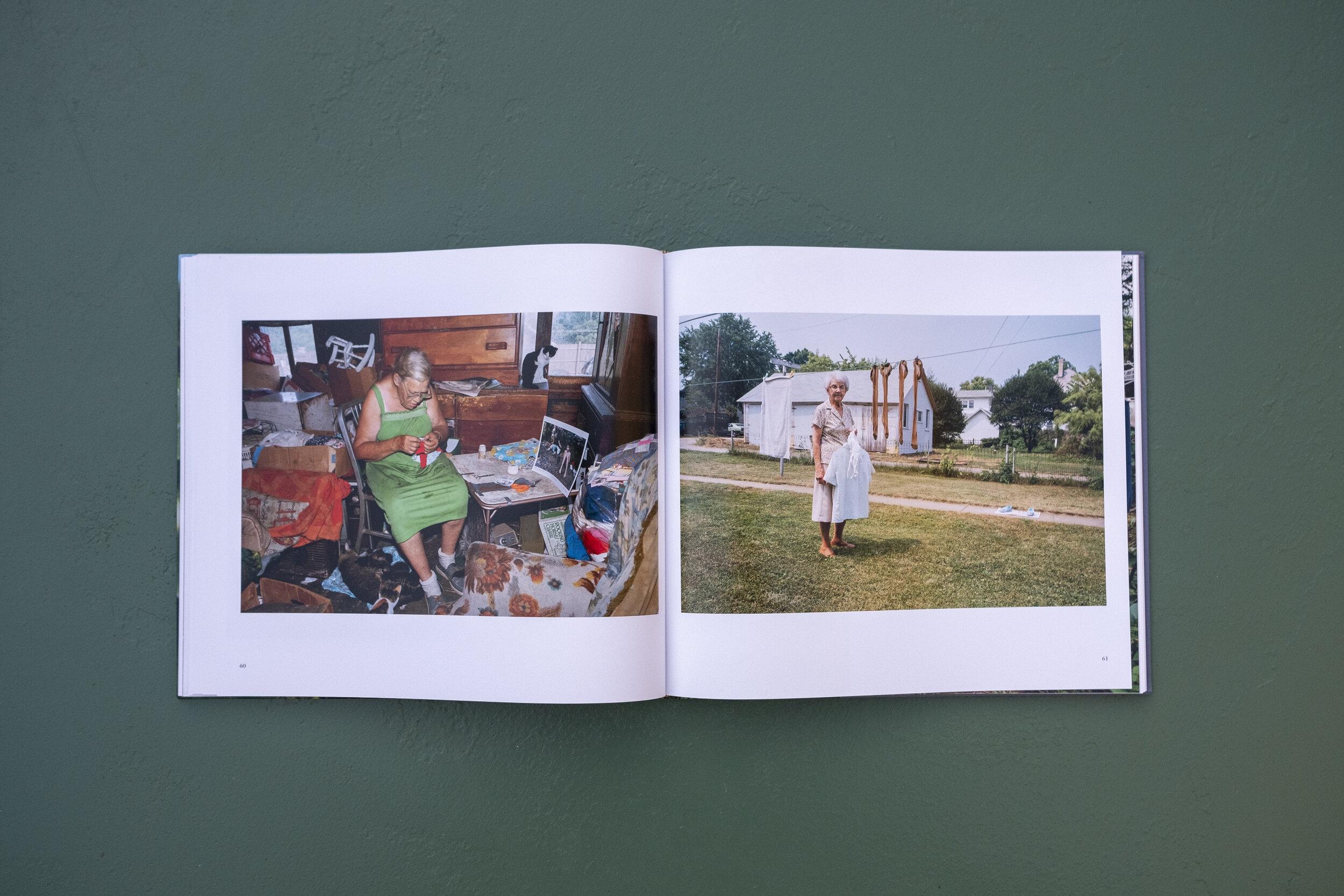
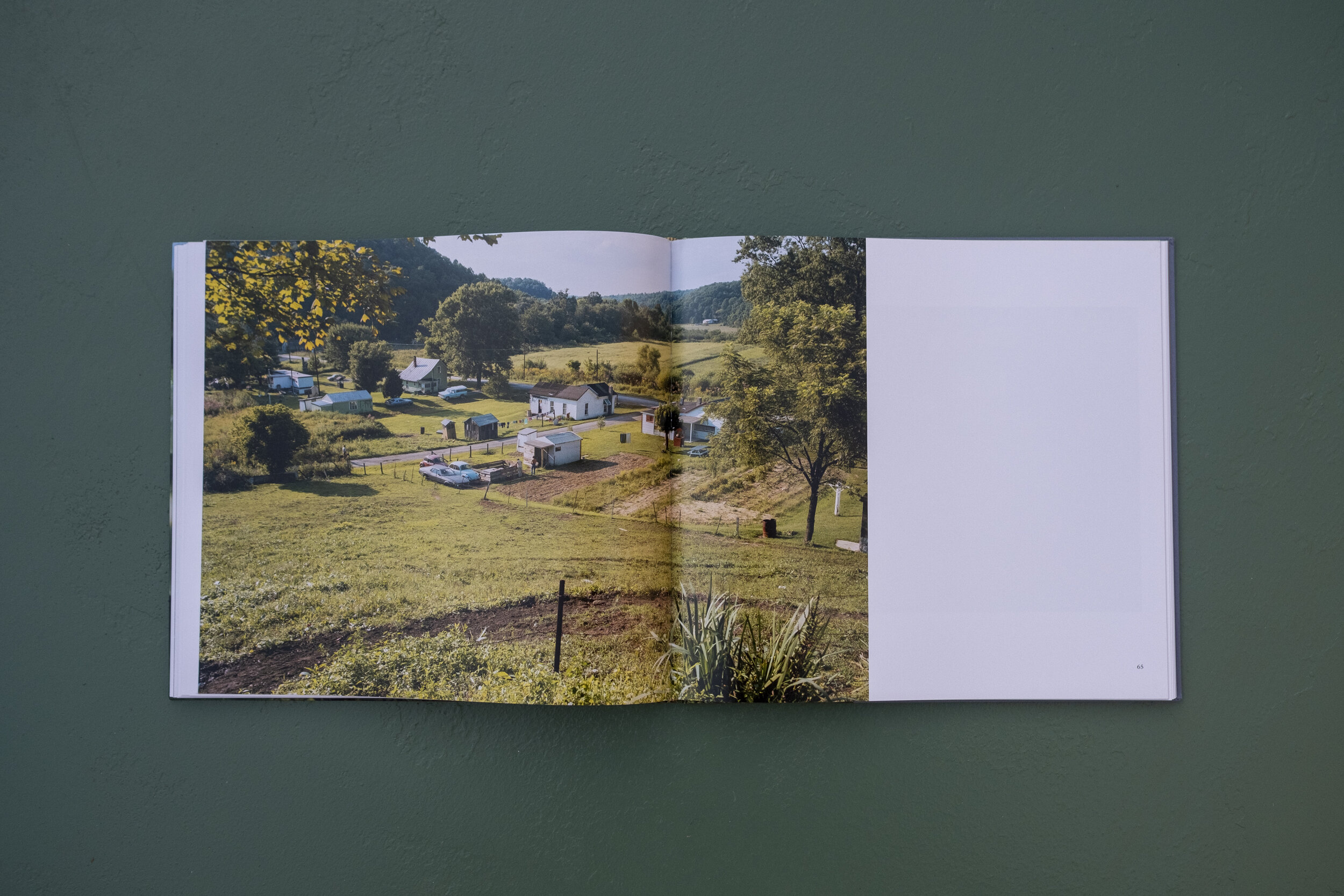
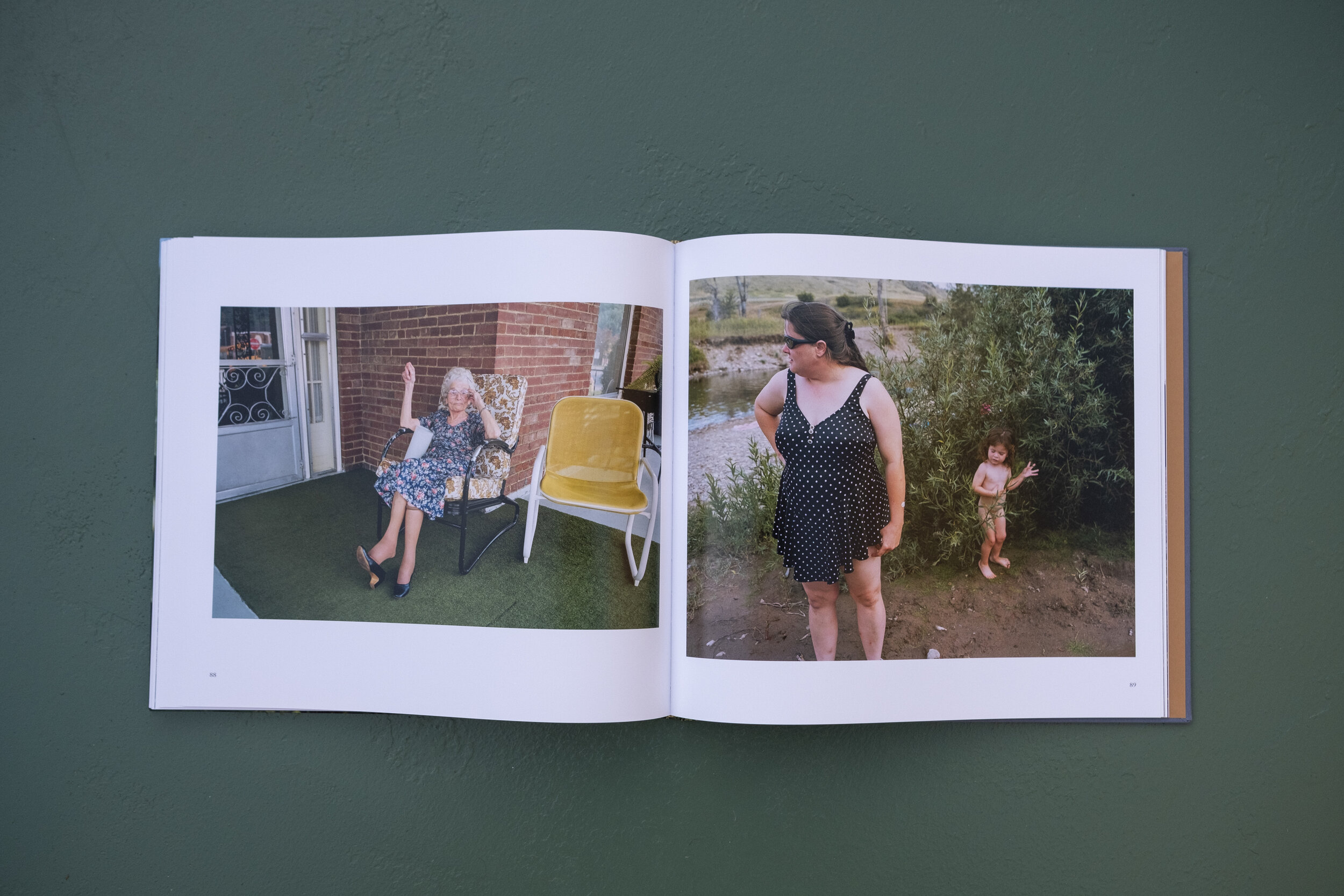
The book’s design is wonderful in its own right. Measuring 12” x 11”, it ranks as one of my favorite photobook dimensions; not unwieldy or unmanageable, but large enough to appreciate the meticulous compositions, colors, and shadows Rupp’s work offers. All the details seem to be dialed in just so, a testament to designer Anja Aronska of Kehrer Design. As an object, the book is quite remarkably made and presented.
Taken From Memory feels like a body of work that could’ve been made exclusively in Appalachia, yet only 18 photographs were made in what the Appalachian Regional Commission regards as Appalachia. In addition to Kentucky, Ohio, and Tennessee, we see photographs from Vermont, Montana, Massachusetts, and several others states. So why does this feel so much like home to me when I’ve never even been to Montana? I’ve come to believe Taken From Memory holds the ability to transmit the feeling of intimacy and of seeing and being seen in a way that makes it more than just a photobook.
Every photograph contains, and ultimately reveals, something one could easily overlook at first glance, rewarding the viewer for looking a bit closer and staying a bit longer. As a photographer, I’ve often found that’s when the best pictures are made – when you stay a little longer and look a bit closer. As a viewer, I’m pleased to experience this in a book of photographs that offers no shortage of beautiful detail.
Rupp’s work implies a connection with the folks being photographed that I find rare in much of the work I see. Growing up, it was common to hear the phrase “never met a stranger” when someone was describing my grandfather, who could seemingly talk to just about anyone at any time just about anywhere. Rupp’s work suggest to me that she’s never met a stranger or at the very least, someone who stayed a stranger for very long. Perhaps that’s another facet of her work that makes Taken From Memory seem so much like home.
John Szarkowski (1925-2007), who served as the Museum of Modern Art’s director of the Department of Photography for nearly 30 years, said of one of Rupp’s pictures in 2006, “There’s a woman in the [Getty] show who I think is really good. [Looking through catalog.] Sheron Rupp. Don’t ask me why that’s such a good picture, it’s just a perfect picture.” (See below.) He continues, “The basic material of photographs is not intrinsically beautiful. It’s not like ivory or tapestry or bronze or oil on canvas. You’re not supposed to look at the thing, you’re supposed to look through it. It’s a window. And everything behind it has got to be organized as a space full of stuff, even if it’s only air.”

St. Albans, Vermont, 1991. © Sheron Rupp. “Don’t ask me why that’s such a good picture, it’s just a perfect picture.” John Szarkowski.
There is a perfect picture for me in this book. In it, a small girl leans against a wood fence. Her gaze is toward the hill across the way, beyond the Rose of Sharon bush much bigger than she is. Her hair is caught by a breeze coming through, which I imagine carries with it the fragrance of the Rose of Sharon I remember so well from my grandmother’s front yard. Maybe she’s playing hide and go seek and she’s counting. Maybe she sees something on the hill. I close my eyes and imagine Waylon Jane and the backyard lightning bugs of summer I’ll never see her chase and catch and let go again. I imagine her voice and her hair and her laugh in the hills she never got to see. And in my mind, it is a perfect picture, familiar and home.

Ironton, Ohio, 1985. © Sheron Rupp.
*Editorial note: I received a complimentary review copy of Taken From Memory from Kehrer Verlag.
Further reading:
LA Weekly Interview with John Szarkowsky
The New Yorker, Two and a Half Decades Observing Life in Rural America
The Heavy Collective, May 2019
Also of note, Susan Worsham’s interview with Sheron Rupp is featured in Ahorn Archive 1, which ships later this month - https://ahornbooks.com/product/ahorn-archive-1/
Review - William Gedney: Only the Lonely, 1955-1984
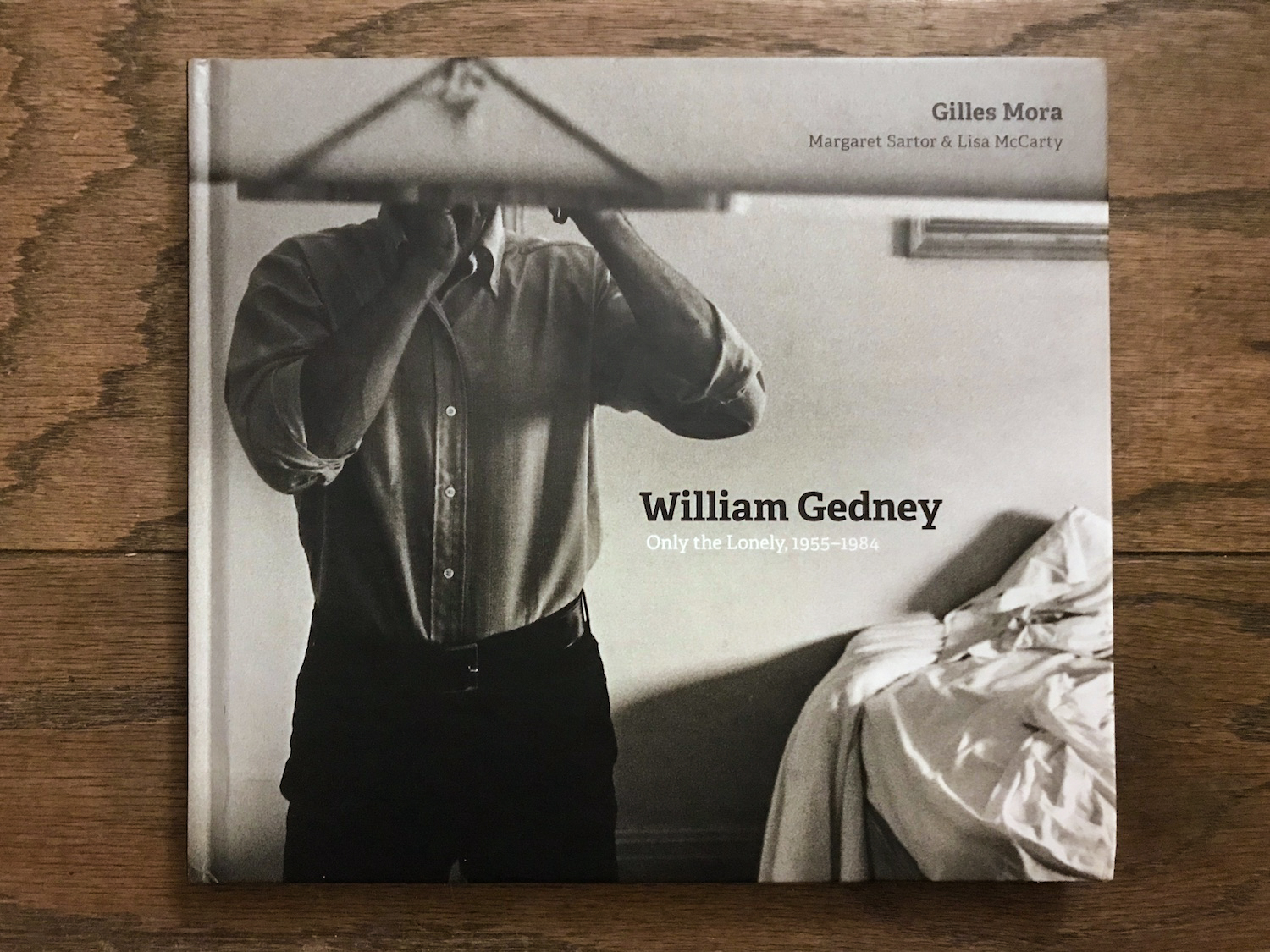
Hardcover | 10.5 x 9.5 inches | 160 pages | 160 duotone photographs | University of Texas Press, 2017 | Edited by Gilles Mora, Margaret Sartor, and Lisa McCarty
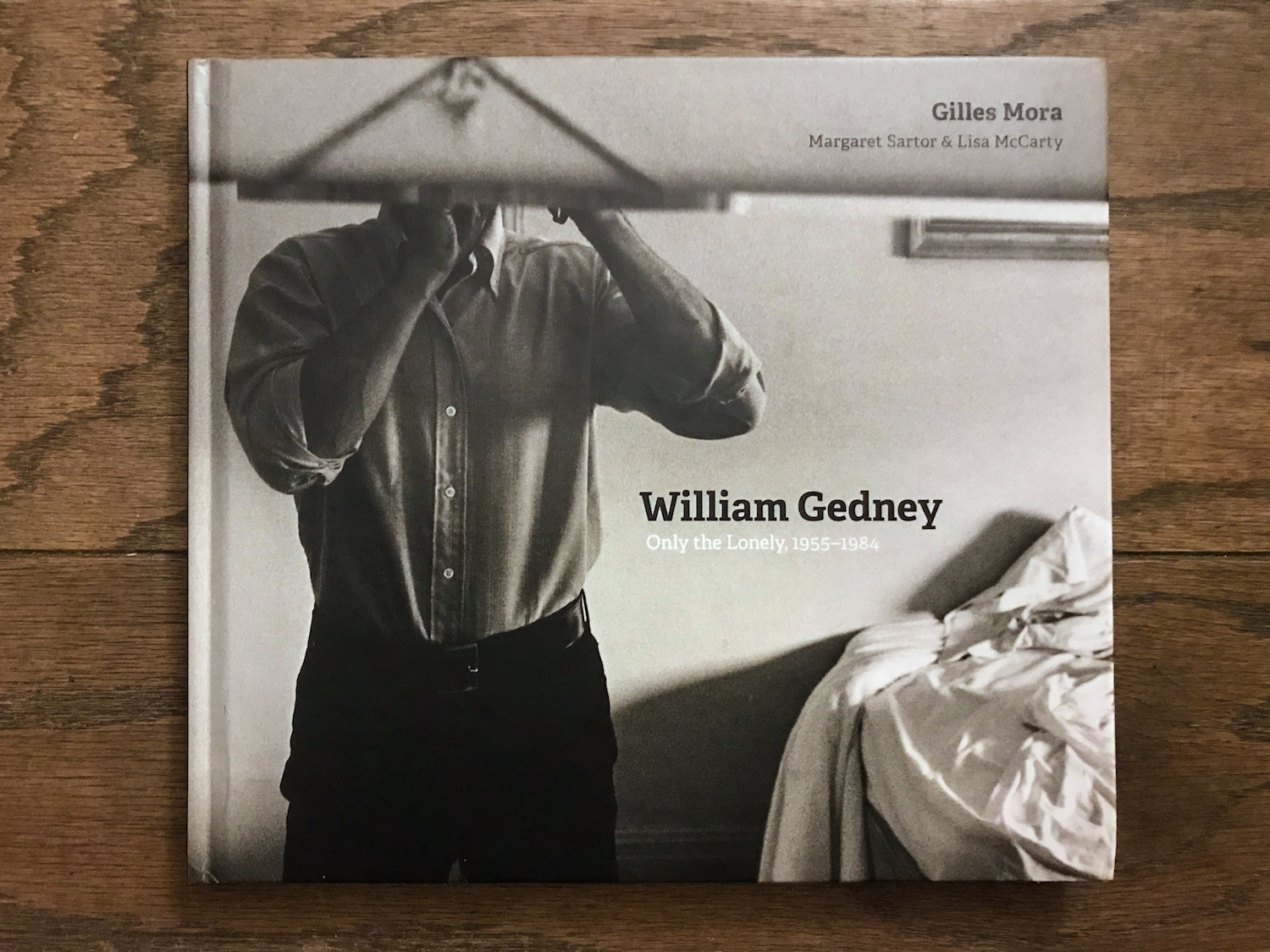
William Gedney’s work was once described as quiet poetry. I can’t think of a finer description of the photographer I’ve never met, but whose work has had a profound impact on my development as a photographer and understanding of photography in all its imperfections and limitations. Intimate is another word often used to describe his work, and although it truly is intimate, I worry that it has become something of a softball descriptor of work that is deeply complex and difficult to categorize. Only the Lonely provides us with a deeper dive into the expansive work of William Gedney. There are three distinct pieces of writing by the editors: “William Gedney, So Similar, So Different: Alone are the Lonely” (Gilles Mora), “Short Distances and Definite Places” (Margaret Sartor), and “Intimate Gestures: Handmade Books by William Gedney” (Lisa McCarty). The book is divided into eight sections of photographs: The Farm, 1955-1959, Brooklyn, 1955-1979, Kentucky, 1964, 1972, United States, 1964-1972, San Francisco, 1965-1967, India, 1969-1971 and 1980, Europe, 1974, and Gay Pride Parades, 1975-1983.
Only the Lonely, is the most recent significant work of this little known photographer. After his death in 1989, Gedney left the responsibility of his archive to Lee Friedlander, who has published dozens of books of his own work and is still actively making books, yet Gedney never lived to see his work in book form. Sean O’Hagan, who writes about photography for the Guardian, called Gedney a “pioneer of immersive documentary.” There has been somewhat of a resurgence in the work of William Gedney, for which I’m incredibly thankful. In 2013, photographer Alec Soth published Iris Garden, a beautiful book of Gedney’s pictures combined with the writing of John Cage (now out of print). Before that, only one other book had been published dedicated solely to the work of William Gedney. In 1993, Duke University became the repository for 51.3 linear feet of Gedney’s work. Margaret Sartor, a photographer, writer, and teacher at the Center for Documentary Studies at Duke, was approached by the library and asked to put together an exhibit of Gedney’s work. In 2000, Sartor and Geoff Dyer coedited What Was True: The Photographs and Notebooks of William Gedney (which quickly sold out and is also out of print).
William Gayle Gedney died on June 23, 1989 at the age 56. In his lifetime, he was awarded a John Simon Guggenheim Memorial Foundation Fellowship for photography (1966-67), a Fulbright Fellowship for photography in India (1969-71), a National Endowment for the Arts grant in photography (1975-76), and several other grants and fellowships. He had a show at the New York Museum of Modern Art (1968-69) as well as more than a dozen other exhibitions. I wrote about my desire for seeing Gedney’s Kentucky work come to fruition in book form exactly as he intended here.
In her essay “Short Distances and Definite Places,” Sartor writes of Gedney, “People trusted him. Moreover they trusted how he saw them.” This gets at the very heart of documentary and place-based work for me. It isn't enough to just earn the trust of folks who let you into their lives, although it is a critical and foundational step. Would that all of us in our documentary practice earn the trust of people to the extent that they trust how we see them. What a beautiful relationship to strive for and what a beautiful book to have as a reminder of its possibility.


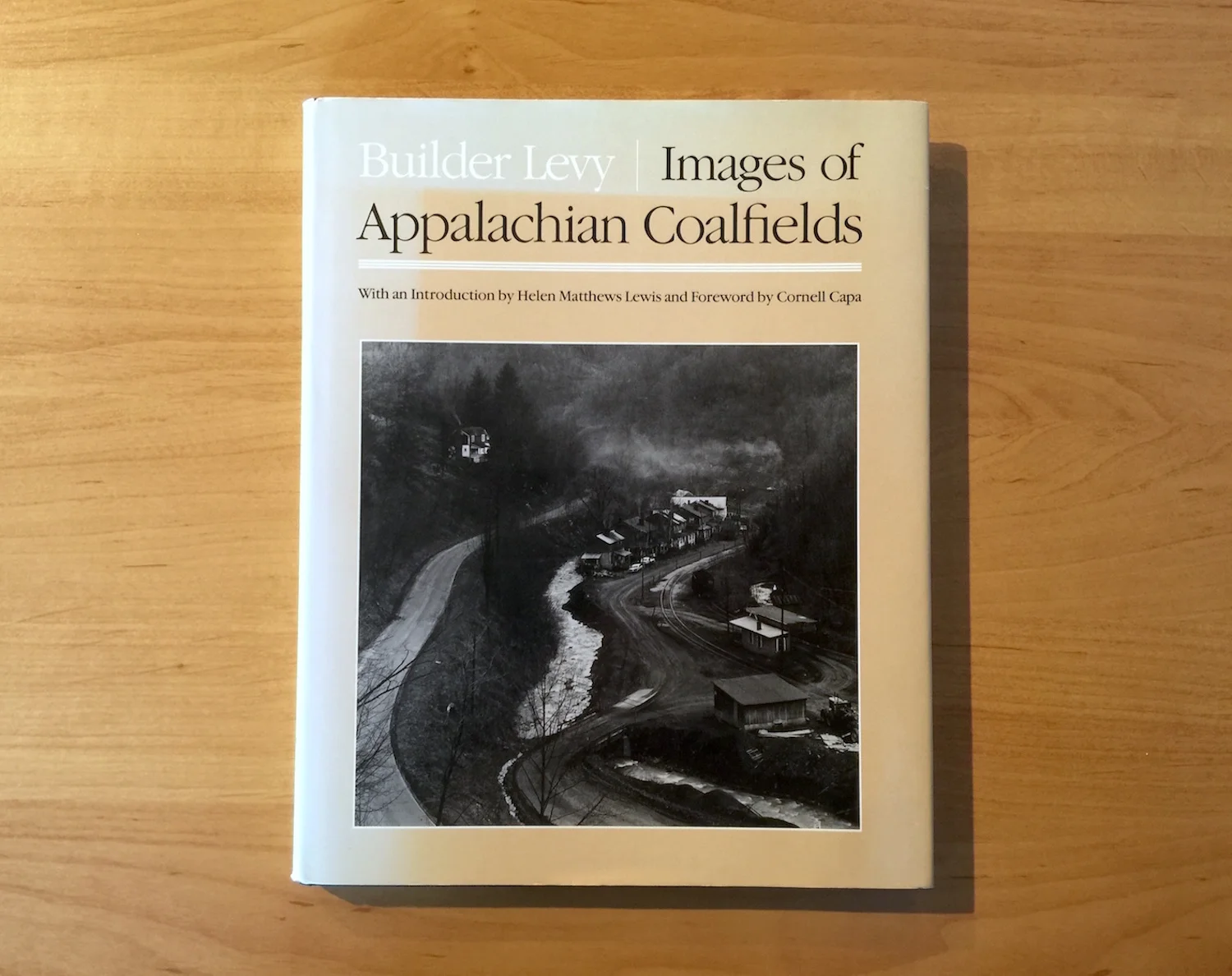
Review - Images of Appalachian Coalfields

Hardcover| 8 x 10 inches | 144 pages | 93 black and white photographs | Temple University Press, 1989 | Builder Levy | $25
Images of Appalachian Coalfields was probably the very first photobook specific to Appalachia I ever bought. In late 2009, I saw Levy's picture of Chattaroy, West Virginia native Nimrod Workman in Coal Country: Rising Up Against Mountaintop Removal Mining, the companion book to the documentary film, and wanted to know more about the photographer who'd photographed in my home town. Chattaroy isn't exactly that widely known (or photographed). An online search about Levy led me to his book, which I ordered right away.
When the book arrived, I sat down and pored over the pages and examined each photograph looking for more pictures from Chattaroy. Then, I noticed several pictures were made at Eastern Coal Company in Stone, Kentucky across the Tug River in Pike County. My pawpaw, Cecil May, was a mine foreman and worked underground for Eastern for over 40 years. I just knew I was going to see him in one of Levy's photographs. Well I didn't see my pawpaw, but I decided to email Levy to thank him for making the work and tell him the story about my connection to Chattaroy and Eastern Coal Company. That email struck up a conversation, which developed into a friendship. Later this month, I'll get to meet Builder Levy for the first time at the 2016 Appalachian Studies Association conference in Shepherdstown, West Virginia, where I'll be part of a panel with Levy and Dr. Sylvia Shurbutt of Shepherd University.
Images of Appalachian Coalfields begins with a powerful combination; a foreword by Cornell Capa, the brother of Robert Capa (yes, that Robert Capa) and an introduction by Dr. Helen Matthews Lewis. The introduction, twenty-two pages long, should be required reading for anyone making work in Appalachia. It's broken out by themes of work, community, and legacy, which sets the structure of how the photographs are presented (in identical sections). Lewis sets up the work with the care and scholarship anyone familiar with her work would expect, ending with, "The current plight of mining communities is strong evidence that the enrichment of the coal producers has resulted in the impoverishment of the region and its people."
The photographs from Levy's first book were made between 1968 and 1982. He started making pictures in Appalachia when he took a 10-day trip to Boone, North Carolina. On his return to New York, he made a detour through Mingo County and stayed with a VISTA worker who introduced him to some local folks. Working slowly over time and returning to the coalfields often, Levy began to build the body of work that would eventually become Images of Appalachian Coalfields.
One of the important things I gleaned from my early conversations with Levy was how important it was to him to give back prints. It's something I started incorporating into my practice because of him. I've given away at least three copies of this book (as well as Rob Amberg's Sodom Laurel Album, which I'll write about later) as examples of the kind of work I want to see more of, that I feel we all need to see more of. This isn't a book any MTV producer referenced as an idea for a new show. Instead, it's a deliberately slow an quiet approach to telling a story with grace and intention.
From the dust jacket: "Levy describes the sometimes mixed reaction he received from miners, foremen, and company guards at various mining sites. By "reading" the images, one senses that he did no simply gain access to witness but fully participated in the daily "mantrips," the comfortable hospitality, the unity of miners surfacing after a long day underground. Images of Appalachian Coalfields forces the reader to confront the life of a mining community, to recognize the faces of struggle, camaraderie, defiance, endurance, and to admire the intense vision of a photographer whose love of subject pays homage to the human spirit."
I've selected some of my favorite spreads from the book and included the caption information.

Spread one, pages 42 and 43. Left: Loaded coal cars in the mines, drawn by animals or men years ago, are now moved or "hauled" by motorized vehicles called "motors." (One of Eastern Associated Coal Corporation's mines; Boone County, West Virginia, 1982) Right: Several years after he was photographed, Andrea Kosto was killed by a large piece of slate that fell as he was trying to locate an obstruction under the loading tipple. (Sycamore Mining Company; Cinderella, West Virginia, 1971)

Spread two, pages 50 and 51. Left: Workers emerge form the mine at shift's end. (Wolf Creek Colliery; Lovely, Kentucky, 1971) Right: Since the late nineteenth century, Black miners have been among the leaders in the struggle to defend and expand the rights of all coal miners. (Old House Branch Mine, Eastern Coal Company; Pike County, Kentucky, 1970) [Editor's note: although not originally identified in Images of Appalachian Coalfields, the miner's name is Toby Moore. He appears on the cover of Levy's third book, Appalachia USA.]
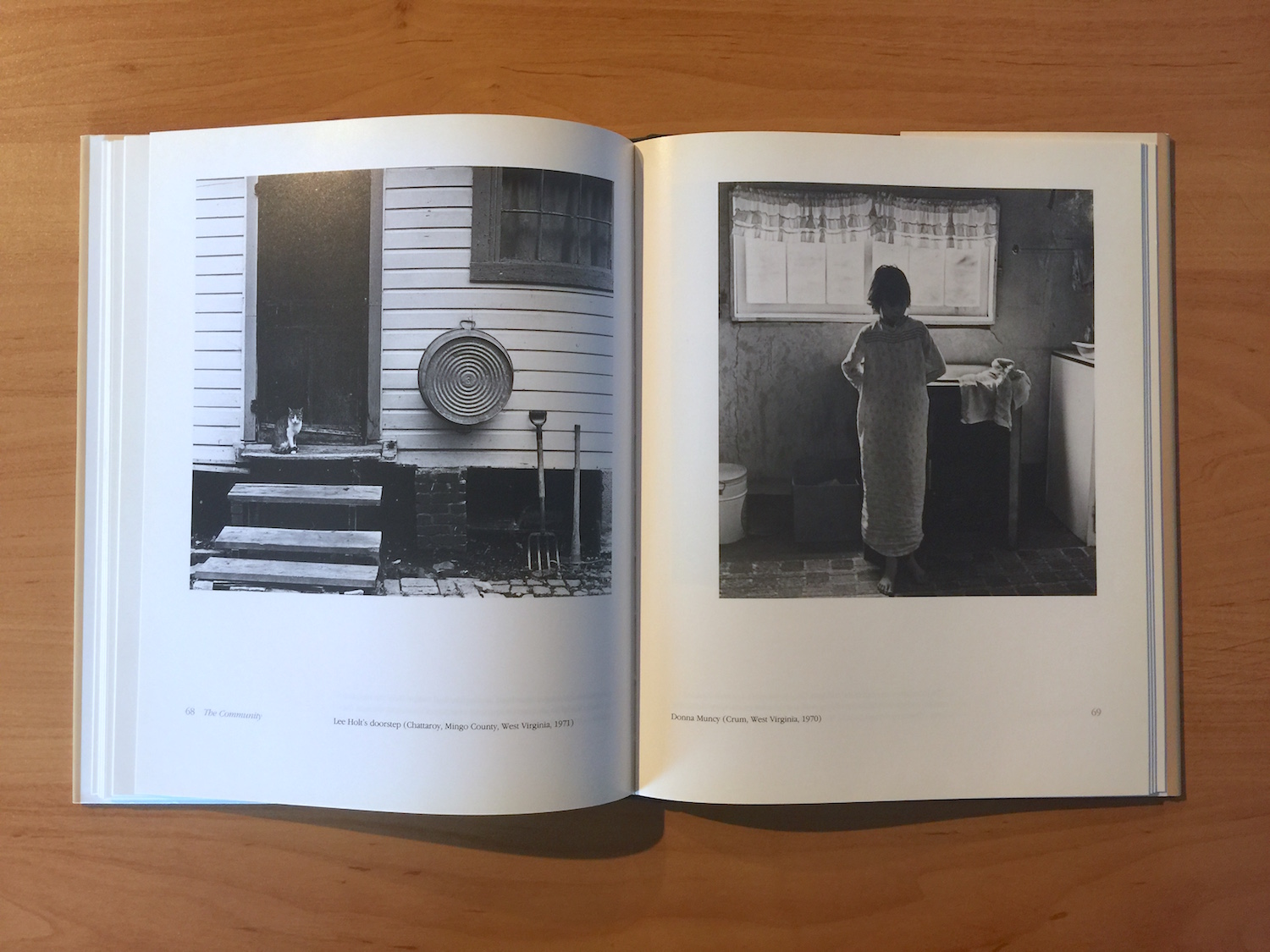
Spread three, pages 68 and 69. Left: Lee Holt's doorstep. (Chattaroy, Mingo County, West Virginia, 1971) Right: Donna Muncy. (Crum, West Virginia, 1970)
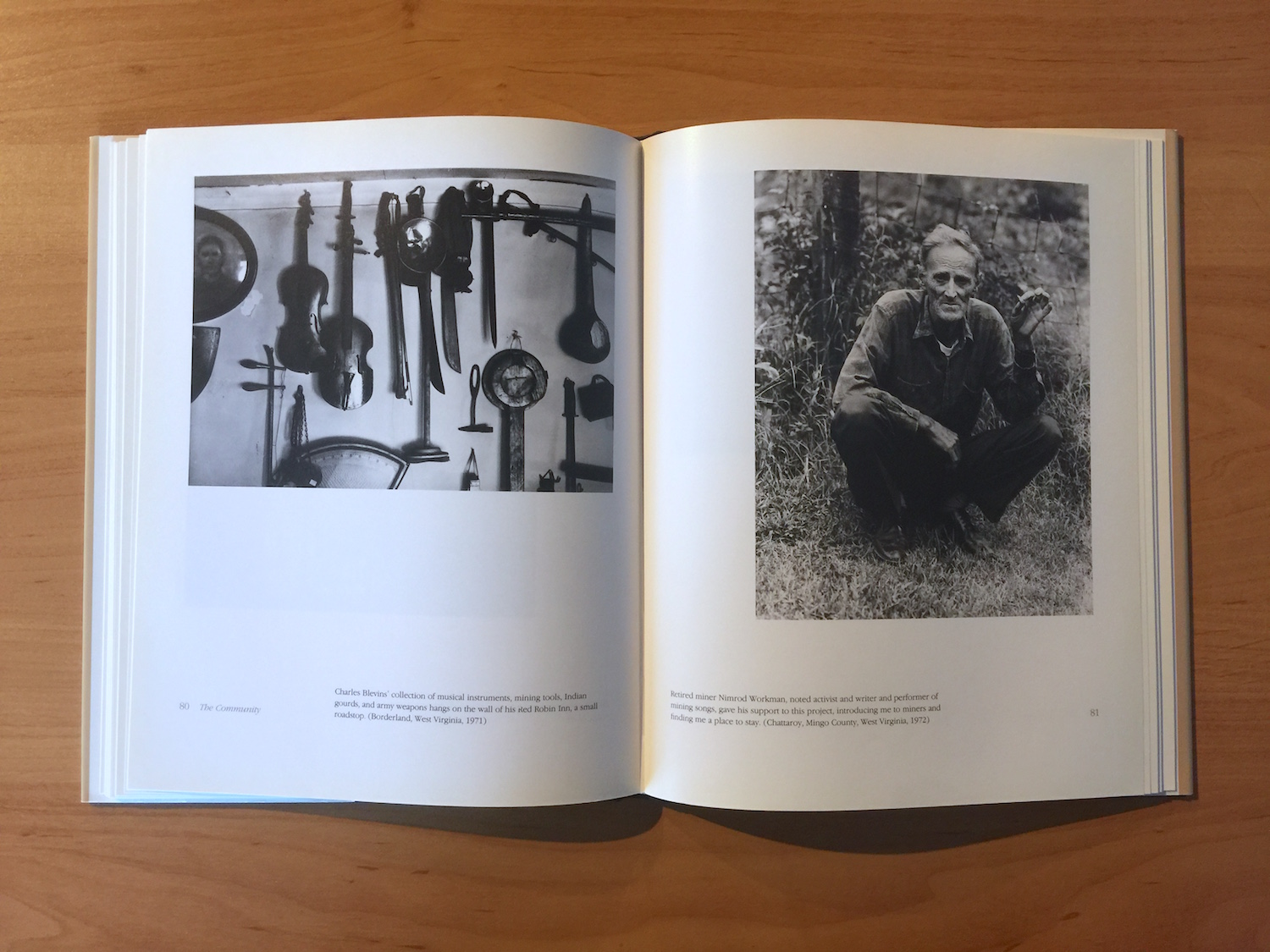
Spread four, pages 80 and 81. Left: Charles Blevins' collection of musical instruments, mining tools, Indian gourds, and army weapons hangs on the wall of his Red Robin Inn, a small roadstop. (Borderland, West Virginia, 1971) Right: Retied miner Nimrod Workman, noted activist and writer and performer of mining songs, gave his support to this project, introducing me to miners and finding me a place to stay. (Chattaroy, Mingo County, West Virginia, 1972)

Spread five, pages 110 and 111. Left: View from Highsplint bridge. (Harlan County, Kentucky, 1974). Right: Williamson, "Home of the Billion Dollar Coalfields." (Mingo County, West Virginia, 1972)
Long out of print, you can pick up a used copy of Images of Appalachian Coalfields relatively inexpensively online from a number of sites. I highly recommend this book.