The Patch: Connecting the FSA Photographs of Wolcott and Shahn

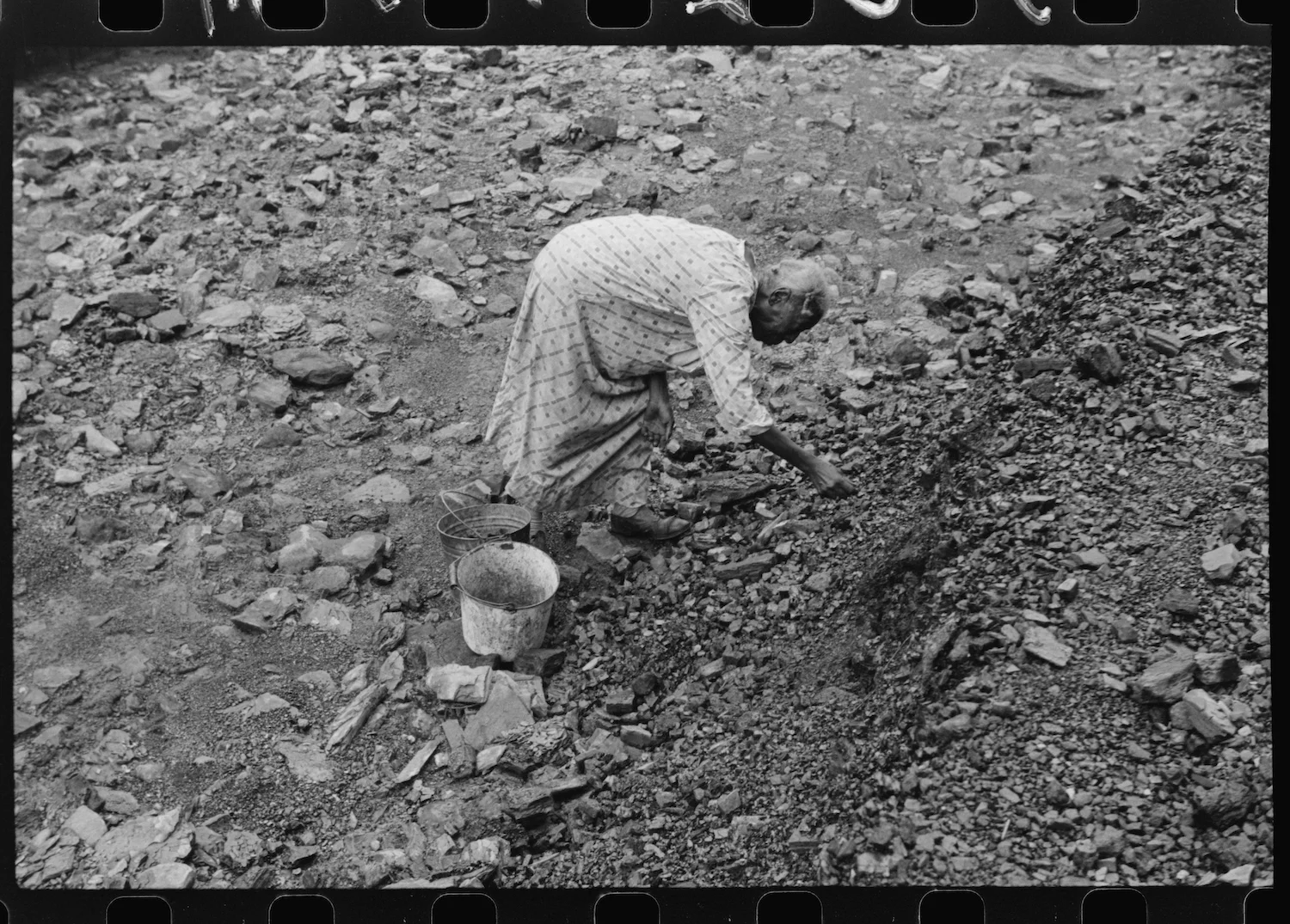
Negro woman picking up coal from old slate heaps in mining community. The "Patch," Cassville, West Virginia. Marion Post Wolcott, September 1938, Farm Security Administration - Office of War Information Photograph Collection (Library of Congress).
When I look at this photograph, I try to make a mental list of all the filters I might be applying to it, whether intentional or not, and the ways of seeing that undoubtedly influence my perspective. For example, I am a mid-forties white male studying a photograph of an elderly Black woman. There is no shortage of collections of photographs – or writings on such - by white men about Black bodies, about women’s bodies. Though this is not the primary focus of why I’m interested in this photograph, I must be aware that it affects how I see the picture. I am also aware of my place of origin, both as a person and a photographer, and how those are inextricably related to both coal and to West Virginia. I am also a student of historical photographs from the region, so I likely spend more time studying composition, location, time period, and the photographer who made the picture. I also consider how or if the subject matter of the photograph has changed over time, whether a particular building might still be standing, what a deforested mountainside might now look like some decades later, and so on.
At first glance, this photograph seems otherworldly, perhaps I can convince myself that if I squint just so, I can picture an astronaut on the moon bending down to collect a sample to study back on earth. Instead, I am left with a reminder that for as long as coal has been mined in these hills, we have been offered only the scraps that remain from toiling underground. That which has been thrown out, thrown away, discarded as no good and of no use, this is where we find ourselves.
I know that Marion Post Wolcott was around 28 years old when she made this photograph. She made this picture during the first year Roy Stryker hired her as the first full time woman photographer of the FSA (Dorothea Lange had been working since 1935, but part time). This picture was likely made on her first assignment and her visit to West Virginia. Stryker was known to punch holes in photographs he deemed not fit to print, which you can see below as two of the five images Wolcott made of the woman bear evidence of Stryker’s hole punch.

The series of five photographs made by Marion Post Wolcott of the woman picking coal from a slate dump in West Virginia in September 1938. Note the middle two images, which bear the evidence of Roy Stryker’s hole punch.
By my best guess, I reckon this woman to be in her 80’s. For argument sake, let’s say 80. This picture was made in September 1938, which would mean she was born around 1860. Was she born a slave? What was her childhood like during the Civil War? We can never know for certain, but suffice it to say, this woman had seen many things through the course of her life at the making of this series of photographs in Monongalia County, West Virginia.
Aesthetically, this photograph is hauntingly beautiful. Black and white photography still dominated most picture making at the time (Kodachrome had been introduced three years prior in 1935), but I can’t imagine this photograph much different as a color image. The entire frame, from corner to corner, is composed of a pallet of blacks, grays, and whites. The perforations (sprocket holes) visible at the top and bottom of the frame indicate a 35mm film camera, which by this time had been used widely by the public for two decades. If I had to guess, I’d say she was using a Leica.
While researching other FSA-era photographs of West Virginia, I noticed that Ben Shahn also made pictures in Cassville a few years earlier. One picture in particular stood out to me. It showed several miners’ shacks with crudely made outhouses perched on the hill behind them. Then, I noticed the pattern of the slate dump located behind the houses to the right of the frame. After comparing Wolcott’s and Shahn’s photographs, I’m convinced they were not only from the same coal camp, but damn near the same location.
I am fascinated by the FSA photographs of West Virginia and the coal-producing areas of Appalachia. There is so much rich history contained in them seemingly waiting for us to visit them, spend time with them, learn from them, and hopefully sometimes connect with them.

The Patch, a shanty town at Cassville, Scotts Run, West Virginia. Ben Shahn, October 1935, Farm Security Administration - Office of War Information Photograph Collection (Library of Congress).
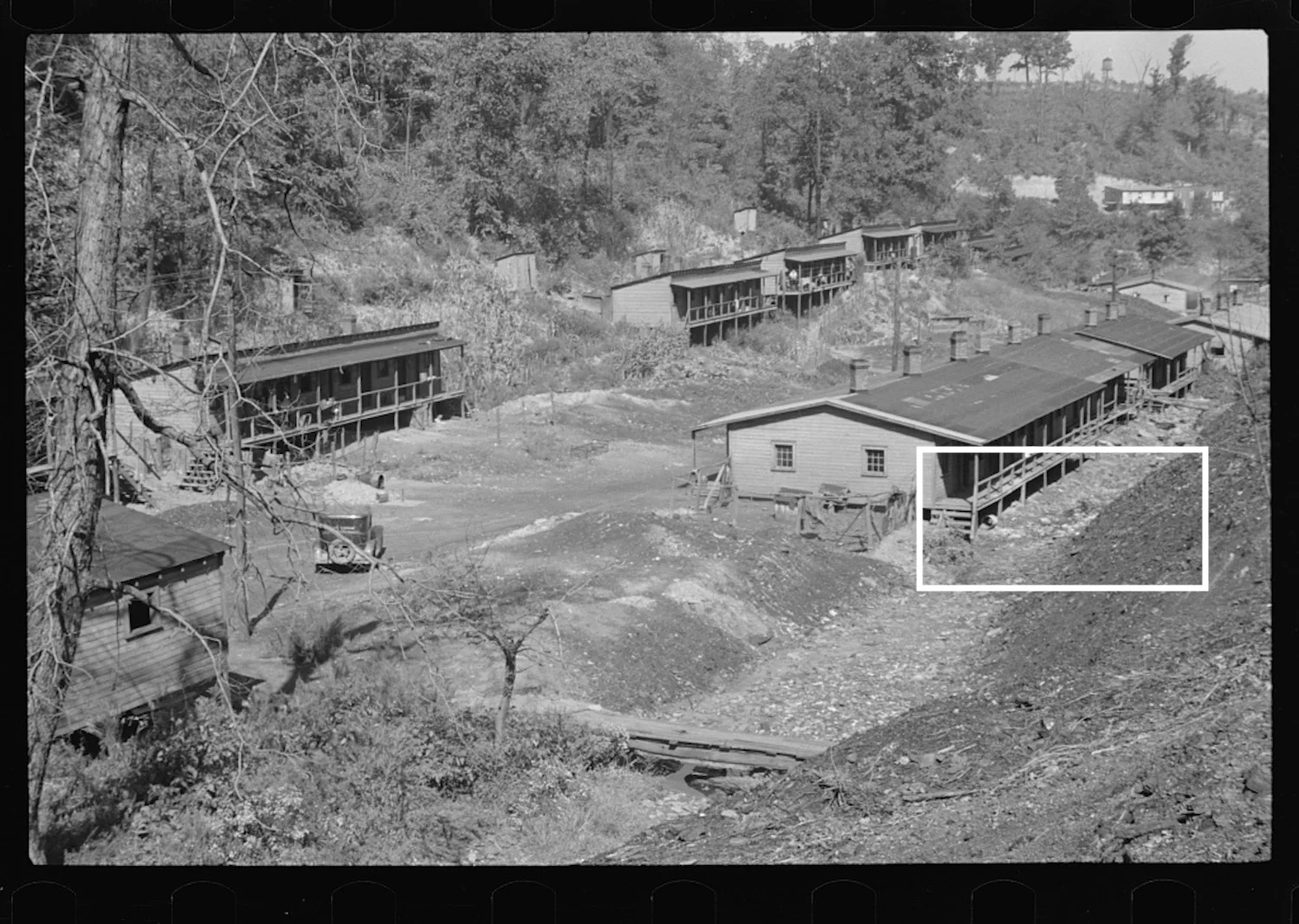
Area where I believe Marion Post Wolcott made her picture of the woman collecting coal in 1938.

Area indicating what I believe to be the shadow of a porch using Ben Shahn’s 1935 photograph as reference.

Composite of Ben Shahn’s 1935 photograph (cropped for detail) from Cassville and Marion Post Wolcott’s 1938 photograph (inset) from Cassville showing a woman picking coal from a slate dump. The composite is not exact, but I believe points to this being the same location.
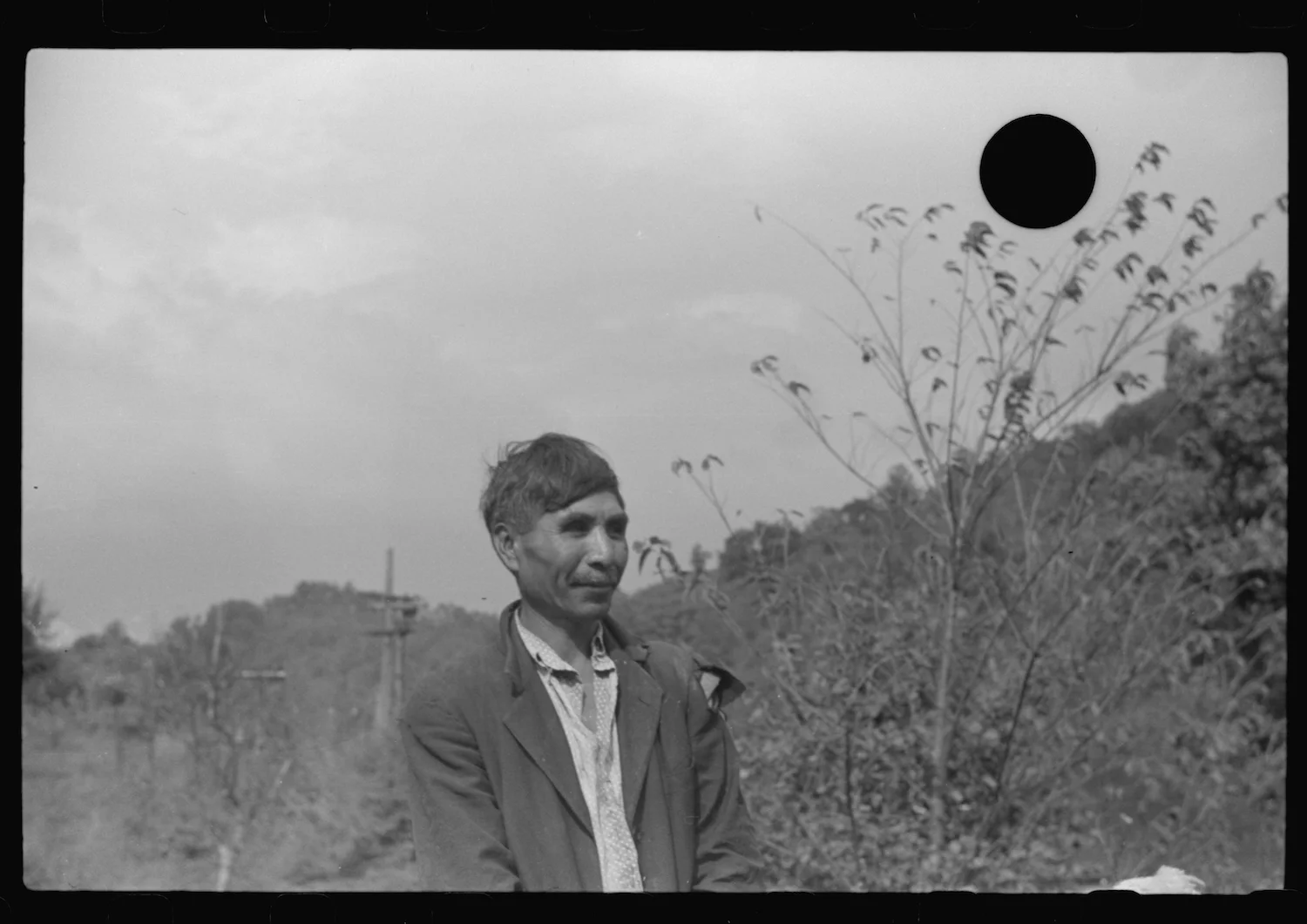
Mexican Coal Miners, West Virginia, and Marion Post Wolcott

The Farm Security Administration—Office of War Information (FSA-OWI) produced some of the most iconic images of the Great Depression and World War II and included photographers such as Dorothea Lange, Walker Evans, and Ben Shahn who shaped the visual culture of the era both in its moment and in American memory. Unit photographers were sent across the country to document and combat rural poverty. The negatives were sent to Washington, DC. The growing collection came to be known as “The File.” With the United State’s entry into WWII, the unit moved into the Office of War Information and the collection became known as the FSA-OWI File. Marion Post Wolcott began her work with the FSA on assignment in West Virginia where her mother had distributed family-planning literature. Her mother advised her to do things like observe clothes hanging on the line to better understand the people she wanted to photograph. Wolcott would go on to canvas the United States for her work with the FSA from 1938-1942.
Wolcott was one of eleven FSA photographers and one of only two women (Dorothea Lange, the other) hired for the project. While researching her photographs from West Virginia, something caught my eye. Mexican miners. In addition to whites and blacks, I knew all manner of immigrants had come to the coalfields in search of steady work: Hungarians, Italians, and others. But it never dawned on me that Mexican coal miners would've been working in West Virginia nearly a hundred years ago (or perhaps longer). A minority (woman) photographing minority (Mexican) coal miners and their families. These are the primary images I wanted to share for this article. It seems timely in our current political climate. Women are still underrepresented, overlooked, and underpaid. Immigrants, particularly Mexican immigrants, still struggle to take hold of the American Dream while constantly facing the threat of harassment or even worse, deportation. I doubt the coal operators in West Virginia's mines cared much about immigration status as long as the coal continued to run and profits remained steady. (I also stumbled upon this brilliant piece of research by Heidi Taylor-Caudill and Whitney Hayes called Immigrants in the Coalfields.)
In a 1965 oral history interview, Wolcott shares, "And so my first assignments were very close to Washington. I think one of the first ones, if not the very first, was in the coal fields in West Virginia. That was a very short assignment, of course. And it was a very interesting one, too. I found the people not as apathetic as I had expected they might be. They weren't too beaten down. Of course, many of them were but they were people with hope and some of them still had a little drive, although, of course, their health was so bad it was telling . . . ."
On another note, Roy Stryker, overseer of the FSA photographers, was known for killing negatives of the work that didn't pass muster. He rendered the images useless by punching a single a hole through them with a manual hole punch (see the first and fourth images in this article as examples). In 2016, Bill McDowell published Ground: A Reprise of Photographs from the Farm Security Administration (below) with Taj Forer and Michael Itkoff of Daylight Books, which is a collection of Stryker's hole-punched rejections sequenced in an altogether poetic and resonant project. The resulting book contains 185 plates from more than 1,000 files from the Library of Congress. (Just one of Wolcott's rejected images made its way into the book - also a West Virginia image).


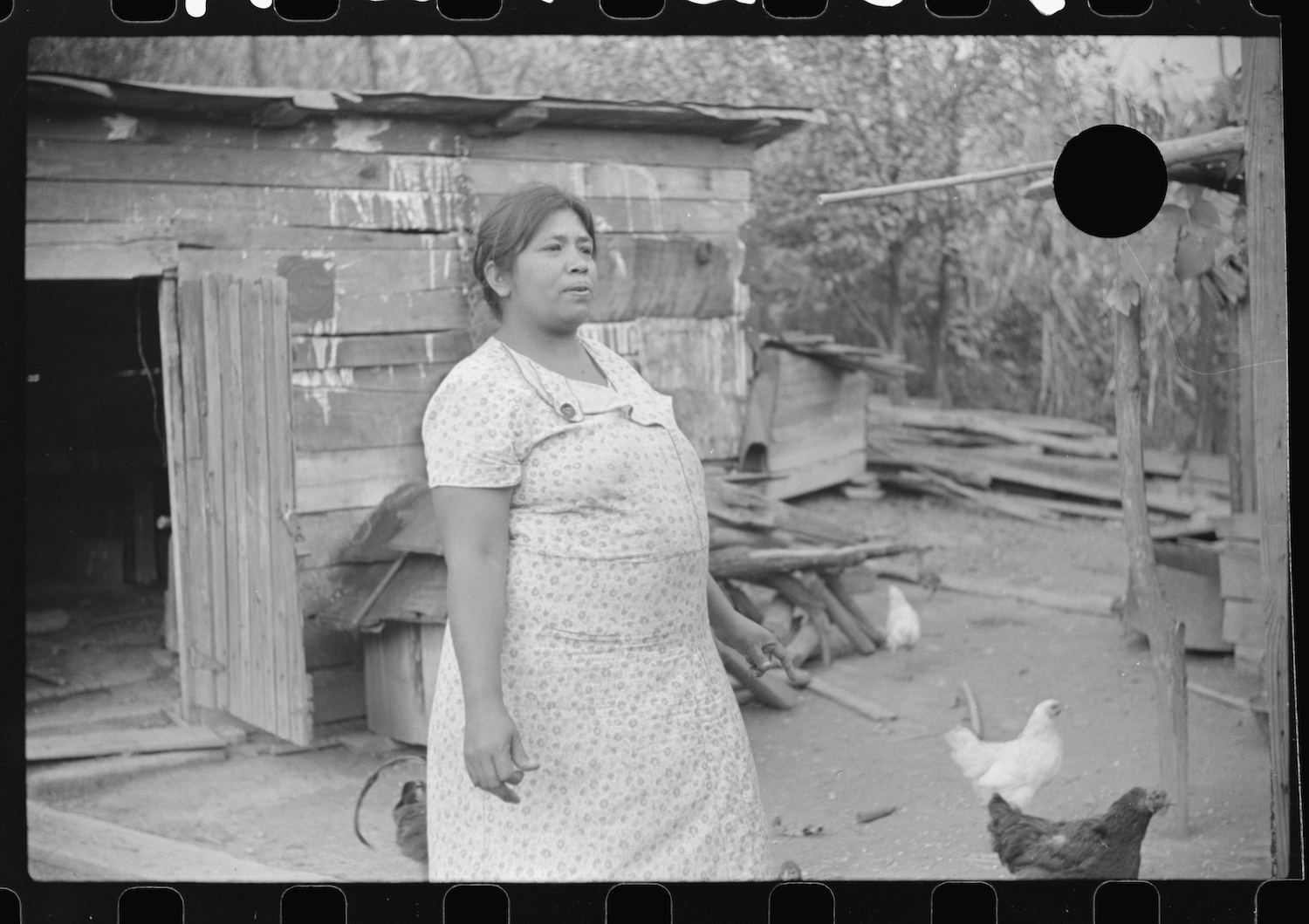


Editor's note: Photogrammar is a web-based platform for organizing, searching, and visualizing the 170,000 photographs from 1935 to 1945 created by the United States Farm Security Administration and Office of War Information (FSA-OWI). Below is a screenshot of my search for Marion Post Wolcott's images from West Virginia during her time with the FSA.
